4.5
4 verified reviews
About
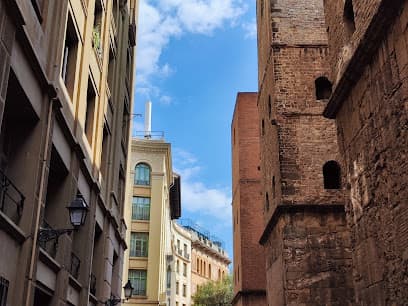
Barcelona is a city built on the bones of its ancestors, and nowhere is that more literal than at the Muralla de Barcelona. We’re talking about the Roman walls, the massive, grey, indifferent fortifications that have been holding this place together since the 3rd and 4th centuries. While the rest of the world is busy chasing the latest brunch trend or queuing up for another Gaudí house, these stones just sit there, reminding you that your life is a blink of an eye in the grand, bloody history of the Mediterranean. This isn't a curated museum experience with air conditioning and a gift shop; it’s the city’s skeleton, exposed and unashamed.
When you stand at Plaça d'Emili Vilanova, you’re looking at the defensive line of Barcino. The Romans weren't building for beauty here; they were building because the empire was starting to fray at the edges and they were scared. They reinforced the original 1st-century walls with whatever they had on hand. If you look closely at the base of the towers, you’ll see 'spolia'—recycled bits of older monuments, pedestals, and carved stones shoved into the wall because survival mattered more than aesthetics. It’s a brutal, pragmatic kind of masonry that tells you more about the Roman mindset than any polished statue ever could.
The experience of visiting the Muralla is one of contrast. On one side, you have the frantic, exhaust-choked rush of Via Laietana, where scooters buzz like angry hornets. On the other, you have the quiet, narrow capillaries of the Gothic Quarter. The wall stands as the border between the two. You can see how the medieval city simply latched onto these Roman bones like a parasite. Houses were built directly into the wall; windows were punched through stone that was meant to stop barbarian hordes. It’s messy, it’s layered, and it’s completely authentic. There is no 'travelese' here because the wall doesn't care if you like it or not.
You won't find many tour groups lingering here for long—there’s no place to sit and no one selling overpriced sangria. Instead, you’ll see locals walking their dogs in the shadow of the towers, or students leaning against 1,700-year-old stone while they scroll through their phones. There’s a beautiful, casual disrespect in how Barcelona treats its history. It’s not a relic kept under glass; it’s part of the furniture. The atmosphere is heavy with the scent of old stone and the dampness of the Ciutat Vella, a reminder that this city has survived plagues, sieges, and the relentless march of time.
Is it worth it? If you’re the kind of person who needs a plaque to tell you how to feel, maybe not. But if you want to touch the actual physical boundary of the ancient world, it’s essential. The flaw, if you can call it that, is the lack of context for the uninitiated. There are few signs, and the traffic noise from Via Laietana can be a buzzkill. But that’s the trade-off for seeing something real. You’re standing where a Roman sentry once stood, looking out at a horizon that didn't include the Sagrada Família or the W Hotel.
Don't come here expecting a show. Come here to stand in the gap between centuries. Walk the perimeter, look for the marks of the stonemasons, and appreciate the fact that in a city being rapidly hollowed out for tourism, these walls remain unmovable. It is one of the best free things to do in Barcelona for anyone who prefers their history served straight, without the garnish. It’s a place for quiet reflection in a city that rarely shuts up.
Type
Historical place, Tourist attraction
Duration
30-45 minutes
Best Time
Early morning for quiet contemplation before the city traffic peaks.
Features
Historical place
Tourist attraction
Categories
Roman HistoryArchitectureArchaeology
Ticket Prices
Free Admission
No tickets required
Must-See Highlights
The massive defensive towers at Plaça d'Emili Vilanova
The 'spolia' stones at the base of the wall
The arches of the old Roman aqueduct nearby at Plaça Nova
Visitor Tips
Combine this with a visit to the MUHBA to see the walls from the inside out.
Look up to see how medieval balconies were built directly into the Roman stone.
Avoid the midday sun as there is very little shade in the plaza.
Good For
History buffsPhotographyBudget travelersSolo travelers
Why Visit
Visible 'spolia'—recycled Roman monument stones embedded in the 4th-century construction
A rare, un-sanitized look at the defensive skeleton of ancient Barcino
The seamless integration of Roman fortifications with medieval residential architecture
Nearby Landmarks
- Barcelona Cathedral (4-minute walk)
- Plaça de Sant Jaume (6-minute walk)
- MUHBA Museu d'Història de Barcelona (4-minute walk)
- Via Laietana (1-minute walk)
Accessibility
- Public square access
- Flat paved surfaces around the plaza
- Visible from street level
Location
Plaça d'Emili Vilanova, 5
Ciutat Vella, Barcelona
Nearby Hotels
Nearby Restaurants
In Ciutat Vella
ATTRACTION
Park
Ciutat Vella
A thousand years of silence tucked behind a Romanesque monastery, where the grit of El Raval dissolves into ancient stone, cool shadows, and the heavy weight of history.
0.0(0)
Park
ATTRACTION
BARSHELONA
Ciutat Vella
Forget the plastic bulls and tacky magnets. This is where Barcelona’s soul is bottled into art, a small sanctuary of local design hidden in the shadows of the Gothic Quarter.
0.0(0)
Tourist attraction
ATTRACTION
Minajoe art
Ciutat Vella
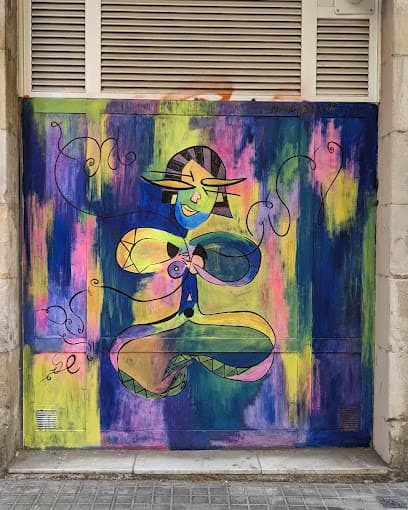
A raw, paint-splattered antidote to the sterile museum circuit. This is where pop-art meets the grit of the street, served straight from the artist’s hands in the heart of old Barcelona.
0.0(0)
Tourist attraction
Frequently Asked Questions
Is Muralla de Barcelona worth visiting?
Yes, if you value authentic history over tourist spectacles. It is a free, outdoor site that offers a visceral connection to the city's Roman origins without the crowds of major landmarks.
How much does it cost to see the Roman walls?
Viewing the walls at Plaça d'Emili Vilanova and throughout the Gothic Quarter is completely free as they are part of the public streetscape.
What is the best time to visit the Roman walls?
Early morning or late evening is best to avoid the heavy traffic noise from nearby Via Laietana and to see the stone textures in softer light.
Can you go inside the Roman walls?
While the section at Plaça d'Emili Vilanova is exterior only, you can explore the interior foundations of the Roman city by visiting the nearby MUHBA (Museum of History of Barcelona) at Plaça del Rei.
Reviews
0 reviews for Muralla de Barcelona
No reviews yet. Be the first to share your experience!