4.1
31 verified reviews
About
The Santa Caterina Market is a riot of color—that wavy, ceramic roof looks like a psychedelic carpet draped over the neighborhood of Sant Pere. It’s loud, it’s frantic, and it smells like the best parts of the Mediterranean: salt cod, ripening peaches, and the metallic tang of fresh blood from the butcher’s block. But if you take a breath and step away from the shouting fishmongers, there’s a staircase that leads you down into the silence. This is MUHBA Santa Caterina, and it’s where the city’s ghosts live.
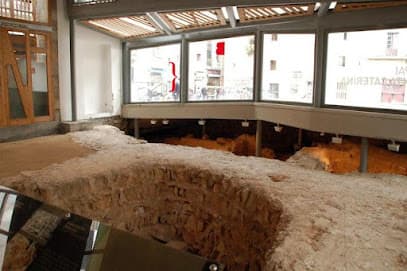
Most people come to this part of the Ciutat Vella to eat, and they should. But MUHBA Santa Caterina offers a different kind of sustenance. It’s an archaeological site that serves as the city’s basement, revealing the layers of human ambition that have occupied this patch of dirt for nearly two thousand years. You aren't here for polished marble or high-tech holograms. You’re here to see the bones of the Convent de Santa Caterina, a Dominican powerhouse that once dominated this skyline before the city decided it needed a marketplace more than it needed monks.
When the market was being renovated in the late 90s, the excavators hit stone. Not just any stone, but a vertical timeline of Barcelona. As you walk the metal gangways, you’re looking at late Roman burials from the 4th century—people who lived and died when this was a colonial outpost of an empire that thought it would last forever. Above those are the foundations of a medieval city, and then the massive, brooding remains of the Gothic convent itself. The Dominicans were here for centuries until the 1835 riots saw the place torched, eventually leading to its demolition in 1837. The city didn't mourn; they just paved over the ruins and started selling vegetables.
There is something deeply honest about this space. It’s cool, dim, and smells faintly of damp earth and old stone. It’s the antithesis of the tourist-choked Rambla just a few blocks away. Here, the history isn't dressed up for a postcard. You see the structural scars of a city that has constantly torn itself down to build something new. The contrast is the point: upstairs, the frantic commerce of the living; downstairs, the silent architecture of the forgotten. It’s a place for the history nerds, the quiet seekers, and anyone who wants to understand that Barcelona isn't just a collection of Gaudí buildings—it’s a living organism built on the debris of its ancestors.
Don’t expect a three-hour epic. It’s a small site, an 'Espai de Memòria' that you can absorb in thirty minutes. But those thirty minutes will change how you walk through the streets above. You’ll realize that every time you step on a cobblestone in the Gothic Quarter, you’re walking on someone’s roof, someone’s church, or someone’s grave. It’s a humbling, necessary perspective to have before you go back upstairs to fight for a stool at a tapas bar and order another glass of vermouth. The dead don't mind; they’ve seen it all before.
Type
Museum, Tourist attraction
Duration
30-45 minutes
Best Time
Weekday mornings when the market is active but the museum space remains quiet.
What People Say
archeological(2)market(2)
Features
Museum
Tourist attraction
Categories
ArchaeologyHistoryGothicRoman
Ticket Prices
Free Admission
No tickets required
Opening Hours
- Monday8:30 AM to 3:30 PM
- Tuesday8:30 AM to 3:30 PM
- Wednesday8:30 AM to 3:30 PM
- Thursday8:30 AM to 3:30 PM
- Friday8:30 AM to 3:30 PM
- Saturday8:30 AM to 3:30 PM
- SundayClosed
Must-See Highlights
The 4th-century Roman necropolis
The foundations of the Gothic apse of the Santa Caterina Convent
The interpretive panels explaining the 1835 destruction of the site
Visitor Tips
The entrance is slightly tucked away inside the market building; look for the MUHBA signage near the rear.
Combine this with a visit to the market stalls for a perfect 'then and now' experience of Barcelona life.
Check the official website for current hours as they can be more limited than the market's operating times.
Good For
History buffsBudget travelersArchitecture studentsSolo travelers
Why Visit
Archaeological ruins located directly beneath a functioning modern food market
Spans history from the 4th-century Roman era to the 19th-century industrial age
One of the few quiet, contemplative historical sites in the busy El Born/Sant Pere area
Nearby Landmarks
- 1-minute walk from Santa Caterina Market
- 5-minute walk from Barcelona Cathedral
- 7-minute walk from Palau de la Música Catalana
- 8-minute walk from Picasso Museum
Accessibility
- Wheelchair accessible via elevator
- Level gangways for viewing ruins
Location
Carrer d'En Giralt el Pellicer, 25
Ciutat Vella, Barcelona
Nearby Hotels
Nearby Restaurants
In Ciutat Vella
ATTRACTION
Park
Ciutat Vella
A thousand years of silence tucked behind a Romanesque monastery, where the grit of El Raval dissolves into ancient stone, cool shadows, and the heavy weight of history.
0.0(0)
Park
ATTRACTION
BARSHELONA
Ciutat Vella
Forget the plastic bulls and tacky magnets. This is where Barcelona’s soul is bottled into art, a small sanctuary of local design hidden in the shadows of the Gothic Quarter.
0.0(0)
Tourist attraction
ATTRACTION
Minajoe art
Ciutat Vella
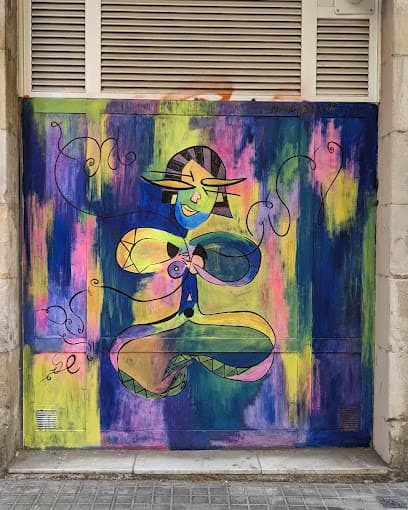
A raw, paint-splattered antidote to the sterile museum circuit. This is where pop-art meets the grit of the street, served straight from the artist’s hands in the heart of old Barcelona.
0.0(0)
Tourist attraction
Frequently Asked Questions
Is MUHBA Santa Caterina worth visiting?
Yes, especially if you are already visiting the Santa Caterina Market. It is a quick, often free look at the city's archaeological layers that provides a deep sense of history without the crowds.
What should I see at MUHBA Santa Caterina?
Focus on the 4th-century Roman burial remains and the massive foundations of the 13th-century Dominican convent which were unearthed during the market's renovation.
How do I get to MUHBA Santa Caterina?
It is located inside the Santa Caterina Market in the Ciutat Vella. The nearest Metro station is Jaume I (L4), about a 5-minute walk away.
Reviews
0 reviews for MUHBA Santa Caterina
No reviews yet. Be the first to share your experience!