4.4
3,207 verified reviews
About
For years, this thing was just a giant, neon-lit phallus on the horizon—the Torre Agbar, a Jean Nouvel-designed bullet that everyone looked at but nobody could actually enter. It was a corporate monolith, a closed circuit. That changed. Now rebranded as Torre Glòries, the top floor has been hollowed out and handed over to the public, and frankly, it’s about time. This isn’t your typical 'stand-and-stare' observation deck where you pay twenty euros to look through a smudged window at a cathedral you’ve already seen. It’s a high-altitude, data-driven trip that feels more like a set piece from a Kubrick film than a tourist stop.
You start in the basement, in a place they call 'Hyperview.' Forget dusty dioramas or boring plaques about urban planning. This is a dark, immersive cavern of screens and sensors that attempts to visualize the 'pulse' of Barcelona in real-time. It tracks the wind, the noise levels, the movement of the sea, and even the flight patterns of the local birds. It’s weird, it’s a little pretentious, and it’s undeniably cool. It sets the stage: you aren’t just looking at a city; you’re looking at a living, breathing organism that’s constantly sweating, eating, and moving.
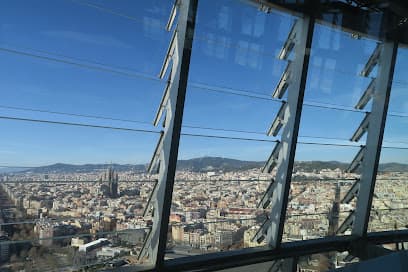
Then comes the elevator. It’s fast, it’s smooth, and it deposits you on the 30th floor, 125 meters up, inside a massive glass dome. This is the 'Mirador.' Because the building is circular, you get a true 360-degree sweep. To the north, the rugged hills of Collserola; to the east, the Mediterranean shimmering like a sheet of hammered lead; and right below you, the rigid, geometric madness of the Eixample grid, sliced through by the Diagonal. From here, the Sagrada Família looks like a sandcastle being slowly reclaimed by the tide. You see the chimneys of the old factories in Poblenou, the tech hubs of the 22@ district, and the sprawling chaos of the Glòries construction site—a project that’s been 'almost finished' for what feels like a century.
But the real reason you’re here—the thing that makes this place worth the climb—is 'Cloud Cities Barcelona.' It’s a massive, interactive sculpture by Tomás Saraceno, a web of cables and panels suspended right in the crown of the dome. It looks like a giant, metallic spiderweb or a cluster of soap bubbles frozen in mid-air. If you’ve got the nerve (and the right shoes), you can actually climb into it. It’s a physical, visceral experience. You’re suspended over the void, crawling through a geometric jungle gym while the city sprawls out beneath your feet. It’s quiet up there, save for the creak of the cables and the distant hum of the ventilation. It’s the closest you’ll get to feeling like you’re floating over the Catalan capital without a parachute.
Is it a tourist trap? Maybe a little. The gift shop is there, the prices are what they are, and the 'Hyperview' might be a bit much for someone just looking for a nice photo. But the view is undeniable, and the Saraceno sculpture is a genuine piece of art that demands you engage with it physically. It’s a perspective shift. It’s the 'new' Barcelona—the one that’s obsessed with data, design, and looking forward rather than backward. If you’re tired of the Gothic Quarter’s narrow alleys and want to see the city for the sprawling, ambitious, slightly chaotic machine it actually is, this is where you go. Just don't look down if you're prone to vertigo.
Type
Observation deck, Scenic spot
Duration
1-2 hours
Best Time
Sunset for the best lighting over the city and the transition to the building's night illumination.
Audio Guide
Available
What People Say
exhibition(229)elevator(95)sculpture(59)muy interesante(53)the cloud(32)basement(23)dome(16)audio visual(13)
Features
Observation deck
Scenic spot
Tourist attraction
Categories
ArchitectureContemporary ArtScenic ViewsTechnology
Ticket Prices
adult€15.00
child€12.00
senior€12.00
Opening Hours
- Monday9:30 AM to 6:30 PM
- TuesdayClosed
- Wednesday9:30 AM to 6:30 PM
- Thursday9:30 AM to 6:30 PM
- Friday9:30 AM to 6:30 PM
- Saturday9:30 AM to 6:30 PM
- Sunday9:30 AM to 6:30 PM
Must-See Highlights
The 360-degree panoramic view from the 30th floor
The Cloud Cities interactive sculpture (requires physical climbing)
The real-time data visualizations in the Hyperview basement gallery
Visitor Tips
Wear comfortable, closed-toe shoes if you plan to climb the Cloud Cities sculpture; skirts and loose jewelry are not recommended.
The dome can get quite warm on sunny days due to the greenhouse effect, so dress in layers.
Check the weather before booking, as visibility is the main draw here.
Good For
Architecture enthusiastsPhotography loversTech and data geeksFamilies with older children
Why Visit
The only 360-degree unobstructed indoor viewpoint in Barcelona
Cloud Cities: A world-first interactive permanent sculpture by Tomás Saraceno
Hyperview Barcelona: A data-driven, immersive exhibition about the city's real-time pulse
Nearby Landmarks
- Disseny Hub Barcelona (2-minute walk)
- Mercat dels Encants (5-minute walk)
- Westfield Glòries Shopping Centre (3-minute walk)
- Can Framis Museum (10-minute walk)
Accessibility
- Fully wheelchair accessible (except for the Cloud Cities sculpture)
- Elevator access to all floors
- Accessible restrooms
Location
Av. Diagonal, 209
Sant Martí, Barcelona
Nearby Hotels
Nearby Restaurants
In Sant Martí
ATTRACTION
LOS CERDINS HOUSE
Sant Martí
A raw, repurposed industrial relic in the heart of Sant Martí, Los Cerdins House is a testament to the neighborhood's manufacturing soul, where red-brick history meets the sharp, creative edge of modern Barcelona.
0.0(0)
Tourist attraction
ATTRACTION
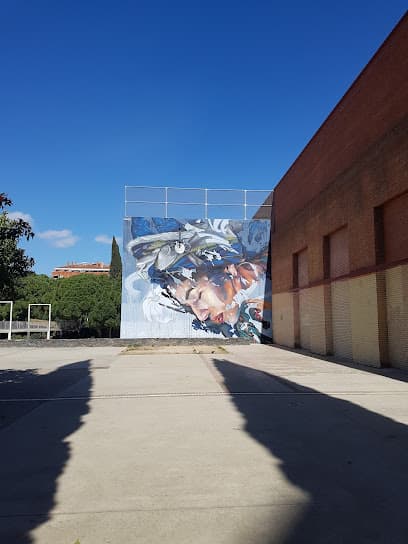
Pista de frontó
Sant Martí
A sun-baked slab of concrete where the rhythmic thwack of a ball against stone serves as the soundtrack to a neighborhood still clinging to its gritty, industrial Poblenou soul.
0.0(0)
Park
ATTRACTION
Saraya Express
Sant Martí
A specialized travel outpost tucked away in Sant Martí. Saraya Express is where the logistics of a trip to Cairo meet the grit of Barcelona’s daily grind, far from the tourist-trap fluff.
0.0(0)
Tourist attraction
Frequently Asked Questions
Is Mirador Torre Glòries worth visiting?
Yes, especially if you want a 360-degree view that includes the sea and the Eixample grid. Unlike other viewpoints, it offers the 'Cloud Cities' interactive sculpture, which is a unique physical experience you won't find elsewhere in the city.
What is the Cloud Cities sculpture?
It is a suspended walk-through installation by artist Tomás Saraceno located at the top of the tower. Visitors can climb through its interconnected webs and panels for a unique perspective of the city, though it requires a separate ticket and closed-toe shoes.
How do I get to Mirador Torre Glòries?
The easiest way is via the L1 Metro (Red Line) to the Glòries station. It is also well-connected by the T4, T5, and T6 tram lines and several local bus routes.
Do I need to book tickets in advance?
It is highly recommended, especially if you want to experience Cloud Cities, as capacity for the sculpture is strictly limited. Booking online is usually cheaper than buying at the door.
Reviews
0 reviews for Mirador Torre Glòries
No reviews yet. Be the first to share your experience!