About
Let’s be honest: most of the 'views' in this city are sold to you. You pay your twenty-odd Euros, you stand in a line with three hundred people wearing zip-off cargo pants, and you look at the Sagrada Família through a forest of selfie sticks. It’s sanitized. It’s exhausting. But if you head up to the northern fringes of Gràcia, where the streets start to tilt at angles that make your calves scream, you find the Mirador de Joan Sales. Located right at the end of Carrer Taradell, this isn't a polished observation deck with a gift shop and a cafe selling overpriced lattes. It’s a ledge. It’s a concrete lip on the edge of the world, and it’s one of the most honest places in Barcelona.
Getting here is an act of penance. You’ll likely come up from the Vallcarca metro station, navigating a labyrinth of escalators that may or may not be functioning, passing through a neighborhood that feels worlds away from the Gothic Quarter’s Disney-fied charm. This is Vallcarca—a place of steep stairs, defiant graffiti, and laundry fluttering over narrow balconies. By the time you reach Carrer Taradell, you’ve earned the view. And what a view it is. From this vantage point, Barcelona reveals itself as a dense, chaotic sprawl of honey-colored stone and terracotta, stretching all the way to the shimmering blue line of the Mediterranean. The Sagrada Família rises out of the Eixample like a giant, holy termite mound, and the Agbar Tower glows like a neon cigar in the distance.
This is the 'back door' to the heights of the city. Just a stone's throw away is the paid, monumental zone of Park Güell, where the crowds are thick enough to choke a horse. But here, at the lookout, you’re likely to be sharing the space with a few local teenagers sharing a six-pack, an old man walking a wiry dog, or a couple of hikers who took a wrong turn and realized they found something better than their destination. There’s a quietness here that you won't find at the Bunkers del Carmel anymore, which has been discovered and subsequently overrun. The Mirador de Joan Sales remains a bit of a secret, mostly because it requires effort to reach and offers nothing but the wind and the vista.
Named after the Catalan writer who chronicled the heartbreak of the Civil War, there’s a certain melancholy to the place, especially at sunset. When the light hits the city at that low, golden angle, turning the blocks of the Eixample into a glowing grid, you understand why people fight for this city. It’s beautiful, sure, but it’s also tough. The lookout doesn't hide the scars; you can see the industrial chimneys of Poble Sec and the sprawling suburbs stretching toward the mountains. It’s the whole picture, not just the postcard version.
Is it worth the trek? If you’re looking for a guided tour and a place to buy a magnet, absolutely not. Stay on the bus. But if you want to sit on a cold stone bench, feel the breeze coming off the Collserola hills, and watch the lights of the city flicker on while the sun sinks behind Tibidabo, then yes. It’s essential. It’s the kind of place where you can actually hear yourself think, which is a rare commodity in a city that usually screams at you to buy something. Bring a bottle of decent vermouth, some olives, and a bit of respect for the neighborhood. This is one of the best free views in Barcelona, and it doesn't owe you a damn thing.
Type
Park
Features
Park
Categories
ViewpointParkPhotographyFree Attraction
Accessibility
- Steep terrain
- Limited wheelchair access due to incline
- Public escalators nearby (often under repair)
Location
Carrer Taradell, 22
Gràcia, Barcelona
Nearby

ATTRACTION
Mirador sado
50 m · Gràcia
A concrete ledge at the edge of the world where Gràcia meets the sky, offering a silent, cigarette-and-solitude view of Barcelona without a single souvenir stall in sight.
5.0(1)
Park
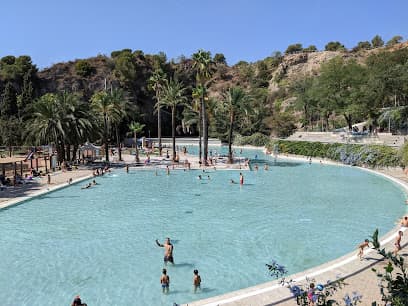
ATTRACTION
Parc de la Creueta del Coll
100 m · Gràcia
A brutalist sanctuary carved from an old quarry, where a 54-ton Chillida sculpture dangles over a turquoise swimming hole. It’s the raw, concrete soul of upper Gràcia.
4.2(4K)
ParkTourist attraction
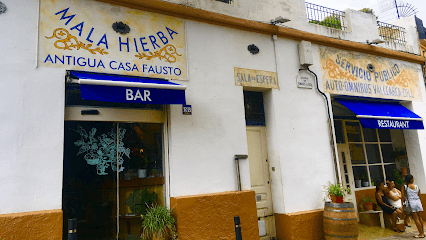
RESTAURANT
Agreste de Fabio & Roser | Restaurante gastronómico Barcelona
150 m · Gràcia
A defiant, high-altitude collision of Lombardy and Catalonia tucked away in the steep backstreets of El Coll, where the pasta is handmade and the soul is strictly 'agreste'.
4.6(1K)
Italian restaurant
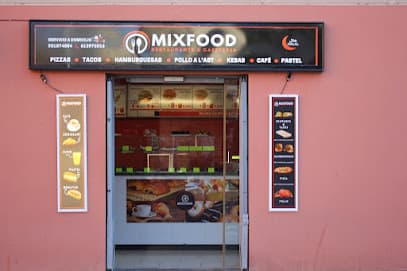
RESTAURANT
Mixfood
€200 m · Municipality of Horta-Guinardó
A no-nonsense Halal sanctuary in Horta-Guinardó where chicken tacos and crispy empanadas prove that the best fusion happens in neighborhood joints, far from the tourist-trap circus.
4.6(63)
Halal restaurant

HOTEL
Hotel Catalonia Park Güell
€650 m · Gràcia
Perched on the steep hills above the tourist fray, this is where you trade the chaos of the Ramblas for a rooftop pool and a view of Tibidabo’s neon glow.
3.9(2K)
HotelRestaurant

HOTEL
Verdi 254
€1.1 km · Gràcia
At the quiet, uphill end of Gràcia, Verdi 254 is a no-nonsense guest house for those who’d rather spend their money on vermouth than a lobby bar they’ll never use.
4.4(14)
Guest house
Frequently Asked Questions
Is Mirador de Joan Sales worth visiting?
Yes, if you want a panoramic view of Barcelona without the crowds or entrance fees of Park Güell. It offers a peaceful, local atmosphere and stunning views of the Sagrada Família and the sea.
How do I get to the lookout on Carrer Taradell?
Take Metro L3 to Vallcarca. From there, use the outdoor escalators on Baixada de la Glòria and follow the signs toward the upper entrance of Park Güell; the lookout is located at the end of Carrer Taradell.
Is there an entrance fee for the lookout?
No, the Mirador de Joan Sales is a public space and is completely free to access 24 hours a day.
What is the best time to visit?
Sunset is the most spectacular time to visit, as the city glows in golden light, though early morning offers the clearest views and the most solitude.
Reviews
0 reviews for Lookout
No reviews yet. Be the first to share your experience!