4.5
4 verified reviews
About
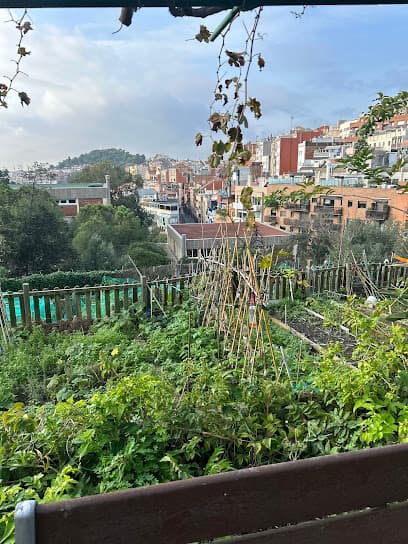
Just a few hundred yards from the gingerbread-house madness of Park Güell, where the tourist industrial complex reaches its fever pitch, there is a patch of dirt that doesn’t care about your Instagram feed. This is L'hort de l'avi—the 'Grandfather’s Garden'—and it is quite possibly the most honest piece of real estate in the entire city of Barcelona. While the crowds are busy jostling for the perfect angle of a mosaic lizard, a group of local seniors is busy with the much more important business of growing beans, tomatoes, and aromatic herbs.
To find it, you have to commit. You head up into the forestal fringes of the Gràcia district, specifically the Vallcarca i els Penitents neighborhood. As the pavement starts to feel more like a suggestion than a rule and the shade of the pines takes over, the noise of the city begins to muffle. You’re looking for Carrer del Torrent del Remei. Here, tucked away on the site of a long-vanished farmhouse, you’ll find twenty plots of earth that represent a quiet revolution that started back in 1986.
This wasn't some top-down initiative from a city planning committee. It was a grassroots demand from nineteen local retirees who wanted a place to put their hands in the soil. They petitioned the district, cleared the land, built the terraces, and laid the paths themselves. It became the first official urban garden in Barcelona, the pioneer of a movement that has since spread across the city. Today, it’s managed by the Municipal Institute of Parks and Gardens, but the soul of the place remains firmly with the 'avis' who hold the keys to the plots.
Walking through L'hort de l'avi is a grounding experience. There is the sharp, resinous scent of rosemary and thyme from the aromatic garden, the earthy funk of the individual composters, and the rhythmic sound of a hoe striking dry earth. You’ll see recycled plastic bottles rigged up as ingenious irrigation systems and trellises made of salvaged wood. It’s not 'pretty' in the way a botanical garden is pretty; it’s functional, lived-in, and slightly scruffy. It’s a place of labor and 'comidas de hermandad'—brotherhood lunches—held under the shade of the vines at the community picnic tables.
The beauty here is in the lack of pretension. The people working these plots aren't doing it for a hobby; they’re doing it because it’s who they are. They are the keepers of a horticultural tradition that the modern city has largely paved over. They invite local schoolchildren here to show them that tomatoes come from vines, not plastic-wrapped trays. It’s a classroom, a social club, and a sanctuary all rolled into one scruffy 800-square-meter lot.
Is it worth visiting? If you’re looking for a gift shop or a cafe with oat milk lattes, absolutely not. Stay down in the center. But if you want to see what Barcelona looks like when it isn't performing for a camera, come here. Stand by the community shed, breathe in the smell of damp earth and pine, and watch an old man argue with a stubborn weed. It’s a reminder that beneath the Gaudí masterpieces and the high-end tapas bars, there is a city that still knows how to get its fingernails dirty. It is a quiet, green 'fuck you' to the over-tourism happening just over the hill, and for that alone, it is essential.
Type
Garden
Duration
30-45 minutes
Best Time
Weekday mornings when the local 'avis' (grandfathers) are most active in their plots.
Features
Garden
Categories
Community GardenUrban FarmingNatureLocal Culture
Ticket Prices
Free Admission
No tickets required
Must-See Highlights
The aromatic herb garden
The community picnic area under the vines
The ingenious DIY irrigation systems used by the gardeners
Views of the city through the pine trees
Visitor Tips
Be respectful of the gardeners; this is their community space, not a tourist attraction.
Combine this with a visit to the less-crowded forestal side of Park Güell.
Wear comfortable walking shoes as the area is hilly and the paths are unpaved.
Good For
Nature loversUrban explorersPhotography enthusiastsSlow travelers
Why Visit
Barcelona's first official urban garden, founded in 1986
Located in the quiet, forestal 'backyard' of Park Güell
A genuine community space run by local seniors
Nearby Landmarks
- 10-minute walk from the forestal entrance of Park Güell
- 12-minute walk from the Viaducte de Vallcarca
- 15-minute walk from the Vallcarca Metro station (L3)
Accessibility
- Outdoor dirt paths
- Some inclines due to hilly location
- Limited wheelchair accessibility in certain plot areas
Location
Carrer del Torrent del Remei, 14
Gràcia, Barcelona
Nearby Hotels
Nearby Restaurants
In Gràcia
ATTRACTION
Maison Sara
Gràcia
Forget the mass-produced kitsch on La Rambla. This is Gràcia at its best: a tactile, clay-smeared workshop where the art is as raw and honest as the neighborhood itself.
0.0(0)
Tourist attraction
ATTRACTION
Intercambiador de libros
Gràcia
A humble, weather-beaten box in the hills of Vallcarca where local history is traded one dog-eared paperback at a time. No tourists, no Wi-Fi, just paper and community.
0.0(0)
Park
ATTRACTION
View
Gràcia
Forget the elbow-to-elbow chaos of Park Güell. This is the raw, vertical soul of Gràcia, where the city unfolds in a silent, sun-drenched sprawl at your feet.
0.0(0)
Garden
Frequently Asked Questions
Is L'hort de l'avi worth visiting?
Yes, if you want to see an authentic, non-touristy side of Barcelona. It's a peaceful community garden that offers a stark contrast to the nearby crowded attractions like Park Güell.
Can anyone garden at L'hort de l'avi?
No, the plots are reserved for local residents over the age of 65 who have been granted a municipal license. However, the public can usually walk through and enjoy the space.
How do I get to L'hort de l'avi?
It is located in the Gràcia/Vallcarca area. The easiest way is to take the L3 Metro to Vallcarca and walk up the hill toward the forestal side of Park Güell.
Is there an entrance fee for the garden?
No, entrance to the garden area is free as it is a municipal public space, though the individual cultivation plots are private.
Reviews
0 reviews for L'hort de l'avi
No reviews yet. Be the first to share your experience!