4.3
602 verified reviews
About
Las Ramblas is the most famous street in Spain, and for many locals, it’s a wound that won’t heal. It is a 1.2-kilometer conveyor belt of human desire, desperation, and history, stretching from the sun-drenched chaos of Plaça de Catalunya down to the salt-crusted edge of the Mediterranean. It’s a place where the city’s grandest architecture rubs shoulders with the kind of tourist traps that would make a carnival barker blush. If you’re looking for the 'real' Barcelona, you won't find it in the frozen, yellow-tinted paella served on the terraces here, but you might find it in the cracks between the souvenir stands.
To understand Las Ramblas, you have to understand what it was: a 'raml,' an Arabic word for a sandy riverbed. It was a seasonal torrent that divided the ancient Roman city from the sprawling fields of El Raval. Today, that torrent is made of people. On any given afternoon, you are part of a slow-moving, multi-national organism. You’ll pass the Font de Canaletes at the top—a modest iron fountain where legend says if you drink the water, you’re destined to return to Barcelona. It’s also where FC Barcelona fans gather to celebrate titles, a sea of blue and garnet turning the street into a riot of joy.
As you move south, the character shifts. You’ll hit the flower stalls, the 'Floristes de la Rambla,' which are the last vestige of the street’s 19th-century elegance. Then there’s the Mercat de Sant Josep de la Boqueria. It is, quite simply, one of the greatest food markets on the planet, though these days it’s a temple being desecrated by selfie sticks. If you can push past the crowds at the entrance, head to the back. Find a stool at El Quim or Pinotxo (now Mingo) and eat chickpeas with calamari or fried eggs with baby squid. That is the visceral, edible heart of the city, surviving despite the madness outside.
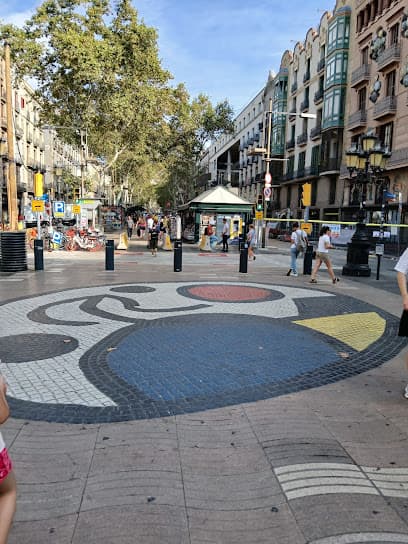
Look down, or you’ll miss the art. Right in the middle of the pavement, near the Liceu Opera House, is a circular tile mosaic by Joan Miró. Thousands of tourists stomp over it every hour, oblivious to the fact they are walking on a masterpiece. This is the Rambla in a nutshell: world-class culture hiding in plain sight, obscured by the noise of a thousand cheap magnets and 'I Love BCN' t-shirts.
We have to talk about the dark side. Las Ramblas is a professional league for pickpockets. They are artists of the distraction, masters of the 'bump and run.' If you’re wandering around with your mouth open and your backpack hanging off one shoulder, you’re not a traveler; you’re a target. And then there are the 'human statues'—performers who have spent decades perfecting the art of standing still for spare change. Some are brilliant; some are just guys in spray-painted suits looking for a payday.
Currently, the street is undergoing a massive, multi-year renovation aimed at reclaiming the space for residents. It’s messy, there’s construction fencing everywhere, and the traffic flow is a nightmare. But maybe, just maybe, when the dust settles in 2025 and beyond, the Rambla will breathe again. For now, it remains a mandatory rite of passage. It’s loud, it’s shambolic, and it’s occasionally infuriating. But to ignore it is to ignore the very artery that pumps the blood through the Ciutat Vella. Walk it at 7:00 AM when the light is hitting the plane trees and the street sweepers are the only ones awake. That’s when the ghost of the old Barcelona still lingers.
Type
Tourist attraction, Hiking area
Duration
1-2 hours
Best Time
Early morning (7:00 AM - 9:00 AM) to avoid the peak tourist rush and see the flower stalls opening.
Guided Tours
Available
What People Say
walk(20)pickpockets(12)avenue(11)souvenirs(11)architecture(8)port(7)plaça de catalunya(6)strolling(6)
Features
Tourist attraction
Hiking area
Categories
ArchitecturePublic SpaceHistoryMarket
Ticket Prices
Free Admission
No tickets required
Must-See Highlights
Font de Canaletes
Boqueria Market
Joan Miró Mosaic
Liceu Opera House
The flower stalls (Floristes de la Rambla)
Visitor Tips
Never eat at the outdoor terraces on the main street; walk two blocks into El Raval or the Gothic Quarter for better, cheaper food.
Keep your hand on your wallet at all times, especially near the street performers.
Look up at the balconies; the architecture above the shop signs is often stunning 19th-century design.
Good For
PhotographyHistory buffsPeople watchingFirst-time visitors
Why Visit
The historic Boqueria Market, a legendary labyrinth of fresh produce and hidden tapas bars
The Joan Miró mosaic embedded directly into the pedestrian pavement
The Font de Canaletes, where drinking the water guarantees a return to the city
Nearby Landmarks
- Plaça de Catalunya - 1-minute walk
- Mercat de la Boqueria - 0-minute walk (on the street)
- Gran Teatre del Liceu - 0-minute walk (on the street)
- Plaça Reial - 2-minute walk
- Columbus Monument - 1-minute walk from the southern end
Accessibility
- Fully pedestrianized central walkway
- Flat terrain
- Accessible Metro stations (Catalunya, Liceu, Drassanes) with elevators
Location
Ciutat Vella, Barcelona
Nearby Hotels
Nearby Restaurants
In Ciutat Vella
ATTRACTION
Park
Ciutat Vella
A thousand years of silence tucked behind a Romanesque monastery, where the grit of El Raval dissolves into ancient stone, cool shadows, and the heavy weight of history.
0.0(0)
Park
ATTRACTION
BARSHELONA
Ciutat Vella
Forget the plastic bulls and tacky magnets. This is where Barcelona’s soul is bottled into art, a small sanctuary of local design hidden in the shadows of the Gothic Quarter.
0.0(0)
Tourist attraction
ATTRACTION
Minajoe art
Ciutat Vella
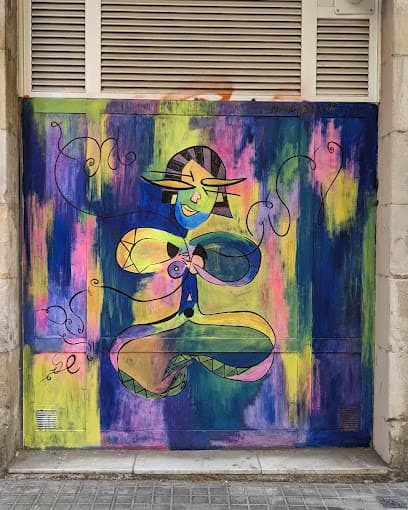
A raw, paint-splattered antidote to the sterile museum circuit. This is where pop-art meets the grit of the street, served straight from the artist’s hands in the heart of old Barcelona.
0.0(0)
Tourist attraction
Frequently Asked Questions
Is Las Ramblas worth visiting?
Yes, for the history and landmarks like the Boqueria and Miró mosaic, but it is highly commercialized. Visit early in the morning to appreciate the architecture without the suffocating crowds.
Are there pickpockets on Las Ramblas?
Yes, it is notorious for petty theft. Keep your bags in front of you, avoid keeping valuables in back pockets, and be wary of anyone trying to distract you with maps or petitions.
What is the best time to visit Las Ramblas?
Early morning (before 9:00 AM) is best for a peaceful walk. Late at night offers a different, grittier energy, but the midday heat and crowds can be overwhelming.
How long is Las Ramblas?
The pedestrian boulevard is approximately 1.2 kilometers (0.75 miles) long, taking about 20 minutes to walk at a steady pace, though much longer if you stop at the market or shops.
Reviews
0 reviews for Las ramblas
No reviews yet. Be the first to share your experience!