4.0
3 verified reviews
About
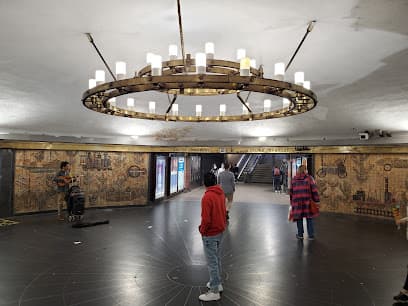
Barcelona is a city that wears its heart on its sleeve, but its guts are a different story. If you want to see the real machinery of the place, you have to go down. Not to the fancy wine cellars or the Roman ruins, but into the humid, ozone-scented belly of the Plaça Catalunya transit hub. There, in a circular lobby that feels like the bridge of a 1960s starship, sits 'La rotonda dels transports.'
Commissioned in 1966 and inaugurated in 1969, this isn't just a wall decoration; it’s a six-panel ceramic manifesto on how we get from point A to point B. Created by the heavy hitters of the Escola Massana—specifically Francesc Albors and Manuel del Río—it’s a sprawling work of gres (stoneware) that captures the frantic, optimistic energy of the mid-century. The Escola Massana, Barcelona's legendary school of art and design, didn't just teach technique; they taught how to weave the city’s identity into the very walls of its infrastructure, using the grit of the earth to tell the story of the future. While the world above was arguing about politics, these artists were down here firing clay to celebrate the steam engine, the hot air balloon, and the clunky, beautiful ancestors of the modern automobile.
Walking into the 'rotonda' (the circular lobby connecting the Metro L1 and L3 with the FGC lines) is a collision of noise and motion. You’ve got the screech of trains, the frantic clicking of turnstiles, and the relentless tide of people who are late for something important. In the middle of this chaos, the mural stands still. It’s a series of panels, some stretching over six meters, depicting everything from primitive flying machines to early submarines. The style is quintessentially 1960s—angular, slightly abstract, and deeply industrial. The textures of the stoneware are tactile and rough, a deliberate choice by Albors and del Río to contrast with the sleek, metallic surfaces of the trains themselves. It’s the kind of art that believed technology would save us before we realized it might just make us more efficient at being stressed.
For decades, this mural was the city’s most ignored resident. It gathered the grime of a million commutes, its textures muted by dust and neglect. But in 2018, a major restoration project brought the 'Rotonda' back to life. The brass elements gleam again, the lighting has been restored to its original 1960s warmth, and the ceramic tiles pop with the intensity of a freshly fired kiln. It’s a reminder that even in the most utilitarian spaces—the places where we just want to get through as fast as possible—there is room for something human, something that demands we slow down even when the schedule says otherwise.
Is it an essential stop in the traditional sense? Probably not if you’re only here for three days and want to tick off the Gaudí boxes. But if you give a damn about the soul of a city, about the art that lives where the people actually live (and sweat, and run), then it’s vital. It’s one of the best things to do in Ciutat Vella if you want to escape the sun and the selfie sticks for ten minutes. Stand there for a moment. Watch the commuters blur past the ceramic steamships. It’s a visceral reminder that we’re all just moving through, part of a long, clattering history of transport that started with a wheel and ended up here, in the dark, under the heart of Barcelona.
Type
Tourist attraction
Duration
15-30 minutes
Best Time
Mid-morning (10:30 AM - 12:30 PM) to avoid the commuter rush.
Features
Tourist attraction
Categories
Public ArtCeramicsModernismTransit
Ticket Prices
adult€2.55
child€2.55
senior€2.55
Must-See Highlights
The Submarine Panel: A detailed ceramic depiction of early underwater exploration.
The Central Column: Narrow panels that wrap around the structural supports of the lobby.
Restored Brass Lamp: The central lighting fixture that anchors the circular space.
Visitor Tips
Look for the signature of Escola Massana on the largest panel near the Rivadeneyra exit.
Combine this with a visit to the nearby Canaletes Fountain on La Rambla.
The mural is best viewed by walking the full circle of the lobby to see the chronological progression of the transport themes.
Good For
Art loversHistory buffsArchitecture studentsBudget travelers
Why Visit
1960s Avant-Garde: A rare, large-scale ceramic work from the peak of Barcelona's mid-century design movement.
Restored Brilliance: Renovated in 2018, featuring original brass fixtures and corrected lighting.
Transit Narrative: A unique visual history of human transportation, from balloons to submarines, hidden underground.
Nearby Landmarks
- 1-minute walk from Plaça de Catalunya
- 2-minute walk from La Rambla
- 5-minute walk from El Corte Inglés
- 8-minute walk from Palau de la Música Catalana
Accessibility
- Elevator access available
- Tactile paving
- Wheelchair accessible lobby
Location
Ciutat Vella, Barcelona
Nearby Hotels
Nearby Restaurants
In Ciutat Vella
ATTRACTION
Park
Ciutat Vella
A thousand years of silence tucked behind a Romanesque monastery, where the grit of El Raval dissolves into ancient stone, cool shadows, and the heavy weight of history.
0.0(0)
Park
ATTRACTION
BARSHELONA
Ciutat Vella
Forget the plastic bulls and tacky magnets. This is where Barcelona’s soul is bottled into art, a small sanctuary of local design hidden in the shadows of the Gothic Quarter.
0.0(0)
Tourist attraction
ATTRACTION
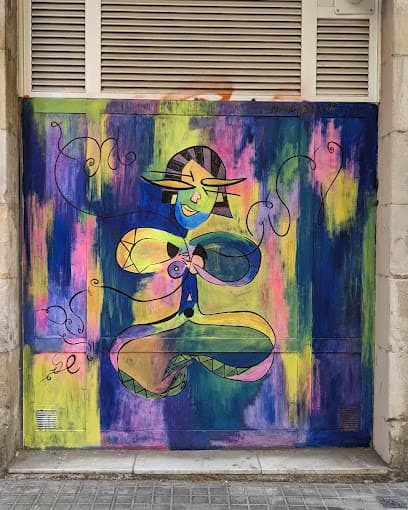
Minajoe art
Ciutat Vella
A raw, paint-splattered antidote to the sterile museum circuit. This is where pop-art meets the grit of the street, served straight from the artist’s hands in the heart of old Barcelona.
0.0(0)
Tourist attraction
Frequently Asked Questions
Is La rotonda dels transports worth visiting?
Yes, especially for fans of mid-century modern art and industrial design. It's a rare example of high-quality 1960s public art integrated into a functional transit space, recently restored to its original glory.
Where exactly is the mural located?
It is located in the circular underground lobby (the 'rotonda') of the Plaça Catalunya station, which serves as the interchange between Metro Lines 1 and 3 and the FGC (Ferrocarrils de la Generalitat) trains.
Do I need a ticket to see it?
Most of the panels are located in the public lobby area or near the ticket gates. While you can see parts of it for free, you may need a standard metro ticket (€2.55 or a T-casual) to access the full circular walkway where all six panels are displayed.
What is the best time to visit?
Avoid peak commuting hours (8:00–9:30 AM and 5:30–7:30 PM) if you want to actually look at the art without being trampled. Mid-morning or late evening offers a much calmer experience.
Reviews
0 reviews for La rotonda dels transports (1966)
No reviews yet. Be the first to share your experience!