4.6
98,393 verified reviews
About
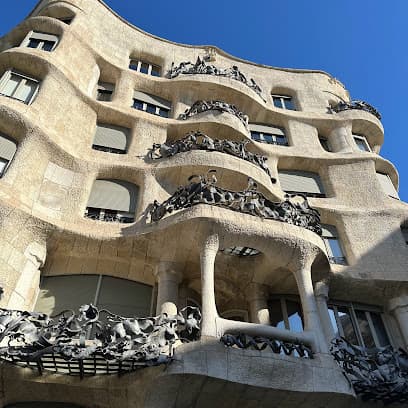
When Antoni Gaudí finished Casa Milà in 1912, the locals didn’t throw him a parade. They called it 'La Pedrera'—the quarry. It was meant as an insult, a jab at the building’s raw, undulating stone facade that looked more like a jagged cliffside than a respectable bourgeois residence. Today, that insult is a badge of honor. This isn't just a building; it’s a middle finger to the straight line, a visceral, limestone-and-iron manifestation of a man who decided that nature was the only architect worth following. If you’re looking for the best Gaudí buildings in Barcelona, this is the one that shows you his brain without the colorful makeup of Casa Batlló.
Walking up to the corner of Passeig de Gràcia and Carrer de Provença, the scale hits you first. There are no load-bearing walls here; the whole thing is supported by a forest of stone and steel columns, allowing the facade to curve and ripple like the Mediterranean on a choppy day. The wrought-iron balconies, twisted and gnarled by Josep Maria Jujol, look like seaweed washed up on a beach. It’s heavy, imposing, and completely unapologetic. You don’t just look at La Pedrera; you feel the weight of it.
Inside, the experience starts in the courtyards—the Butterfly and the Flower. They are massive light wells that pull the sky down into the center of the building, painted in hues that make you feel like you’re standing at the bottom of a very expensive pond. But the real magic happens as you move upward. The attic, or the 'Espai Gaudí,' is a masterclass in structural obsession. It’s composed of 270 catenary arches made of plain brick, creating a space that feels like the inside of a whale’s ribcage. This is where you see the genius stripped bare—no mosaics, no distractions, just the pure geometry of the arch. It’s quiet, haunting, and arguably the most honest space Gaudí ever designed.
Then there’s the roof. This is why you paid the admission fee. The 'Garden of Warriors' is a surrealist landscape of chimneys and ventilation shafts disguised as helmeted giants. They stand guard over the Eixample district, their stone faces weathered and stoic. From here, you get a framed view of the Sagrada Família through one of the archways—a reminder that Gaudí’s work is a conversation happening across the entire city. It’s one of the best views in Barcelona, but it’s also a deeply strange one. You’re walking on a floor that rises and falls like a sand dune, surrounded by guardians that look like they belong in a galaxy far, far away.
Is La Pedrera worth it? If you want to understand why Barcelona looks the way it does, yes. It’s expensive, and the crowds can be a grind, but there is a soul in this stone that you won’t find in the polished tourist traps. It’s a reminder that great art usually starts by pissing everyone off. Even now, a few private residents still live in the upper floors, their laundry drying just a few feet away from thousands of camera-wielding tourists. It’s a living, breathing piece of the city, stubborn and beautiful in its refusal to be normal. Skip the midday rush, book a sunset slot, and watch the light hit those stone warriors. It’s the closest you’ll get to seeing the world through Gaudí’s eyes.
Type
Historical landmark, Cultural center
Guided Tours
Available
Audio Guide
Available
What People Say
gaudi(6466)audio guide(1477)genius(758)sagrada familia(581)attic(554)roof terrace(150)ticket(137)park guell(136)
Features
Historical landmark
Cultural center
Museum
Tourist attraction
Categories
ArchitectureUNESCOGaudíModernismMuseum
Opening Hours
- Monday9 AM to 6:30 PM, 7 to 11 PM
- Tuesday9 AM to 6:30 PM, 7 to 11 PM
- Wednesday9 AM to 6:30 PM, 7 to 11 PM
- Thursday9 AM to 6:30 PM, 7 to 11 PM
- Friday9 AM to 6:30 PM, 7 to 11 PM
- Saturday9 AM to 6:30 PM, 7 to 11 PM
- Sunday9 AM to 6:30 PM, 7 to 11 PM
Accessibility
- Wheelchair accessible (except for the roof terrace, though a lift provides access to a flat section)
- Audio guides available in multiple languages
- Tactile models for the visually impaired
Location
Pg. de Gràcia, 92
Eixample, Barcelona
Nearby
ATTRACTION
Casa Enric Batlló
150 m · Eixample
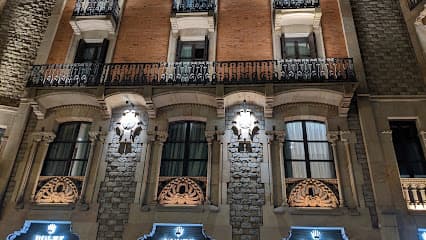
The 'other' Batlló house—a red-brick neo-Gothic masterpiece by Josep Vilaseca that offers a quiet, dignified middle finger to the crushing crowds down the street at Gaudí’s place.
4.8(41)
MuseumTourist attraction
ATTRACTION
Jardins de Laura Albèniz Jordana
200 m · Eixample
A concrete-and-green sanctuary tucked inside an Eixample block, where the city’s frantic pulse drops to a whisper and the ghost of a forgotten artist watches over the benches.
0.0(0)
Garden
RESTAURANT
Ponte Milvio Bistro
€€50 m · Eixample
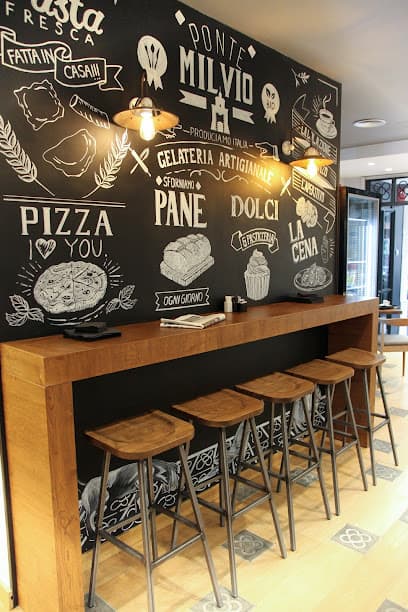
A Roman-style sanctuary in the shadow of Casa Milà, where pinsa romana and pistachio croissants offer a carb-heavy escape from the Eixample tourist gauntlet.
4.2(218)
Italian restaurant
RESTAURANT
Assunta Madre
50 m · Eixample
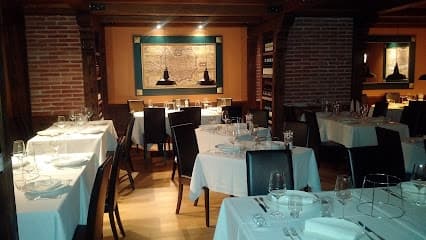
A temple of high-end Italian seafood where the catch of the day sits on ice like stolen jewels. Expect white tablecloths, Roman swagger, and the freshest crudo in Eixample.
4.3(476)
Italian restaurantMediterranean restaurant
HOTEL
Royal Passeig de Gràcia
€€€100 m · Eixample
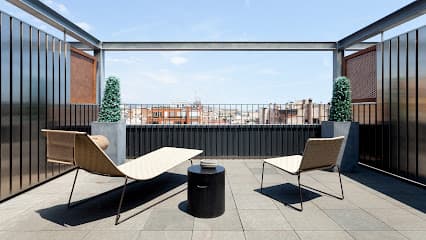
A four-star hotel on Passeig de Gràcia in the Eixample, rated 4.3 from 1,510 Google reviews that mention the roof and cocktails most.
4.3(1K)
Hotel
HOTEL
Hotel Passeig de Gràcia
€€100 m · Eixample
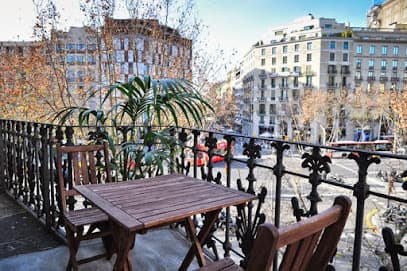
A one-star reality check on a five-star boulevard. No gold leaf, no pretension—just a clean, honest room in the absolute center of Barcelona’s high-rent architectural fever dream.
4.4(323)
Hotel
Frequently Asked Questions
Is La Pedrera worth visiting if I've already seen Casa Batlló?
Yes, they are completely different experiences. While Casa Batlló is about color and light, La Pedrera focuses on revolutionary structure, the catenary arches in the attic, and the iconic warrior-themed roof terrace.
How long do you need at La Pedrera?
Plan for 1.5 to 2 hours. This gives you enough time to explore the courtyards, the recreated early 20th-century apartment, the Gaudí exhibition in the attic, and the extensive roof terrace.
Do I need to book Casa Milà tickets in advance?
Absolutely. Booking online is cheaper than buying at the box office and allows you to select a specific time slot, which is essential for avoiding the massive queues on Passeig de Gràcia.
What is the best time to visit La Pedrera?
Early morning (9:00 AM) is best for fewer crowds, but the 'La Pedrera Night Experience' offers a spectacular light show on the roof terrace that is worth the extra cost.
Reviews
0 reviews for La Pedrera - Casa Milà
No reviews yet. Be the first to share your experience!