4.8
41 verified reviews
About
You’re walking up the Passeig de Gràcia, the sun is beating down on the hexagonal paving stones, and you’re surrounded by a sea of people clutching maps and looking for the house that looks like it was designed by a man on a very specific kind of mushroom trip. That’s Casa Batlló, at number 43. It’s beautiful, sure, but it’s also a circus. If you keep walking, past the luxury boutiques and the overpriced cafes, you hit number 75. This is Casa Enric Batlló. It’s the quiet sibling. The one who stayed in school, wore a suit, and didn’t feel the need to turn a chimney into a ceramic dragon. It is one of the best examples of pre-Modernista architecture in Barcelona, yet it remains blissfully ignored by the masses.
Designed by Josep Vilaseca i Casanovas—the same guy who gave Barcelona its Arc de Triomf—this place is a masterclass in what was happening in this city before Gaudí sucked all the oxygen out of the room. It was finished in 1891 for Enric Batlló, a textile tycoon who, like everyone else in the Eixample at the time, wanted to flex his wealth through masonry. But where his brother Josep went for the avant-garde and the organic, Enric went for something that felt permanent, solid, and rooted in European tradition. This is a crucial stop for anyone interested in the history of the Eixample neighborhood.
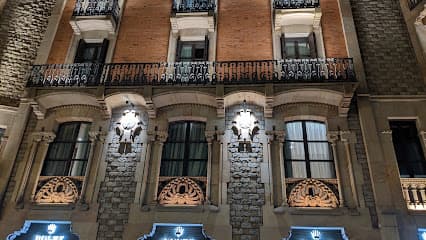
The first thing that hits you is the color. It’s not the shimmering, iridescent scales of the other house; it’s the deep, honest red of exposed brick. It feels Flemish, neo-Gothic, and slightly intimidating. The ironwork on the balconies is intricate enough to make a modern blacksmith weep, and the way the stone carvings frame the windows suggests a level of craftsmanship that we just don't see anymore in our world of glass and steel. It’s a building that demands you look up, past the storefronts of the ground floor, to see the rhythm of the facade.
Today, the building houses the Hotel Condes de Barcelona. This is where the 'tourist attraction' part gets a little blurry for some. You aren't going to find a gift shop selling Batlló-themed umbrellas here. Instead, you walk into a lobby that manages to feel both historic and sleek. The real move, the one that the locals and the savvy travelers know, is to head straight for the elevator and hit the button for the Alaire Terrace. This is one of the most sophisticated rooftop bars in the city, and it's the primary way for non-guests to experience the building's interior and views.
This is where the 'balcony' reviews come from. From the rooftop, you get a view of the Eixample that puts everything into perspective. You can see the spires of the Sagrada Família poking through the skyline like stone fingers, and you can look down on the chaos of the Passeig de Gràcia from a safe, booze-adjacent distance. It’s one of the best spots in the city to watch the light change over the grid of Ildefons Cerdà’s master plan. While there are no 'tickets' in the traditional museum sense, the 'cost' people mention is usually the price of a cocktail on the roof—a fair trade for the lack of a three-hour queue.
Is it worth it? If you’re looking for a curated museum experience with an audio guide narrated by a B-list celebrity, no. Go back down the street and wait in line with the rest of the world. But if you want to see a piece of Barcelona’s soul that hasn't been entirely commodified, if you want to appreciate the work of a man like Vilaseca who understood that architecture is about rhythm and texture as much as it is about spectacle, then yes. It’s worth every second. The Batlló family had more than one trick up their sleeve; one brother gave the world a dream, the other gave it a masterpiece of brick and mortar.
Type
Museum, Tourist attraction
Duration
45-60 minutes
Best Time
Late afternoon for the best light on the facade and sunset drinks on the roof.
What People Say
price(4)balcony(2)tickets(2)cost(2)
Features
Museum
Tourist attraction
Categories
ArchitectureModernismeHistoric BuildingRooftop Bar
Must-See Highlights
The red-brick facade and intricate ironwork balconies
The Alaire Terrace for views of Sagrada Família and La Pedrera
The grand interior staircase visible from the hotel lobby
Visitor Tips
Don't confuse this with the Gaudí house; look for number 75 on Passeig de Gràcia.
Head to the rooftop bar (Alaire) for a drink to get the best views of the surrounding Eixample architecture.
Look closely at the stone carvings around the windows; they are some of the finest in the district.
Good For
Architecture enthusiastsCouplesPhotographyAvoiding crowds
Why Visit
Josep Vilaseca Masterpiece: A rare look at the Flemish-inspired neo-Gothic style that predated Gaudí's dominance.
The Alaire Terrace: One of the best rooftop views in Barcelona without the museum-crowd madness.
Architectural Authenticity: A building that still functions as part of the city's living fabric rather than just a cordoned-off museum.
Nearby Landmarks
- 3-minute walk from Casa Milà (La Pedrera)
- 5-minute walk from Casa Batlló
- 2-minute walk from Palau Robert
- 10-minute walk from Casa Amatller
Accessibility
- Elevator access to the rooftop
- Accessible lobby and bar areas
Location
Pg. de Gràcia, 75
Eixample, Barcelona
Nearby Hotels
Nearby Restaurants
In Eixample
ATTRACTION
Mural Margalef
Eixample
A towering splash of Mediterranean blue breaking the rigid geometry of Eixample, Joan Margalef’s mural is a visceral reminder that Barcelona’s soul isn't just in its museums.
0.0(0)
Tourist attraction
ATTRACTION
Mural Margalef
Eixample
A geometric middle finger to urban decay, this massive kinetic mural by Eduard Margalef turns a drab Eixample blind wall into a rhythmic, shifting explosion of optical art.
0.0(0)
Tourist attraction
ATTRACTION
Happy Foodies
Eixample
Forget the plastic-wrapped tourist traps; this is a deep dive into the grease, garlic, and soul of Catalan cooking where you actually learn to handle a knife and a porrón.
0.0(0)
Sightseeing tour agencyTour agency
Frequently Asked Questions
Is Casa Enric Batlló the same as Gaudí's Casa Batlló?
No. While both were built for members of the Batlló family, Casa Enric Batlló (at #75) was designed by Josep Vilaseca in a neo-Gothic style, whereas the famous Gaudí house is at #43.
Can you visit the interior of Casa Enric Batlló?
The building currently houses the Hotel Condes de Barcelona. You can visit the lobby and the Alaire rooftop terrace without being a hotel guest, but there are no formal museum tours of the private rooms.
Do I need tickets for Casa Enric Batlló?
No tickets are required to view the facade or visit the rooftop bar. However, if you are part of a guided Modernisme walking tour, the tour itself will have a cost.
What is the best time to visit?
Late afternoon is best. You can admire the red-brick facade in the golden hour light and then head to the Alaire terrace for sunset views over the Eixample.
Reviews
0 reviews for Casa Enric Batlló
No reviews yet. Be the first to share your experience!