4.7
6 verified reviews
About
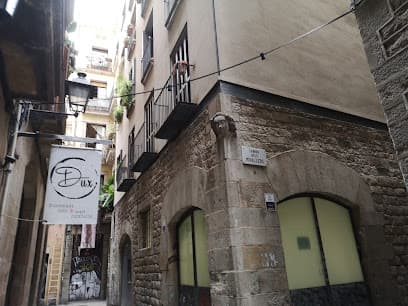
If you’re walking through the narrow, shadow-drenched veins of El Born and you feel like someone is watching you, look up. At the corner of Carrer dels Vigatans and Carrer dels Mirallers, a weathered stone face—a 'carassa'—emerges from the masonry. It’s been there since the 15th century, and it wasn't put there to look pretty. This is a relic of a Barcelona that didn't give a damn about your sensibilities. It was a functional, sweaty, maritime hub where sailors arrived with pockets full of coin and a singular, urgent set of needs.
In the 1400s, literacy was a luxury for the clergy and the elite. The average deckhand coming off a galley in the nearby port couldn't read a street sign, let alone a menu. So, the city spoke in symbols. A stone head of a woman with long, flowing hair was the universal icon for a brothel. It was the medieval equivalent of a neon 'Open' sign, signaling that pleasure was available just behind the heavy wooden doors below. While the rest of the world was building cathedrals to the divine, Barcelona was also marking its cathedrals of the flesh with the same stone-carving precision.
The Ribera district, where La Carassa resides, was the heart of this world. It was a neighborhood of guilds, merchants, and the rough-and-tumble crowd that kept the Mediterranean trade moving. Today, the area is filled with high-end boutiques and overpriced gin bars, but the Carassa remains as a stubborn reminder of the neighborhood's unvarnished roots. The carving itself is haunting—a wide-eyed, slightly grotesque face that has survived wars, plagues, and the relentless gentrification of the Ciutat Vella. It’s a piece of history that hasn't been polished for the tourists; it’s just there, staring, indifferent to the passage of time.
Finding it requires you to slow down and actually look at the architecture, something most people forget to do while hunting for the next photo op. The street itself, Carrer dels Vigatans, still retains that claustrophobic, medieval energy where the balconies almost touch and the sun only hits the pavement for twenty minutes a day. Standing under the Carassa, you can almost hear the clatter of carts and the shouting of merchants from five hundred years ago. It’s one of the few places where the 'dark' in Dark Ages feels literal.
Is it worth a detour? Absolutely. Not because it’s a grand monument, but because it’s the truth. It represents the side of Barcelona that the tourism boards usually try to bury under layers of Gaudí-inspired whimsy. It’s a testament to the city’s long history as a place of trade, vice, and survival. You don't need a ticket, you don't need to wait in line, and you don't need a guide to tell you what it means. You just need to look up and acknowledge the stone-cold reality of the 15th century staring back at you. It’s a small, visceral connection to the humans who walked these same stones centuries ago, driven by the same basic instincts that still move the world today.
Type
Tourist attraction
Duration
10-15 minutes
Best Time
Dusk, when the shadows in the narrow streets enhance the medieval atmosphere.
Features
Tourist attraction
Categories
HistoryArchitectureMedievalStreet Art
Ticket Prices
Free Admission
No tickets required
Opening Hours
- MondayOpen 24 hours
- TuesdayOpen 24 hours
- WednesdayOpen 24 hours
- ThursdayOpen 24 hours
- FridayOpen 24 hours
- SaturdayOpen 24 hours
- SundayOpen 24 hours
Must-See Highlights
The intricate carving of the woman's hair
The weathered expression of the stone face
The surrounding medieval architecture of Carrer dels Vigatans
Visitor Tips
Look up! It's easy to miss if you're staring at your phone.
Combine this with a visit to the nearby Santa Maria del Mar for a full picture of 14th-15th century life.
The street is very narrow, so watch out for local delivery scooters while you're taking photos.
Good For
History buffsPhotography enthusiastsSolo travelersBudget travelers
Why Visit
Authentic 15th-century medieval street signage
Unfiltered glimpse into Barcelona's maritime and social history
Located in one of the most atmospheric, narrow streets of El Born
Nearby Landmarks
- Basilica of Santa Maria del Mar (3-minute walk)
- Picasso Museum (4-minute walk)
- Mercat de Santa Caterina (6-minute walk)
- Plaça de Sant Jaume (8-minute walk)
Accessibility
- Public street access
- Viewable from ground level
- Narrow cobblestone streets may be challenging for some wheelchairs
Location
Carrer dels Vigatans, 10
Ciutat Vella, Barcelona
Nearby Hotels
Nearby Restaurants
In Ciutat Vella
ATTRACTION
Park
Ciutat Vella
A thousand years of silence tucked behind a Romanesque monastery, where the grit of El Raval dissolves into ancient stone, cool shadows, and the heavy weight of history.
0.0(0)
Park
ATTRACTION
BARSHELONA
Ciutat Vella
Forget the plastic bulls and tacky magnets. This is where Barcelona’s soul is bottled into art, a small sanctuary of local design hidden in the shadows of the Gothic Quarter.
0.0(0)
Tourist attraction
ATTRACTION
Minajoe art
Ciutat Vella
A raw, paint-splattered antidote to the sterile museum circuit. This is where pop-art meets the grit of the street, served straight from the artist’s hands in the heart of old Barcelona.
0.0(0)
Tourist attraction
Frequently Asked Questions
Is La Carassa worth visiting?
Yes, if you appreciate dark history and architectural curiosities. It takes only a few minutes to find and offers a raw look at the gritty, medieval social life of Barcelona.
What does the stone head signify?
In the 15th century, these stone faces (carasses) were used to mark the location of brothels, serving as visual signs for illiterate sailors and travelers.
How do I find La Carassa?
It is located high on the corner of the building at the intersection of Carrer dels Vigatans and Carrer dels Mirallers in the El Born neighborhood.
Is there an entry fee for La Carassa?
No, it is a public architectural feature located on the exterior of a building and can be viewed for free at any time.
Reviews
0 reviews for LA CARASSA - siglo xv
No reviews yet. Be the first to share your experience!