About
Barcelona’s Gothic Quarter is a masterclass in deception. It’s a place where the walls have ears, the stones have memories, and the shadows are thick enough to hide four centuries of bad decisions. Most people walk through the Barri Gòtic looking for the big hits—the Cathedral, the Plaça del Rei, the stuff that makes it into the glossy brochures. But if you want the real soul of this city, the grit that hasn't been scrubbed away by the tourism board, you have to look for the 'carasses.' Specifically, the one tucked away at Carrer de la Carabassa, number 7.
La Carassa del carrer Carabassa isn't a monument to a saint or a king. It’s a stone face, a grotesque mask built into the masonry of a building. It looks like a satyr or a demon caught mid-shout, weathered by centuries of humidity and exhaust. In the 17th century, this wasn't art; it was a signpost. Back then, if you were a sailor fresh off a boat at Port Vell with a pocket full of coins and a desperate need for company, you didn't have an app to find the red-light district. You looked for the stone faces. These carvings were the universal code for a brothel. If a house had a carassa on the corner, you knew exactly what was being sold inside.
Carrer de la Carabassa—Pumpkin Street—is one of those narrow, claustrophobic veins of the city that feels like it’s closing in on you. It’s famous for the elegant overhead bridges that connect the buildings, creating a cinematic, almost haunting atmosphere. But while everyone else is pointing their cameras at the bridges, you should be looking at the wall of number 7. The face there is a silent witness to the thousands of souls who passed through these doors when this neighborhood was the beating, sweaty heart of Barcelona’s underworld. It’s a reminder that beneath the tapas bars and the boutique hotels, there’s a layer of history that is messy, human, and unapologetically carnal.
There is something deeply honest about a city that leaves its brothel markers intact. It’s a refusal to sanitize the past. The carassa is still there, staring down at the delivery scooters and the tourists, looking just as cynical as it did three hundred years ago. It represents a time when the city was a labyrinth of illicit trades and secret codes, a place where you had to know how to read the architecture just to survive the night. It’s not 'pretty' in the traditional sense, but it’s visceral. It’s the kind of detail that makes Barcelona feel like a living organism rather than a museum.
Is it worth a detour? Absolutely. Not because it’s a grand spectacle, but because it’s a fragment of the real Barcelona. It takes thirty seconds to see, but it stays with you. It forces you to look at every other stone face in the city and wonder what secrets they’re keeping. It’s a cheap thrill in the best way possible—free, historical, and slightly scandalous. Walk down from the Basilica de la Mercè, turn into the narrow mouth of Carabassa, and find the face. It’s a small, stone reminder that the world’s oldest profession has always left its mark, even in the most beautiful corners of the Mediterranean.
Don't expect a plaque or a gift shop. There are no velvet ropes here. It’s just you, the stone, and the ghosts of a thousand sailors. It’s the kind of discovery that makes wandering the Gothic Quarter worth the inevitable blisters. It’s a piece of the puzzle that explains why this city feels so heavy with history. Just don't expect the face to smile back; it’s seen too much for that.
Type
Tourist attraction
Duration
5-10 minutes
Best Time
Early morning or dusk for the most atmospheric lighting in the narrow street.
Features
Tourist attraction
Categories
HistoryArchitectureUrban LegendGothic Quarter
Ticket Prices
Free Admission
No tickets required
Must-See Highlights
The grimacing stone face at number 7
The overhead pedestrian bridges connecting the buildings
The narrow perspective of the street looking toward La Mercè
Visitor Tips
Look up—most people walk right past it while looking at their phones.
Combine this with a visit to the nearby Basilica de la Mercè.
The street is very narrow; be mindful of the occasional delivery van or scooter.
Good For
History buffsPhotographersSolo travelersBudget travelers
Why Visit
Authentic 17th-century urban artifact
Hidden-in-plain-sight history of the city's underworld
Located on one of Barcelona's most atmospheric narrow streets
Nearby Landmarks
- Basilica de la Mercè (2-minute walk)
- Port Vell (5-minute walk)
- Plaça Reial (7-minute walk)
- Carrer de l'Avinyó (3-minute walk)
Accessibility
- Public street access
- Narrow cobblestone street may be difficult for some wheelchairs
- Visual attraction only
Location
Carrer de la Carabassa, 7
Ciutat Vella, Barcelona
Nearby Hotels
Nearby Restaurants
In Ciutat Vella
ATTRACTION
Park
Ciutat Vella
A thousand years of silence tucked behind a Romanesque monastery, where the grit of El Raval dissolves into ancient stone, cool shadows, and the heavy weight of history.
0.0(0)
Park
ATTRACTION
BARSHELONA
Ciutat Vella
Forget the plastic bulls and tacky magnets. This is where Barcelona’s soul is bottled into art, a small sanctuary of local design hidden in the shadows of the Gothic Quarter.
0.0(0)
Tourist attraction
ATTRACTION
Minajoe art
Ciutat Vella
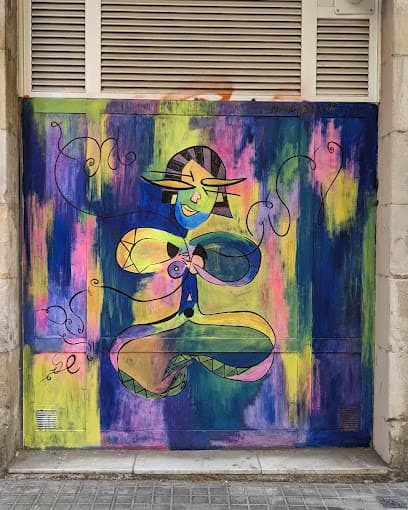
A raw, paint-splattered antidote to the sterile museum circuit. This is where pop-art meets the grit of the street, served straight from the artist’s hands in the heart of old Barcelona.
0.0(0)
Tourist attraction
Frequently Asked Questions
What is La Carassa del carrer Carabassa?
It is a 17th-century stone carving of a face on a building facade that historically served as a marker for a nearby brothel.
Is it free to see the Carassa?
Yes, it is located on a public street and can be viewed for free at any time of day.
Where exactly is it located?
You can find it at Carrer de la Carabassa, 7, in the Gothic Quarter, near the Basilica de la Mercè.
Why were these stone faces used in Barcelona?
They were used as visual signals for illiterate sailors and visitors to identify the location of houses of prostitution.
Reviews
0 reviews for La carassa del carrer Carabassa
No reviews yet. Be the first to share your experience!