3.7
53 verified reviews
About
Just a few hundred yards from the whimsical, mosaic-encrusted gates of Park Güell—where tourists pay twenty euros to take the same selfie with a ceramic lizard—sits a very different kind of monument. Kasa de la Muntanya is a massive, stone-walled fortress that serves as a concrete middle finger to the gentrification eating Barcelona alive. It is not a museum, it is not a gallery, and it sure as hell isn't a 'hidden gem.' It is a living, breathing, squatted social center that has survived more eviction attempts and police raids than most of us have had hot dinners.
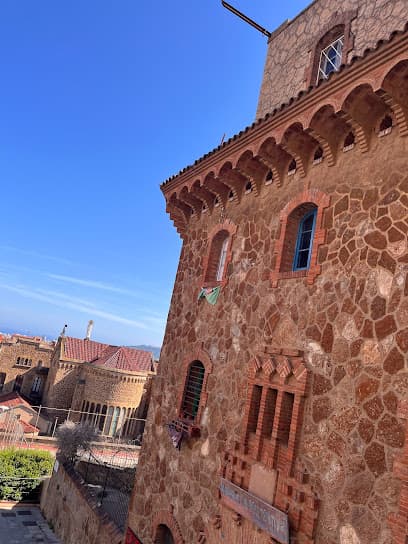
The history here is thick enough to choke on. Built in 1909 by Eusebi Güell—the same industrialist who funded Gaudí’s fever dreams—the building was originally a barracks for the Civil Guard. It was designed to house the muscle that kept the city’s restless working class in check. But the universe has a funny way of balancing the scales. After being abandoned by the police in 1983 following an attack by Catalan nationalists, a group of young activists climbed through the windows in 1989 and claimed it for the people. They haven't left since. For over thirty-five years, this has been the beating heart of the 'okupa' movement in Barcelona, a laboratory for self-management, anti-fascism, and radical autonomy.
Walking up the steep incline of Avinguda del Santuari de Sant Josep de la Muntanya, you can’t miss it. The facade is a visual scream of political murals, anarchist symbols, and banners that change with the global political weather. It looks like a castle under siege because, in many ways, it is. Inside those thick walls, there are residences, workshops, a 'kafeta' for communal meals, and even a history of high-tech rebellion; at one point, it was a global hub for Bitcoin pioneers and hacktivists like Amir Taaki. It’s a strange, beautiful intersection of 19th-century stone and 21st-century digital resistance.
Here is the honest truth: Kasa de la Muntanya doesn't care if you like it. The service isn't 'warm,' and there is no gift shop. If you show up acting like a 'poverty tourist,' snapping photos of people’s faces or treating the residents like exhibits in a zoo, you will be told to leave, and not particularly politely. This is a home and a political statement, not a backdrop for your Instagram feed. But if you approach with respect, if you read the posters on the walls, and maybe show up for one of their public vegan calçotadas or a punk show, you’ll see a side of Barcelona that hasn't been sterilized for the cruise ship crowds.
The 3.7 rating on Google tells you everything you need to know. The people who hate it are the ones who wanted a clean sidewalk and a 'vibrant atmosphere.' The people who love it are the ones who recognize that a city without places like this is just a shopping mall with better weather. It is gritty, it is loud, and it is unapologetically political. It is the last stand of a Barcelona that refuses to be bought, and for that alone, it is worth more than every souvenir shop on La Rambla combined.
Type
Cultural association
Duration
30-60 minutes
Best Time
Late afternoon when the light hits the murals, or during a scheduled community event.
What People Say
tourist(3)facade(2)society(2)pictures(2)
Features
Cultural association
Categories
HistoryStreet ArtActivismAlternative Culture
Ticket Prices
Free Admission
No tickets required
Must-See Highlights
Political murals and graffiti on the exterior walls
The historic stone facade built by Eusebi Güell
Community bulletin board for local activist events
Visitor Tips
Do not take photos of people's faces or the interior without explicit permission
Respect the space as a private residence and political collective
Check local activist calendars like convoca.la for public events or workshops
Good For
ActivistsHistory buffsAlternative travelersStreet art fans
Why Visit
Former police barracks turned into a world-renowned anarchist stronghold
Direct historical connection to the Güell family and Barcelona's industrial past
One of the longest-running and most significant squatted social centers in Europe
Nearby Landmarks
- 2-minute walk from Park Güell
- 5-minute walk from Gaudí House Museum
- 10-minute walk from Plaça de Lesseps
Accessibility
- Limited accessibility due to steep incline and historic structure
Location
Av. del Santuari de St. Josep de la Muntanya, 31
Gràcia, Barcelona
Nearby Hotels
Nearby Restaurants
In Gràcia
ATTRACTION
Maison Sara
Gràcia
Forget the mass-produced kitsch on La Rambla. This is Gràcia at its best: a tactile, clay-smeared workshop where the art is as raw and honest as the neighborhood itself.
0.0(0)
Tourist attraction
ATTRACTION
Intercambiador de libros
Gràcia
A humble, weather-beaten box in the hills of Vallcarca where local history is traded one dog-eared paperback at a time. No tourists, no Wi-Fi, just paper and community.
0.0(0)
Park
ATTRACTION
View
Gràcia
Forget the elbow-to-elbow chaos of Park Güell. This is the raw, vertical soul of Gràcia, where the city unfolds in a silent, sun-drenched sprawl at your feet.
0.0(0)
Garden
Frequently Asked Questions
Is Kasa de la Muntanya safe to visit?
Yes, it is safe to walk past and view the murals from the street. However, it is a private residence and social center, so you should be respectful and avoid trespassing or taking photos of the residents.
Can I go inside Kasa de la Muntanya?
The building is generally not open for casual tourism. You can enter during public events, workshops, or communal meals which are often advertised on their website or local activist calendars like Convoca-la BCN.
What is the history of the building?
Built in 1909 by Eusebi Güell as a Civil Guard barracks, it was abandoned by police in 1983 and occupied by activists in 1989. It has remained a squatted social center for over 35 years.
Where is it located?
It is located in the Gràcia neighborhood, specifically in the La Salut area, just a 2-minute walk from the main entrance of Park Güell.
Reviews
0 reviews for Kasa de la Muntanya | Barcelona
No reviews yet. Be the first to share your experience!