4.5
189 verified reviews
About
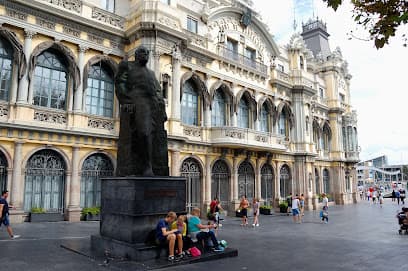
Walk down the Rambla long enough and you’ll eventually hit a wall of humidity, the smell of frying oil, and the faint, metallic tang of diesel. This is where the city finally tries to shake off its landlocked neuroses and face the sea. Right there, standing like a stubborn old captain who refuses to retire, is the Junta d'Obres del Port. Built in 1907, back when 'bureaucracy' meant heavy oak desks, the scratch of fountain pens, and the weight of actual ledgers, this building is a gorgeous, eclectic middle finger to the glass-and-steel monstrosities of the modern age.
Designed by Julio Valdés, it’s a piece of architecture that doesn't know when to quit. It’s got four corner towers that look like they belong on a coastal fortress, but the ornamentation is pure turn-of-the-century Barcelona—a mix of classical restraint and the kind of decorative flourishes that suggest the Port Authority had a lot of money and wanted you to know it. It sits at the Portal de la Pau, the 'Gate of Peace,' which is ironic considering the sheer volume of tourists currently losing their minds trying to take selfies with the Columbus Monument just a few meters away.
For decades, Barcelona famously turned its back on the sea. The waterfront was a grim landscape of warehouses, rail lines, and industrial grit. This building was the exception—a grand statement of intent. When you look at the facade today, you’re seeing the remnants of a city that was desperate to prove it was a world-class maritime power. The stone is weathered by over a century of Mediterranean salt and city exhaust, giving it a textured, lived-in patina that you just can't fake. It’s one of the best architecture spots in Barcelona if you want to see the city's transition from the medieval to the modern.
Inside? Well, that’s the catch. For most of its life, this has been a working administrative building for the Port Authority. You aren't going to find a gift shop or a café selling overpriced lattes inside. It’s often closed to the general public unless there’s a specific exhibition or institutional event. But that’s almost the point. In a city where every square inch is being commodified for the 'tourist experience,' there is something deeply satisfying about a building that just exists to be itself. You stand on the Moll de la Fusta, watch the Golondrinas—those double-decker wooden tour boats—chug past, and you appreciate the symmetry of the towers against the blue Catalan sky.
Is it worth the walk? Absolutely. If you’re doing the standard pilgrimage down La Rambla, don't stop at the statue of the guy pointing the wrong way toward America. Keep going. Cross the street. Get close enough to the Junta d'Obres to see the detail in the stonework. It’s a reminder that even the most boring functions of government—managing a harbor, tracking cargo, arguing over tariffs—once demanded a sense of grandeur. It’s a quiet, dignified anchor in a part of the city that often feels like it’s drifting into a theme-park fever dream. Come at golden hour, when the setting sun hits the stone and makes the whole thing glow like a discarded treasure chest. It’s one of the few things in this neighborhood that doesn't feel like it’s trying to sell you something.
Type
Historical landmark, Tourist attraction
Duration
15-30 minutes
Best Time
Late afternoon for the best light on the facade.
What People Say
las ramblas(6)architecture(6)passengers(4)christmas(4)strolling(4)columbus monument(3)1907(3)1918(3)
Features
Historical landmark
Tourist attraction
Categories
ArchitectureMaritime HistoryModernism
Ticket Prices
Free Admission
No tickets required
Must-See Highlights
The four ornate corner towers
The sculptural details on the main facade
The view of the building framed by the palms of Moll de la Fusta
Visitor Tips
Don't just look from afar; cross the street to see the intricate stonework up close.
Combine this with a walk across the Rambla de Mar wooden bridge to the Maremagnum.
Check the 48h Open House Barcelona schedule in October to see if interior tours are available.
Good For
Architecture loversPhotographersHistory buffsBudget travelers
Why Visit
1907 Eclectic-Modernist architecture by Julio Valdés
Iconic four-towered silhouette at the edge of Port Vell
Historical gateway between the city's historic center and the sea
Nearby Landmarks
- Columbus Monument (Monument a Colom) - 2-minute walk
- Rambla de Mar - 3-minute walk
- Maritime Museum of Barcelona (Museu Marítim) - 5-minute walk
- Aquàrium de Barcelona - 10-minute walk
Accessibility
- Viewable from public pedestrian areas
- Flat paved surroundings
Location
Carrer de Circumval·lació Tram Dos, 6
Ciutat Vella, Barcelona
Nearby Hotels
Nearby Restaurants
In Ciutat Vella
ATTRACTION
Park
Ciutat Vella
A thousand years of silence tucked behind a Romanesque monastery, where the grit of El Raval dissolves into ancient stone, cool shadows, and the heavy weight of history.
0.0(0)
Park
ATTRACTION
BARSHELONA
Ciutat Vella
Forget the plastic bulls and tacky magnets. This is where Barcelona’s soul is bottled into art, a small sanctuary of local design hidden in the shadows of the Gothic Quarter.
0.0(0)
Tourist attraction
ATTRACTION
Minajoe art
Ciutat Vella
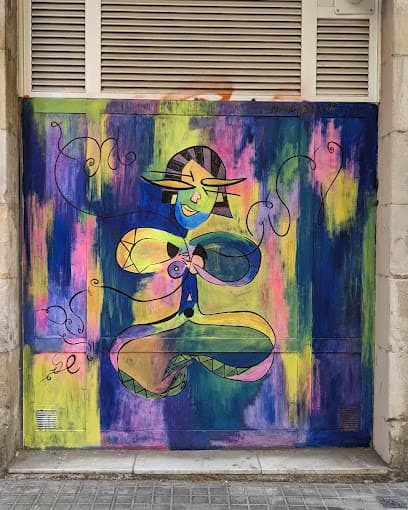
A raw, paint-splattered antidote to the sterile museum circuit. This is where pop-art meets the grit of the street, served straight from the artist’s hands in the heart of old Barcelona.
0.0(0)
Tourist attraction
Frequently Asked Questions
Is Junta d'Obres del Port worth visiting?
Yes, primarily for its 1907 Eclectic architecture. While you often cannot enter the building, the weathered facade is a standout feature of Port Vell and a favorite for anyone with a lens and an eye for detail.
Can you go inside the Junta d'Obres del Port?
Generally, no. It is an administrative building for the Port Authority. However, it occasionally opens for public exhibitions or during special festivals like 48h Open House BCN.
How do I get to the Junta d'Obres del Port?
It is located at the very end of La Rambla, right across from the Columbus Monument. The nearest Metro station is Drassanes (L3).
What is the best time to see the building?
Golden hour is spectacular, as the sunset reflects off the Mediterranean and illuminates the stone facade and the four corner towers.
Reviews
0 reviews for Junta d'Obres del Port
No reviews yet. Be the first to share your experience!