4.3
3 verified reviews
About
Let’s be clear: nobody is putting the Jardins de Manuel Sacristán on a 'top ten' list. If they do, they’re lying to you. This isn't the Park Güell. There are no mosaics, no gingerbread houses, and no busloads of tourists wielding selfie sticks like bayonets. This is Sant Martí. This is the edge of the city where the grid of the Eixample starts to fray and the salty, industrial breath of the Besòs river starts to settle in your lungs. It is a place of transition, of hard edges, and of the quiet dignity of people just trying to live their lives.
Named after Manuel Sacristán—a man who spent his life wrestling with Marxist theory and the crushing weight of the Franco regime—these gardens are a modest tribute to a giant of the Spanish left. It’s a bit of a trip, isn't it? A man who lived for the revolution, who was purged from his university post for his beliefs, now has his name attached to a place where toddlers struggle with plastic slides and retirees argue about the price of bread. But maybe that’s exactly what he would have wanted. Not a bronze statue in a crowded plaza, but a functional piece of the commons, a small victory of public space over private interest.
The space itself is a rectangular slice of green and grey tucked between the towering apartment blocks of the El Besòs i el Maresme neighborhood. It’s a landscape of tipuana trees that drop yellow blossoms in the summer and sturdy benches that have seen a thousand sunsets. You’ve got the UPC Campus Diagonal-Besòs nearby, so you’ll see students hunched over laptops, looking like they haven't slept since the previous Tuesday. You’ll see the local grandfathers, the 'jayo' contingent, sitting in the sun, watching the world go by with the kind of practiced indifference you can only earn after seventy years of living in a city that is constantly changing its skin.
There’s a playground, of course. There’s always a playground. The sound of children screaming in Catalan and Spanish provides the soundtrack, punctuated by the occasional bark of a bored Galgo. It’s not 'charming' in the way a travel brochure uses the word. It’s honest. It’s a place where the city stops trying to sell you something for five minutes. There are no overpriced mojitos here, no menus with pictures of paella that look like they were taken in 1984. Just the wind, the trees, and the hum of the nearby Ronda Litoral.
If you find yourself out here—maybe you wandered too far from the Fòrum, or you’re visiting the university—take a seat. Don't look at your phone. Just look at the architecture of survival. The way the sun hits the laundry hanging from the balconies nearby. The way the shadows of the trees stretch across the pavement. It’s a reminder that Barcelona isn't just a museum; it’s a living, breathing, sometimes exhausted organism. The Jardins de Manuel Sacristán represent the real Sant Martí, a neighborhood that has fought for every square meter of green it possesses.
Is it worth the trek from the center? Probably not, unless you’re a student of philosophy or a fan of urban planning that actually serves the residents. But if you’re already in the neighborhood, it’s a necessary palate cleanser. It’s the reality of the 21st-century city: a small, hard-won victory of green over concrete, named after a man who believed the world could be better. It’s not a destination; it’s a pause. And in a city as frantic and performative as Barcelona, a genuine, unscripted pause is a goddamn luxury.
Type
Park
Duration
30-45 minutes
Best Time
Late afternoon when the neighborhood comes alive with families and students.
Features
Park
Categories
Urban GardenLocal LifePhilosophy
Ticket Prices
Free Admission
No tickets required
Opening Hours
- MondayOpen 24 hours
- TuesdayOpen 24 hours
- WednesdayOpen 24 hours
- ThursdayOpen 24 hours
- FridayOpen 24 hours
- SaturdayOpen 24 hours
- SundayOpen 24 hours
Must-See Highlights
The tipuana trees which bloom yellow in early summer
The contrast between the park and the surrounding modern university architecture
The commemorative plaque or signage regarding Manuel Sacristán
Visitor Tips
Grab a coffee from one of the nearby student cafes and sit here to people-watch
Don't expect a 'park' in the traditional sense; it's more of an urban plaza with greenery
Combine it with a visit to the nearby Museu Blau to escape the museum crowds
Good For
LocalsStudentsBudget travelersPhilosophy buffs
Why Visit
Authentic local atmosphere far from the tourist center
Named after a significant figure in Spanish intellectual history
Quiet green space adjacent to the modern UPC university campus
Nearby Landmarks
- 2-minute walk from UPC Campus Diagonal-Besòs
- 8-minute walk from Parc del Fòrum
- 10-minute walk from Museu de Ciències Naturals de Barcelona
- 12-minute walk from Diagonal Mar Shopping Centre
Accessibility
- Flat paved paths
- Accessible benches
- Street-level entry
Location
Carrer de Josep Ferrater i Mora, 4X
Sant Martí, Barcelona
Nearby Hotels
Nearby Restaurants
In Sant Martí
ATTRACTION
LOS CERDINS HOUSE
Sant Martí
A raw, repurposed industrial relic in the heart of Sant Martí, Los Cerdins House is a testament to the neighborhood's manufacturing soul, where red-brick history meets the sharp, creative edge of modern Barcelona.
0.0(0)
Tourist attraction
ATTRACTION
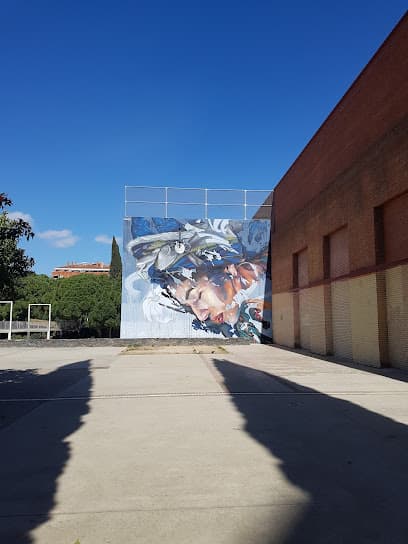
Pista de frontó
Sant Martí
A sun-baked slab of concrete where the rhythmic thwack of a ball against stone serves as the soundtrack to a neighborhood still clinging to its gritty, industrial Poblenou soul.
0.0(0)
Park
ATTRACTION
Saraya Express
Sant Martí
A specialized travel outpost tucked away in Sant Martí. Saraya Express is where the logistics of a trip to Cairo meet the grit of Barcelona’s daily grind, far from the tourist-trap fluff.
0.0(0)
Tourist attraction
Frequently Asked Questions
Is Jardins de Manuel Sacristán worth visiting?
Only if you are already in the Sant Martí or Fòrum area. It is a small, local neighborhood park rather than a major tourist attraction, offering a quiet place to sit away from the crowds.
Who was Manuel Sacristán?
He was a highly influential Spanish philosopher, Marxist writer, and university professor known for his opposition to the Franco regime and his contributions to modern political thought.
How do I get to Jardins de Manuel Sacristán?
The easiest way is via the Tram (T4 line) to the Campus Diagonal-Besòs stop or the Metro (L4) to El Maresme | Fòrum, followed by a short walk.
What is near the Jardins de Manuel Sacristán?
It is located right next to the UPC Campus Diagonal-Besòs and is about a 10-minute walk from the Parc del Fòrum and the Museu Blau (Natural Science Museum).
Reviews
0 reviews for Jardins de Manuel Sacristán
No reviews yet. Be the first to share your experience!