4.3
723 verified reviews
About
Forget the Gothic Quarter. Forget the Eixample. If you want to see the Barcelona that doesn't care if you like it or not, you get on the L4 yellow line and you ride it until the tourists start looking nervous. You get off at Llucmajor, in the heart of Nou Barris. This isn't the Barcelona of glossy brochures and overpriced sangria. This is the Barcelona of the people who actually keep the city running—the working class, the immigrants, the activists who fought for every square inch of green space they have.
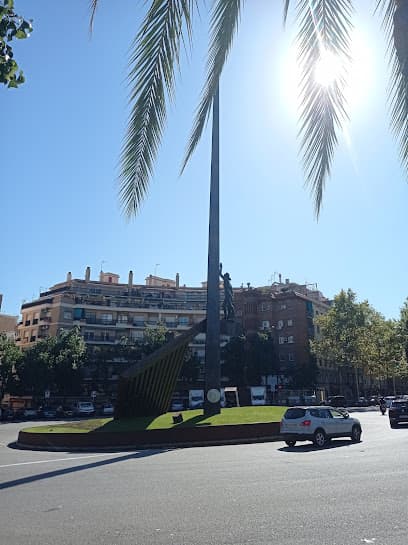
The Jardins de Llucmajor—officially renamed Jardins de la Segona República in 2016—is a triangular wedge of civic pride sitting at the intersection of Via Júlia and Passeig de Valldaura. It’s not a 'park' in the sense of rolling hills and manicured flower beds. It’s a hard-won urban clearing. At its center stands the monument to the Republic, a bronze statue of a woman by Josep Viladomat that spent decades hidden in a municipal warehouse during the Franco years because it was too dangerous, too hopeful, too much of a reminder of what was lost. Seeing her standing there now, high on her pedestal, is a gut punch of historical justice.
Walking through here, you won't find a single person selling selfie sticks. What you will find are the 'bancs'—the benches—occupied by retirees who have lived in these apartment blocks since they were built in the 50s and 60s. They’re watching the world go by, arguing about politics or the price of bread, while dogs weave between their legs. There’s a raw, unvarnished energy here. It’s one of the best things to do in Nou Barris if you’re tired of the theme-park atmosphere of the city center. You’re surrounded by the 'blocks,' the high-density housing that defines this district, creating a canyon-like feel that makes the open space of the gardens feel even more vital.
The gardens recently underwent a 'reform,' a renovation that cleaned up the paths and updated the play areas. It’s a magnet for local families. You’ll see kids kicking footballs against stone walls and teenagers huddled over phones, oblivious to the heavy history looming over them. That’s the beauty of it. The history is lived-in. The medallion of Pi i Margall, the federalist president of the First Republic, sits there quietly, a nod to the intellectual roots of the neighborhood’s fierce independence.
Is it worth visiting? If you’re looking for 'pretty,' maybe not. But if you’re looking for the soul of the city, absolutely. It’s a place to sit with a cheap coffee from a nearby bodega and just watch. You’ll see the real Barcelona—the one that doesn't show up on Instagram. It’s a reminder that a city isn't just its monuments; it's the people who refuse to let those monuments be forgotten. It’s a place of memory, but more importantly, it’s a place of life. Come here when the sun is setting and the neighborhood pours out into the streets. It’s loud, it’s crowded, and it’s completely authentic. This is the Barcelona that belongs to the Barcelonans, and they’re kind enough to let you stand in the corner and witness it.
Type
Park
Duration
45-60 minutes
Best Time
Late afternoon when the neighborhood locals gather on the benches.
What People Say
kids(17)bank(10)dogs(8)reform(7)trees(7)lungs(6)ideal(6)reading(6)
Features
Park
Categories
HistoryMonumentsLocal LifePublic Art
Ticket Prices
Free Admission
No tickets required
Opening Hours
- Monday10 AM to 9 PM
- Tuesday10 AM to 9 PM
- Wednesday10 AM to 9 PM
- Thursday10 AM to 9 PM
- Friday10 AM to 9 PM
- Saturday10 AM to 9 PM
- Sunday10 AM to 9 PM
Must-See Highlights
The 'La República' bronze statue by Josep Viladomat
The medallion of Pi i Margall
The vibrant local life along Via Júlia
Visitor Tips
Grab a coffee at one of the modest bars on Via Júlia and sit on a bench to people-watch.
Combine this with a walk through the nearby Parc de la Guineueta.
Don't expect English menus in the nearby cafes; this is a local-first zone.
Good For
History buffsBudget travelersPeople-watchingFamilies with kids
Why Visit
Home to the iconic 'La República' bronze monument by Josep Viladomat
A rare, authentic glimpse into the working-class soul of Nou Barris
A site of significant political and historical memory for Barcelona
Nearby Landmarks
- Parc de la Guineueta (5-minute walk)
- Via Júlia shopping street (1-minute walk)
- Mercat de Montserrat (10-minute walk)
Accessibility
- Fully wheelchair accessible
- Flat paved paths
- Accessible by elevator from Llucmajor Metro
Location
Via Júlia, 3
Nou Barris, Barcelona
Nearby Hotels
Nearby Restaurants
In Nou Barris
ATTRACTION
Plaça Verda de la Prosperitat
Nou Barris
A concrete-and-chlorophyll middle finger to urban neglect, where Nou Barris locals reclaim their right to breathe, drink, and exist far from the suffocating Sagrada Familia crowds.
0.0(0)
Garden
ATTRACTION
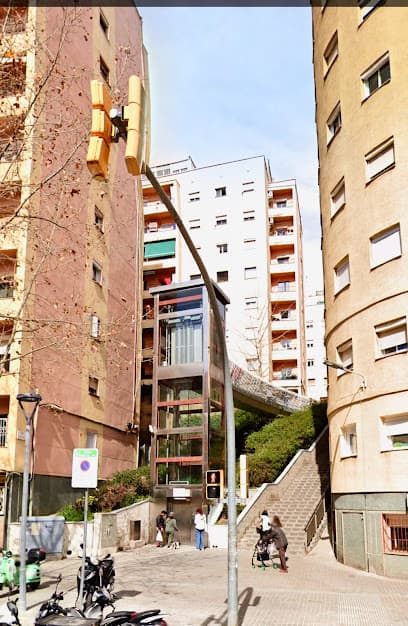
Ascensor Canfranc - Paseo de Fabra y Puig 08031 Nou Barris
Nou Barris
A glass-and-steel lifeline in Nou Barris that saves your knees and offers a gritty, honest view of the Barcelona tourists usually ignore. No gift shops, just gravity-defying utility.
0.0(0)
Hiking area
ATTRACTION
Carrer pimoli42
Nou Barris
The anti-tourist Barcelona. A gritty, honest stretch of Nou Barris where the Gaudí magnets disappear and the real city begins over cheap beer and the smell of rotisserie chicken.
0.0(0)
Tourist attraction
Frequently Asked Questions
Is Jardins de Llucmajor worth visiting?
Yes, if you want to see an authentic, non-touristy side of Barcelona. It’s a significant site for local history and a great place to observe real neighborhood life away from the crowds.
What is the history of the La República monument?
The bronze statue by Josep Viladomat was originally intended for the intersection of Diagonal and Passeig de Gràcia but was hidden away during the Franco dictatorship. It was finally installed here in 1990 as a tribute to democratic values.
How do I get to Jardins de Llucmajor?
Take the L4 (Yellow Line) metro to the Llucmajor station. The gardens are located right outside the station exit at the junction of Via Júlia and Passeig de Valldaura.
Is the park safe for visitors?
Yes, it is a very active community space. While Nou Barris is a working-class area, the gardens are well-used by families and locals throughout the day and evening.
Reviews
0 reviews for Jardins de Llucmajor
No reviews yet. Be the first to share your experience!