About
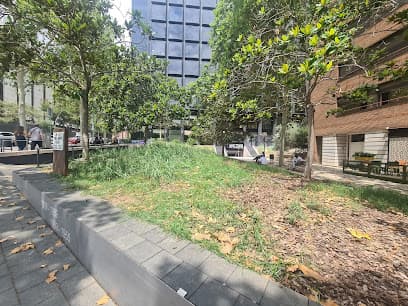
Les Corts is usually the part of Barcelona where people go to buy high-end sneakers at L'Illa Diagonal or worship at the altar of Messi at Camp Nou. It’s a neighborhood of suits, shopping bags, and sterile glass towers. But on the corner of Carrer de Joan Güell and Carrer d'Europa, the concrete gives way to something heavier. The Jardins de Carme Claramunt Barot isn’t just another patch of urban greenery designed to satisfy a city planning quota. It’s a site of memory, a quiet reclamation of a ground that saw some of the darkest days of the 20th century.
This garden sits on the footprint of what was once the Presó de Dones de les Corts—the Les Corts Women's Prison. From 1936 to 1955, this wasn't a place of leisure; it was a warehouse for the 'undesirables' of the Franco regime. The name on the plaque belongs to Carme Claramunt Barot, a woman whose story is a visceral reminder of how petty and cruel history can be. Carme wasn't a high-ranking general or a famous revolutionary. She was a shopkeeper from Badalona, betrayed by a neighbor who wanted her inheritance. On April 18, 1939, at five in the morning, she became the first woman executed by a firing squad at the notorious Camp de la Bota. She was 41 years old. Her last letter to her aunt is a gut-punch of dignity in the face of state-sponsored murder.
When you walk into these gardens today, you’re stepping onto the site of the prison’s former orchard and courtyard. It’s an 'interior d'illa'—one of those classic Barcelona interior block spaces—that has been opened up to the street. It’s peaceful now. You’ll see local grandparents sitting on the benches, kids from the nearby schools chasing each other around, and the occasional office worker eating a sandwich in the shade. But the ghosts are still there. Just a few meters away stands the 'Monument a la Presó de Dones de les Corts,' a collection of six massive stones brought from different parts of Spain, representing the origins of the women who were held here in overcrowded, miserable conditions run by an order of nuns who believed in redemption through suffering.
If you’re hunting for lush, manicured greenery, this might not be the most beautiful spot in the city in the traditional sense. There are no manicured rose bushes or ornate fountains here. It’s a functional, modern urban space. But it’s one of the most important things to do in Les Corts if you actually want to understand the city beneath the tourist lacquer. It’s a place that forces you to acknowledge that the modern, high-octane Barcelona we see today was built over a layer of silence and repression.
The garden was officially inaugurated in March 2023, part of a long-overdue effort to 'feminize' the city’s map and honor the women who were erased from the official narrative for decades. It’s a small victory for memory. If you’re visiting the nearby shopping districts or heading to a match, take twenty minutes. Sit on a bench. Look at the stones. Think about Carme Claramunt and the thousands of others who passed through these vanished walls. It’s not a 'must-see' for the Instagram crowd, but it’s a place that demands respect. It’s a reminder that even in a city as obsessed with the future as Barcelona, the past is never truly buried—it’s just waiting for someone to say its name.
Type
Garden
Duration
30-45 minutes
Best Time
Late afternoon when the sun hits the memorial stones and the neighborhood comes alive with locals.
Features
Garden
Categories
HistoryMemorialFeminismCivil War
Ticket Prices
Free Admission
No tickets required
Opening Hours
- MondayOpen 24 hours
- TuesdayOpen 24 hours
- WednesdayOpen 24 hours
- ThursdayOpen 24 hours
- FridayOpen 24 hours
- SaturdayOpen 24 hours
- SundayOpen 24 hours
Must-See Highlights
The commemorative plaque for Carme Claramunt Barot
The 'Six Stones' (Monument a la Presó de Dones) on the corner of Joan Güell
The perimeter markings showing where the prison walls once stood
Visitor Tips
Read the history of the Les Corts Women's Prison before visiting to fully appreciate the weight of the site.
Combine this with a visit to the nearby Plaça de la Concòrdia for a taste of old-world Les Corts.
It's a quiet spot, ideal for a contemplative break from the busy Diagonal shopping area.
Good For
History buffsSolo travelersBudget travelersLocals
Why Visit
Built on the historic site of the notorious Les Corts Women's Prison.
A dedicated memorial to the first woman executed by the Franco regime.
Features the 'Six Stones' monument, a striking symbolic tribute to female political prisoners.
Nearby Landmarks
- L'Illa Diagonal shopping mall (5-minute walk)
- Camp Nou Stadium (15-minute walk)
- Plaça de la Concòrdia (10-minute walk)
- Jardins de la Maternitat (7-minute walk)
Accessibility
- Fully wheelchair accessible
- Flat paved surfaces
- Accessible seating areas
Location
Carrer d'Europa, 13
Les Corts, Barcelona
Nearby Hotels
Nearby Restaurants
In Les Corts
ATTRACTION
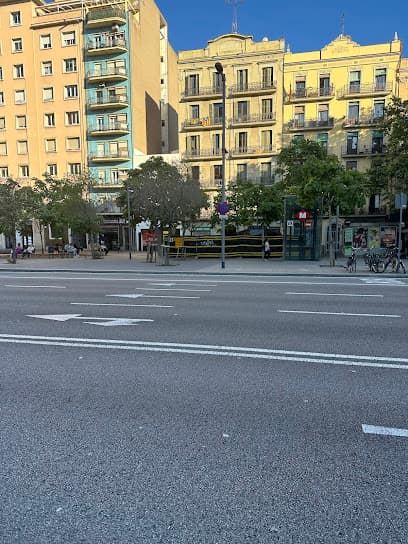
Placa commemorativa 'El Congrés de Sants de la CNT de 1918'
Les Corts
A humble plaque marking the spot where the CNT redefined the labor struggle in 1918. No gift shops here, just the ghosts of the 'Rose of Fire' and the grit of Sants.
0.0(0)
Memorial park
ATTRACTION
City Bus Tour Stop Plaça Pius XII
Les Corts
A sun-baked slab of pavement on the Diagonal where the double-deckers pause to vent exhaust and drop off pilgrims heading for the altar of FC Barcelona.
0.0(0)
Tourist attraction
ATTRACTION
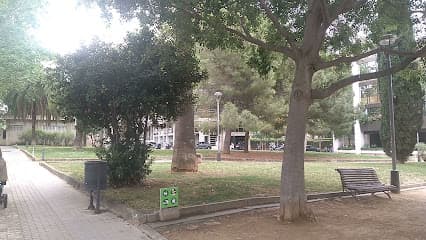
Jardins de la Font dels Ocellets
Les Corts
A quiet, unpretentious slice of Les Corts where the only thing louder than the fountain is the sound of locals actually living their lives away from the Gaudí-obsessed crowds.
0.0(0)
Garden
Frequently Asked Questions
Is Jardins de Carme Claramunt Barot worth visiting?
Yes, especially for those interested in the Spanish Civil War and feminist history. It is a powerful memorial site located on the grounds of a former women's prison, offering a deeper look into Barcelona's past than typical tourist attractions.
What is the significance of Carme Claramunt Barot?
Carme Claramunt Barot was a political activist and the first woman executed by the Franco regime in 1939. The garden is named in her honor to preserve the memory of those repressed during the dictatorship.
How do I get to the Carme Claramunt gardens?
The gardens are located in the Les Corts district. You can take the Metro Line 3 (Green) to either the 'Maria Cristina' or 'Les Corts' stations; both are about a 5-10 minute walk from the site.
Is there an entry fee for the Jardins de Carme Claramunt Barot?
No, the gardens are a public space and entry is free of charge for everyone.
Reviews
0 reviews for Jardins de Carme Claramunt Barot
No reviews yet. Be the first to share your experience!