5.0
6 verified reviews
About
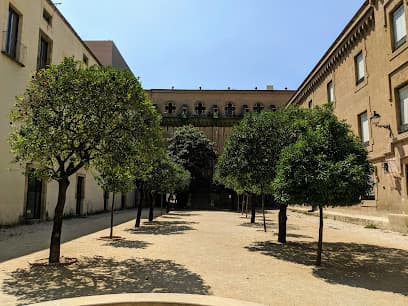
The Raval is a fist. It’s a tight, crowded, beautiful mess of a neighborhood that smells of frying oil, cheap beer, and a thousand years of desperate ambition. It’s the kind of place that demands your constant attention, a sensory overload that can leave you feeling like you’ve been worked over in a dark alley. But then, you slip through an archway on Carrer d’Elisabets, and the world just... stops. You’ve stepped into the Jardí interior de la Casa de la Misericòrdia, and suddenly, the roar of Barcelona is replaced by the sound of your own breathing.
This isn't a park designed by a landscape architect looking for a design award. It’s a courtyard that feels like it was carved out of the city’s collective memory. The Casa de la Misericòrdia—the House of Mercy—was founded in the 16th century to deal with the city’s 'unfortunates.' It was a convent, a school, and most famously, an orphanage. When you sit on one of the weathered benches here, you aren't just sitting in a garden; you’re sitting in the shadow of a massive, complicated history of charity and sorrow. The stone walls are thick, the kind of masonry built to keep the world out and the secrets in.
In the center, orange trees stand like sentinels. Depending on the season, the air is either thick with the scent of citrus blossoms or the heavy, slightly fermented smell of fallen fruit. It’s a visceral contrast to the grit just twenty yards away. You’ll see students from the nearby University of Barcelona hunched over books, their faces illuminated by the soft, filtered light. You’ll see old men who look like they’ve been sitting on the same bench since the transition to democracy, staring at nothing in particular. It’s a place for the quiet ones, the ones who need a moment to decompress from the frantic energy of the Ciutat Vella.
If you walk around the corner to Carrer de les Ramelleres, you’ll see the darker side of this sanctuary’s history. There, embedded in the wall, is the 'torn dels orfes'—the orphan’s hole. It’s a wooden turntable where desperate mothers would place their newborn babies, spin the wheel, and ring a bell, handing their children over to the nuns and the state without ever having to show their faces. Knowing that history changes the way you look at this garden. The silence here isn't just peaceful; it’s heavy. It’s the silence of thousands of stories that were never told, of lives that started with a turn of a wooden wheel.
Is it 'beautiful' in the postcard sense? Maybe not. The grass can be patchy, and the walls are stained with the damp of centuries. But it is honest. It’s one of the few places left in the center of Barcelona that hasn't been scrubbed clean for the tourist brochures. It’s a place to sit, have a smoke, and think about the sheer weight of time. You don't come here for a 'gastronomic adventure' or a 'must-see' photo op. You come here to remember that even in a city as loud and proud as Barcelona, there are pockets of stillness that refuse to be moved.
When the sun starts to dip and the shadows of the surrounding buildings stretch across the courtyard, the garden takes on a melancholy air that is pure Barcelona. It’s the feeling of a city that has seen everything and survived it all. If you’re looking for a place to escape the heat, the crowds, and the relentless commerce of the Rambla, this is your spot. Just don't expect it to entertain you. It’s a garden that asks nothing of you, and in a city like this, that’s the greatest mercy of all.
Type
Garden
Duration
30-45 minutes
Best Time
Late afternoon when the light filters through the orange trees and the student crowd thins out.
Features
Garden
Categories
HistoryArchitecturePublic ParkReligious Heritage
Ticket Prices
Free Admission
No tickets required
Opening Hours
- Monday10 AM to 7 PM
- Tuesday10 AM to 7 PM
- Wednesday10 AM to 7 PM
- Thursday10 AM to 7 PM
- Friday10 AM to 7 PM
- Saturday10 AM to 7 PM
- Sunday10 AM to 7 PM
Must-See Highlights
The orange tree grove
The 'Torn dels Orfes' (orphan wheel) on the exterior wall
The weathered stone cloisters of the former convent
The view of the surrounding 16th-century architecture
Visitor Tips
Enter through the CIDOB entrance or the University of Barcelona's Faculty of Geography and History for the best access.
Combine this with a visit to the nearby MACBA for a contrast between old and new Barcelona.
Respect the silence; many people come here to study or reflect.
Good For
History buffsSolo travelersBudget travelersPhotographyQuiet reflection
Why Visit
The 'Torn dels Orfes' historical connection
Absolute silence in the heart of the chaotic Raval
Authentic, non-touristy atmosphere used by locals and students
Nearby Landmarks
- 3-minute walk from MACBA (Museum of Contemporary Art)
- 4-minute walk from CCCB (Centre de Cultura Contemporània de Barcelona)
- 7-minute walk from La Boqueria Market
- 8-minute walk from Plaça de Catalunya
Accessibility
- Wheelchair accessible entrance
- Flat paved paths
- Benches available
Location
Carrer d'Elisabets, 8I
Ciutat Vella, Barcelona
Nearby Hotels
Nearby Restaurants
In Ciutat Vella
ATTRACTION
Park
Ciutat Vella
A thousand years of silence tucked behind a Romanesque monastery, where the grit of El Raval dissolves into ancient stone, cool shadows, and the heavy weight of history.
0.0(0)
Park
ATTRACTION
BARSHELONA
Ciutat Vella
Forget the plastic bulls and tacky magnets. This is where Barcelona’s soul is bottled into art, a small sanctuary of local design hidden in the shadows of the Gothic Quarter.
0.0(0)
Tourist attraction
ATTRACTION
Minajoe art
Ciutat Vella
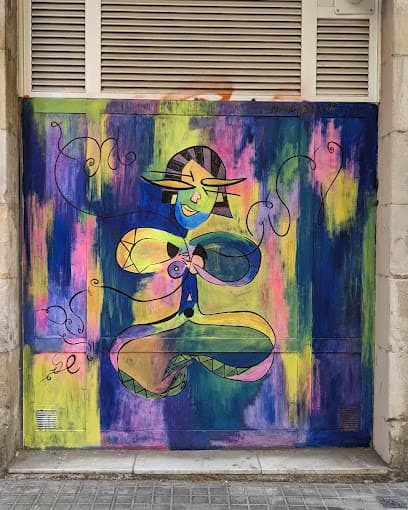
A raw, paint-splattered antidote to the sterile museum circuit. This is where pop-art meets the grit of the street, served straight from the artist’s hands in the heart of old Barcelona.
0.0(0)
Tourist attraction
Frequently Asked Questions
Is the Jardí de la Casa de la Misericòrdia worth visiting?
Yes, if you value silence and history over flashy attractions. It is one of the most peaceful spots in the Raval and offers a profound look at Barcelona's social history.
How do I find the orphan's wheel (torn dels orfes)?
The wheel is located on the exterior wall of the complex at Carrer de les Ramelleres, 17, just a short walk around the corner from the garden entrance.
Is there an entrance fee for the garden?
No, the garden is a public space and is completely free to enter during its opening hours.
What are the opening hours for the garden?
The garden typically follows standard public park hours, opening around 10:00 AM and closing at dusk, though access may be restricted during university holidays or special events.
Reviews
0 reviews for Jardí interior de la Casa de la Misericòrdia
No reviews yet. Be the first to share your experience!