About
Barcelona is a city built on top of itself, a dense sprawl of stone and history where every inch of space is a battlefield. For decades, the city was scarred by 'parets mitgeres'—those ugly, blind party walls left exposed when a neighboring building was torn down or never built. They were the architectural equivalent of an open wound: grey, windowless, and depressing. But in the Sant Martí district, specifically the old industrial heart of Poblenou, they’ve started fighting back. The Jardí del Sol, or Garden of the Sun, is a photosynthetic middle finger to that urban decay.
Located at the intersection of Carrer de la Ciutat de Granada and Carrer dels Almogàvers, this isn't your typical manicured European park. You won't find gravel paths or statues of forgotten generals here. Instead, you find a vertical ecosystem bolted onto the side of a five-story building. It’s a steel and wooden skeleton draped in a lush, living carpet of greenery. When you first walk up, the smell hits you—not the usual city cocktail of diesel fumes and toasted sandwiches, but the damp, earthy scent of wet ferns and rosemary. It’s jarring in the best way possible, a sudden burst of life in a neighborhood defined by glass-and-steel tech offices and the ghosts of textile factories.
What makes this place actually interesting, rather than just a pretty backdrop for an Instagram post, is the 'Sol' part of the name. At the very top of the structure sits a crown of solar panels. This isn't just for show. This wall is a machine. The panels soak up that brutal Mediterranean sun and use the energy to pump water through a complex, self-sufficient irrigation system. It collects rainwater, filters it, and feeds the thousands of plants clinging to the facade. It’s a closed loop, a tiny piece of the future functioning quietly while the rest of the city rushes toward the nearby Glòries shopping center. There are even nesting boxes tucked away in the foliage, providing a high-rise apartment for local birds who are probably as confused by the sudden appearance of a forest as the tourists are.
Standing at the base, you’ll see a small wooden deck with benches. It’s a humble spot, often occupied by a lone coder from a nearby startup nursing a flat white, or an elderly local who remembers when this whole barrio smelled of grease and smoke. There’s a quiet dignity to it. It’s one of the best vertical gardens Barcelona has to offer because it doesn't try too hard. It’s not a grand statement; it’s a solution to a problem. It turns a dead space into a lung.
Is it worth the trek? If you’re looking for the Sagrada Familia, keep walking. But if you want to see how a city survives its own growth, if you want to see what happens when architecture stops being selfish and starts giving something back to the street, then yes. It’s a reminder that even in a city of concrete, the sun and a little ingenuity can still make something grow. It’s honest, it’s clever, and it’s one of the few places in the 22@ district that feels like it has a soul. Go there, sit on the wooden bench, and just breathe for a second. The plants are doing the hard work for you.
The best part is the lack of pretense. There’s no gift shop, no ticket booth, and no velvet rope. It’s just a wall that decided to be a garden. In a world of over-hyped tourist traps, that’s a rare and beautiful thing. It’s a quiet victory for the neighborhood and a blueprint for what every city should be doing with its scars.
Type
Garden
Duration
15-30 minutes
Best Time
Mid-day for full sun or late afternoon for a quieter atmosphere.
Features
Garden
Categories
Vertical GardenSustainable DesignUrban ArtEco-friendly
Ticket Prices
Free Admission
No tickets required
Opening Hours
- MondayOpen 24 hours
- TuesdayOpen 24 hours
- WednesdayOpen 24 hours
- ThursdayOpen 24 hours
- FridayOpen 24 hours
- SaturdayOpen 24 hours
- SundayOpen 24 hours
Must-See Highlights
The solar panel array at the top of the wall
The wooden seating area at the base
The diverse species of climbing plants and ferns
The integrated bird nesting boxes
Visitor Tips
Combine this with a walk through the 22@ tech district to see the contrast between old and new Barcelona.
It's a great spot for a quiet coffee break away from the crowds of the Glòries shopping area.
Look closely at the irrigation pipes to see the engineering behind the garden.
Good For
Architecture enthusiastsSustainability geeksSolo travelersPhotographers
Why Visit
Self-sufficient solar-powered irrigation system
Transformation of a 'blind' party wall into a vertical ecosystem
Integrated nesting boxes for local bird populations
Nearby Landmarks
- 8-minute walk from Museu del Disseny de Barcelona
- 10-minute walk from Torre Glòries
- 5-minute walk from Razzmatazz
- 15-minute walk from Bogatell Beach
Accessibility
- Fully accessible from the public sidewalk
- Street-level viewing
- Wheelchair friendly
Location
&, C/ de la Ciutat de Granada, Carrer dels Almogàvers
Sant Martí, Barcelona
Nearby Hotels
Nearby Restaurants
In Sant Martí
ATTRACTION
LOS CERDINS HOUSE
Sant Martí
A raw, repurposed industrial relic in the heart of Sant Martí, Los Cerdins House is a testament to the neighborhood's manufacturing soul, where red-brick history meets the sharp, creative edge of modern Barcelona.
0.0(0)
Tourist attraction
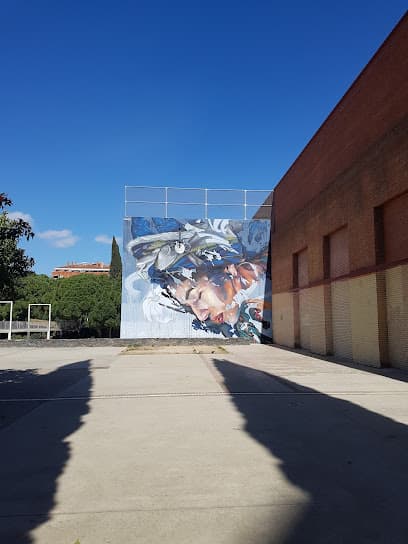
ATTRACTION
Pista de frontó
Sant Martí
A sun-baked slab of concrete where the rhythmic thwack of a ball against stone serves as the soundtrack to a neighborhood still clinging to its gritty, industrial Poblenou soul.
0.0(0)
Park
ATTRACTION
Saraya Express
Sant Martí
A specialized travel outpost tucked away in Sant Martí. Saraya Express is where the logistics of a trip to Cairo meet the grit of Barcelona’s daily grind, far from the tourist-trap fluff.
0.0(0)
Tourist attraction
Frequently Asked Questions
Is Jardí del Sol worth visiting?
Yes, especially for those interested in sustainable architecture and urban design. It is a unique, self-sufficient vertical garden that offers a quiet, green escape in the heart of the industrial Poblenou district.
How do I get to Jardí del Sol?
The garden is located at the corner of Carrer de la Ciutat de Granada and Carrer dels Almogàvers. The easiest way to get there is via Metro Line 4 (Yellow), getting off at the Llacuna or Bogatell stations, both a short walk away.
Is there an entrance fee for Jardí del Sol?
No, it is a public urban installation located on a street corner. You can visit it for free at any time of day or night.
What is the best time to visit Jardí del Sol?
The best time is during the day when the sun is out, as you can see the solar panels in action and the greenery is most vibrant. Spring and summer offer the densest foliage.
Reviews
0 reviews for Jardí del Sol
No reviews yet. Be the first to share your experience!