4.0
3 verified reviews
About
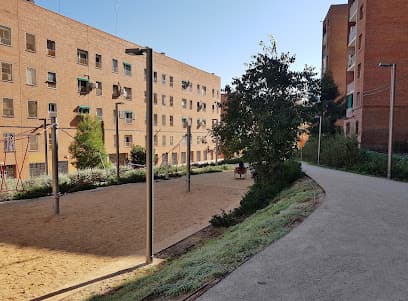
If you’re looking for the Barcelona of the postcards—the one with the shimmering mosaics and the overpriced sangria—you’ve taken the wrong metro line. Nou Barris doesn’t care about your vacation photos. It’s a place of steep hills, laundry hanging over balconies, and people who work for a living. And right here, tucked into the block at Carrer del Doctor Pi i Molist, is an 'Interior d’Illa' known to the locals as the Jardins de Can Xiringoi. It is, in the most literal sense, a neighborhood lung.
To understand this place, you have to understand the 'Interior d’Illa' concept. Barcelona’s Eixample was designed with these grand visions of green inner courtyards, most of which were promptly choked out by greedy developers over the last century. In neighborhoods like Nou Barris, the city is fighting back, clawing back space from the concrete to give people a place to breathe. This isn't a 'hidden gem'—it’s a hard-won victory for urbanism. You walk through an unassuming entrance and suddenly the roar of the city drops an octave. You’re standing in the middle of a residential block, surrounded by the backs of apartment buildings, looking at a space that has lived a dozen lives.
The history here has teeth. This site was once home to Can Xiringoi, a 19th-century farmhouse that stood long before the surrounding apartment blocks were even a fever dream in a developer's mind. As the city swallowed the countryside, the farmhouse gave way to a bus depot—a place of grease, diesel fumes, and the clatter of heavy machinery. For decades, this was where the city’s transport went to be patched up. When the depot finally closed, the neighborhood didn't want another shopping mall or a luxury hotel. They wanted air. They wanted the gardens you see today, which finally opened around 2019.
Walking through the Jardins de Can Xiringoi today, you won't find any Gaudí-esque whimsy. It’s functional. There are paved areas for kids to kick a ball, benches where old men sit in silence or heated debate, and patches of green that feel like a miracle in this densely packed corner of the city. The architecture of the surrounding buildings forms a canyon wall, creating a strange, intimate acoustics where you can hear the clink of a coffee cup from a third-floor balcony or the distant sound of a television. It’s voyeuristic in a way that feels honest. You aren't a tourist here; you’re an intruder in a private-public living room.
Is it worth the trek? If you’re a fan of urban planning, or if you’re just sick of the 'Disney-fication' of the city center, then yes. It’s a reminder that the best parts of a city aren't always the monuments. Sometimes, the most important place in a neighborhood is the simple patch of ground where a kid learns to ride a bike or an old woman sits in the sun. It’s not spectacular, it’s not breathtaking, and it’s certainly not 'must-see' in the traditional sense. It’s just real. And in a city that’s increasingly being sold off piece by piece to the highest bidder, that reality is worth more than all the stained glass in the world. Come here to see how Barcelona actually breathes when it thinks no one is watching.
Type
Garden
Features
Garden
Categories
Urban GardenNeighborhood ParkLocal History
Accessibility
- Fully wheelchair accessible
- Flat paved surfaces
- Accessible entrance from the street
Location
Carrer del Doctor Pi i Molist, 39, 63
Nou Barris, Barcelona
Nearby
ATTRACTION
Carrer pimoli42
150 m · Nou Barris
The anti-tourist Barcelona. A gritty, honest stretch of Nou Barris where the Gaudí magnets disappear and the real city begins over cheap beer and the smell of rotisserie chicken.
0.0(0)
Tourist attraction

ATTRACTION
Plaça d'Olof Palme
150 m · Nou Barris
A gritty, honest slice of Nou Barris where concrete meets community. No gift shops, no crowds—just a tiered neighborhood square with a killer playground and a view of real life.
3.7(116)
Park

RESTAURANT
Rao's Grill
€100 m · Nou Barris
Forget the Ramblas tourist traps. This is Nou Barris soul food: charcoal-charred meats, massive durums, and the kind of honest, spice-heavy Pakistani grill that keeps the real Barcelona running.
4.8(74)
Restaurant
RESTAURANT
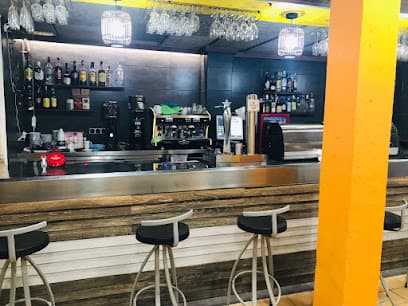
Restaurante La Flor
€€100 m · Nou Barris
A no-nonsense bastion of the working-class menú del día in Nou Barris, where the paella is real, the callos are spicy, and the tourist crowds are blissfully non-existent.
4.2(574)
RestaurantBar
HOTEL
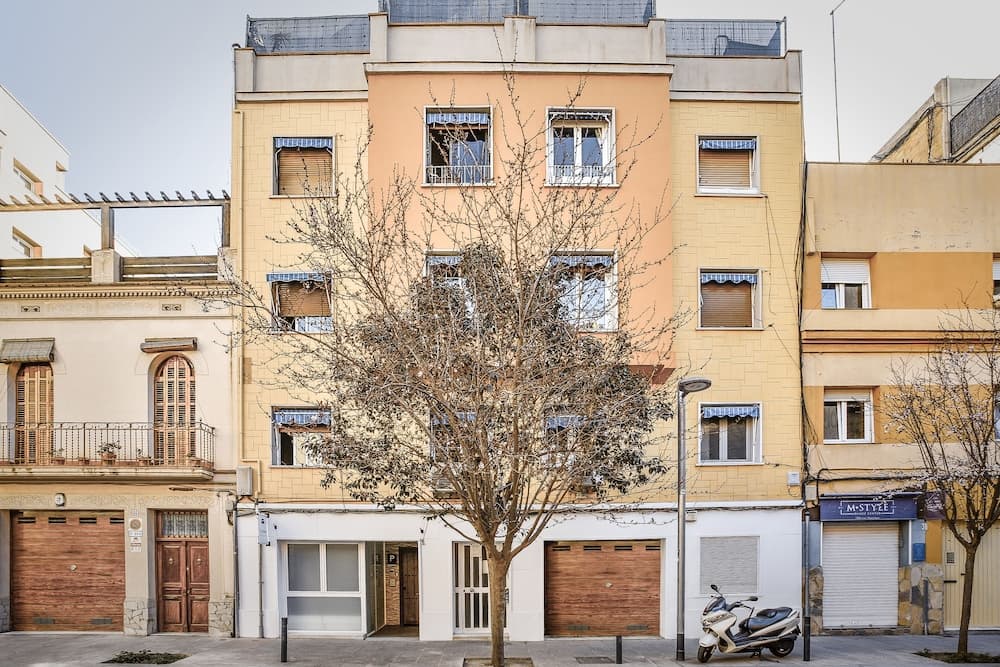
Comfort Barcelona Rooms
€€800 m · Nou Barris
A no-frills crash pad in the gritty, real-deal neighborhood of Nou Barris. It’s cheap, it’s functional, and it’s exactly what you need when your budget is tighter than a drum.
3.8(133)
Hotel
HOTEL
Laramond Barcelona Rooms
€800 m · Nou Barris
A three-star hotel with kitchens in some rooms on Carrer de Malgrat in Nou Barris, rated 4.7 from 93 Google reviews.
4.7(93)
Hotel
Frequently Asked Questions
Is Jardins de Can Xiringoi worth visiting?
It is worth it for travelers interested in urban transformation and local life away from the tourist center. It offers a quiet, authentic look at how Barcelona reclaims industrial space for public use.
What was Can Xiringoi before it was a park?
The site has a long history, originally serving as a 19th-century farmhouse (masia) before being converted into a bus depot and workshop for the city's public transport system.
How do I get to this garden in Nou Barris?
The gardens are located on Carrer del Doctor Pi i Molist. The easiest way to reach them is via the L4 Metro (Yellow Line) to the Llucmajor station or the L5 (Blue Line) to Virrei Amat.
Reviews
0 reviews for Interior d'Illa
No reviews yet. Be the first to share your experience!