4.0
109 verified reviews
About
Poblenou is a neighborhood of ghosts and glass. It used to be the 'Catalan Manchester,' a sprawling forest of soot-stained chimneys and brick textile mills that powered the city’s industrial heart. Today, it’s the 22@ district, a high-tech experiment where gleaming glass towers house software engineers and digital nomads. But if you want to see where the actual soul of the barrio still breathes, you have to step off the main drag of Carrer de Pallars and find the Illa Interior del Poblenou.
This isn’t the Barcelona of the postcards. There are no Gaudí curves here, no sweeping vistas of the Mediterranean, and certainly no one trying to sell you a plastic bull. Instead, you get the 'Illa'—the interior block courtyard. It was Ildefons Cerdà’s original dream for the Eixample: green, open spaces tucked inside every residential block, protected from the noise and filth of the street. In most of the city, greedy developers filled those spaces with warehouses and garages. But here in Poblenou, the city has been clawing them back, one industrial carcass at a time.
Walking into the courtyard at Pallars 216 feels like a glitch in the matrix. One minute you’re dodging delivery scooters and breathing in bus exhaust, and the next, the sound drops away. You’re standing in a reclaimed lung. The architecture surrounding you is a jagged timeline of the city’s history. On one side, you might see the weathered, sun-bleached back of a 19th-century apartment building with laundry flapping like surrender flags from the balconies. On the other, the sharp, cold lines of a modern office block. It’s a jarring juxtaposition that tells the truth about what Barcelona is: a city constantly cannibalizing its own past to feed its future.
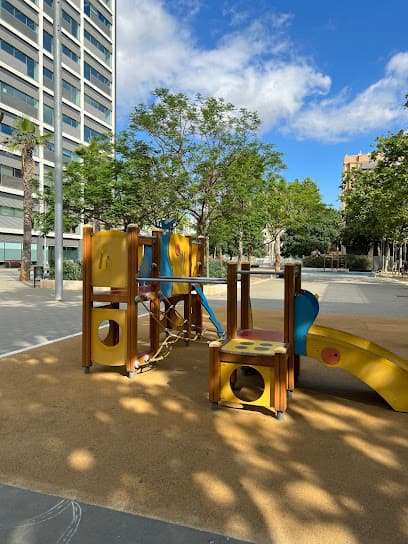
The park itself is functional, not flowery. The playground equipment is standard-issue—slides and swings that have been tested to destruction by generations of local kids. The ground is often that soft, recycled rubber that smells like a tire fire in the midday sun, but it serves its purpose. This is the local ritual. Around 5:00 PM, the space fills with the sound of children screaming in Catalan and Spanish, the rhythmic thud of a football against a concrete wall, and the low murmur of weary parents sitting on benches, scrolling through their phones or sharing a cigarette. It is aggressively normal, and that is exactly why it’s worth your time.
If you’re looking for 'stunning vistas,' go to Bunkers del Carmel. If you want 'vibrant energy,' go to La Boqueria and get elbowed by a cruise ship passenger. But if you want to sit in the shade of a tree and watch the real Barcelona—the one that doesn’t care if you’re there or not—this is the spot. It’s a place to breathe, to let the kids burn off the sugar from a nearby bakery, and to contemplate the fact that even in a city as hyper-touristed as this one, there are still corners that belong entirely to the people who live here.
Is it pretty? Not in the traditional sense. It’s gritty, it’s a little worn at the edges, and the shade is hard-won. But it’s honest. It’s a reminder that beneath the layers of tapas tours and souvenir shops, there is a working-class heart that still beats. Grab a coffee from one of the specialty roasters nearby, find a bench that isn't too sticky, and just sit. Watch the light change on the old brickwork. Listen to the city hum beyond the walls. This is the real deal, unfiltered and unapologetic.
Type
Playground, Park
Duration
30-60 minutes
Best Time
Late afternoon (5:00 PM - 7:00 PM) to see the local family ritual or weekday mornings for total silence.
What People Say
games(6)age(3)space(3)
Features
Playground
Park
Categories
PlaygroundUrban SpaceIndustrial Heritage
Ticket Prices
Free Admission
No tickets required
Opening Hours
- Monday9 AM to 9 PM
- Tuesday9 AM to 9 PM
- Wednesday9 AM to 9 PM
- Thursday9 AM to 9 PM
- Friday9 AM to 9 PM
- Saturday9 AM to 9 PM
- Sunday9 AM to 9 PM
Must-See Highlights
The playground area which is a hub for local families
The view of the surrounding industrial chimneys and modern 22@ architecture
The quiet 'illa' (island) effect that blocks out street noise
Visitor Tips
Pick up a coffee at a nearby roastery like Nomad or Espai Joliu before heading in.
Don't expect a botanical garden; this is a functional urban space.
Respect the neighbors—sound echoes in these interior courtyards.
Good For
Families with young childrenBudget travelersArchitecture enthusiastsLocals looking for a quiet spot
Why Visit
Reclaimed industrial courtyard offering a quiet escape from city traffic
Authentic local atmosphere where you can observe real Barcelona family life
Unique architectural contrast between 19th-century industrial heritage and modern tech offices
Nearby Landmarks
- Museu Can Framis (3-minute walk)
- Rambla del Poblenou (8-minute walk)
- Bogatell Beach (15-minute walk)
- Palo Alto Market (12-minute walk)
Accessibility
- Wheelchair accessible entrance
- Flat paved surfaces
- Ramped access from the street
Location
Carrer de Pallars, 216
Sant Martí, Barcelona
Nearby Hotels
Nearby Restaurants
In Sant Martí
ATTRACTION
LOS CERDINS HOUSE
Sant Martí
A raw, repurposed industrial relic in the heart of Sant Martí, Los Cerdins House is a testament to the neighborhood's manufacturing soul, where red-brick history meets the sharp, creative edge of modern Barcelona.
0.0(0)
Tourist attraction
ATTRACTION
Pista de frontó
Sant Martí
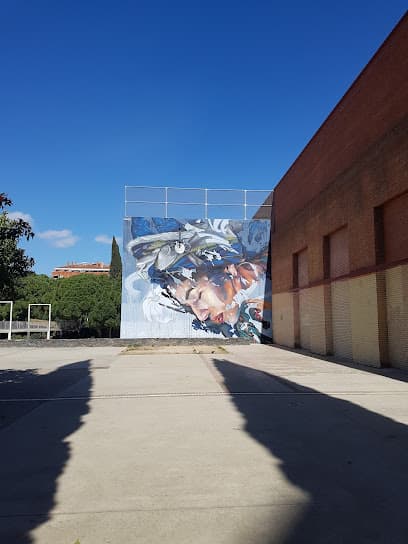
A sun-baked slab of concrete where the rhythmic thwack of a ball against stone serves as the soundtrack to a neighborhood still clinging to its gritty, industrial Poblenou soul.
0.0(0)
Park
ATTRACTION
Saraya Express
Sant Martí
A specialized travel outpost tucked away in Sant Martí. Saraya Express is where the logistics of a trip to Cairo meet the grit of Barcelona’s daily grind, far from the tourist-trap fluff.
0.0(0)
Tourist attraction
Frequently Asked Questions
Is Illa Interior del Poblenou worth visiting?
It is worth it if you are exploring the Poblenou neighborhood or have children who need a break. It offers a quiet, authentic look at local life away from the tourist crowds.
What should I know before going to this park?
It is a public interior courtyard, meaning it is enclosed by buildings and very safe for kids. There are no cafes inside, so bring your own water or snacks from the surrounding streets.
How do I get to Carrer de Pallars 216?
The easiest way is via the Metro Line 4 (Yellow Line), getting off at either Llacuna or Poblenou stations. It is a short 5-10 minute walk from either stop.
Reviews
0 reviews for Illa Interior del Poblenou
No reviews yet. Be the first to share your experience!