4.8
4 verified reviews
About
Most people come to Barcelona and never leave the gravitational pull of the Gothic Quarter or the Eixample. They think the city is just a collection of Gaudí curves and overpriced gin-and-tonics. They’re wrong. If you want to see the soul of this place—the part that hasn’t been scrubbed clean for Instagram—you have to head out to Sant Martí. Specifically, you need to find the Horta Masia Sant Martí on Carrer de Menorca. This isn't a 'must-see' in any traditional sense. It’s a survivor. It’s a 17th-century farmhouse, the Masia de Sant Martí, standing defiantly against a backdrop of 1970s red-brick apartment blocks and the relentless march of urban sprawl.
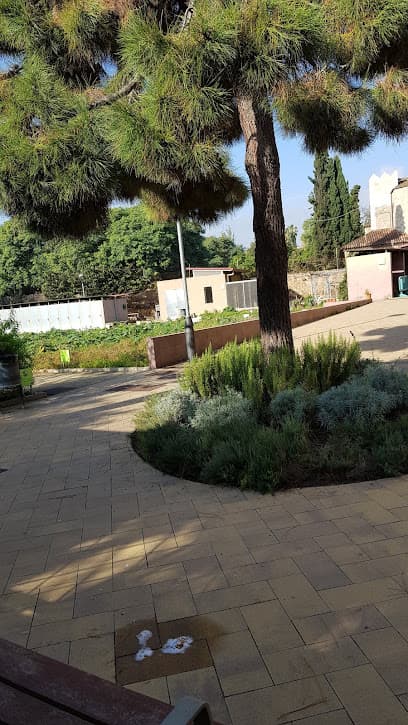
Walking up to this place is a lesson in cognitive dissonance. You’re in a dense, working-class residential neighborhood, and suddenly, there’s a patch of earth that smells like actual dirt, compost, and tomato vines instead of diesel and sunscreen. This is part of Barcelona’s 'Horts Urbans' network—urban gardens managed by the city, mostly tended by retirees who have more wisdom in their calloused pinky fingers than most of us have in our entire bodies. These aren't decorative flower beds. These are functional, productive plots of land where chard, beans, and onions grow in neat, obsessive rows. It’s a living link to the time when Sant Martí de Provençals was the 'granary of Barcelona,' a vast expanse of farmland that fed the walled city before the industrial revolution turned it into the 'Catalan Manchester.'
The Masia itself is a beautiful, unvarnished hunk of history. It’s one of the few remaining examples of the traditional rural architecture that once defined this entire plain. You look at the weathered stone and the heavy wooden doors and you realize this building has seen everything: the arrival of the trains, the rise of the factories, the Spanish Civil War, and the eventual transformation of the fields into the grid of streets you see today. It’s not a museum where you pay twenty euros to look at velvet ropes. It’s a community hub. On any given morning, you’ll see the 'avis'—the grandfathers—leaning on their hoes, arguing about the weather or the local football scores, and tending to their crops with a level of care that borders on the religious.
Is Horta Masia Sant Martí worth it? That depends on what you’re looking for. If you want a 'gastronomic adventure' or a 'breathtaking vista,' go somewhere else. But if you want to sit on a bench and watch the real Barcelona go by—the one that works, the one that grows things, the one that remembers its roots—then this is exactly where you need to be. It’s quiet. It’s honest. It’s a reminder that even in a city as globalized and touristed-to-death as Barcelona, there are still pockets of resistance where the earth still matters.
The best way to experience it is to just show up. Don't bring a tripod. Don't act like you're on a safari. Just walk the perimeter of the gardens, look at the way the light hits the old stone of the Masia, and appreciate the fact that in a world of glass and steel, someone is still bothered enough to grow a decent tomato in the middle of the city. It’s a small, green victory in a concrete world, and honestly, we need more of those. This is the best area to stay in Barcelona if you actually want to live like a local, far from the madding crowds of La Rambla.
Type
Park
Duration
30-45 minutes
Best Time
Weekday mornings when the local gardeners are most active and the neighborhood vibe is at its peak.
Features
Park
Categories
Urban GardenHistoryArchitectureCommunity Space
Ticket Prices
Free Admission
No tickets required
Must-See Highlights
The 17th-century stone facade of the Masia
The meticulously tended community vegetable plots
The contrast between the ancient farmhouse and the surrounding high-rise apartment blocks
Visitor Tips
Be respectful of the gardeners; this is their community space, not a theme park.
Combine this with a walk through the nearby Parc de Sant Martí for a full afternoon of local greenery.
Don't expect a museum; the Masia is often used for community offices and isn't always open for interior tours.
Good For
History buffsSlow travelersPhotography enthusiastsBudget travelers
Why Visit
Authentic 17th-century Masia (farmhouse) architecture preserved in a modern residential district.
Active community urban gardens providing a rare glimpse into local neighborhood life.
Zero tourist crowds, offering a peaceful and honest look at Barcelona's agricultural heritage.
Nearby Landmarks
- Parc de Sant Martí (2-minute walk)
- Biblioteca Sant Martí de Provençals (4-minute walk)
- Parc de la Verneda (10-minute walk)
Accessibility
- Flat paved paths around the perimeter
- Wheelchair accessible public areas
Location
Carrer de Menorca, 25
Sant Martí, Barcelona
Nearby Hotels
Nearby Restaurants
In Sant Martí
ATTRACTION
LOS CERDINS HOUSE
Sant Martí
A raw, repurposed industrial relic in the heart of Sant Martí, Los Cerdins House is a testament to the neighborhood's manufacturing soul, where red-brick history meets the sharp, creative edge of modern Barcelona.
0.0(0)
Tourist attraction
ATTRACTION
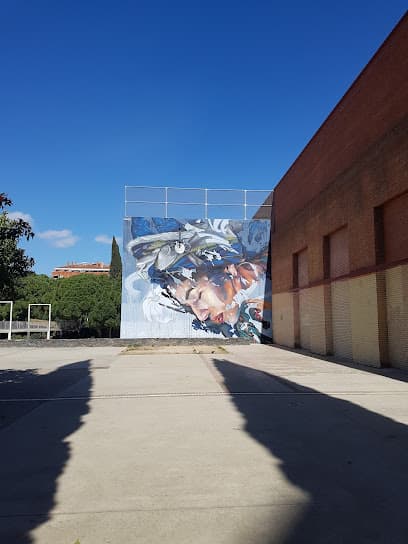
Pista de frontó
Sant Martí
A sun-baked slab of concrete where the rhythmic thwack of a ball against stone serves as the soundtrack to a neighborhood still clinging to its gritty, industrial Poblenou soul.
0.0(0)
Park
ATTRACTION
Saraya Express
Sant Martí
A specialized travel outpost tucked away in Sant Martí. Saraya Express is where the logistics of a trip to Cairo meet the grit of Barcelona’s daily grind, far from the tourist-trap fluff.
0.0(0)
Tourist attraction
Frequently Asked Questions
Is Horta Masia Sant Martí worth visiting?
Yes, if you want to see a genuine, non-touristy side of Barcelona. It offers a unique contrast between a 17th-century farmhouse and modern urban life, though it is not a traditional 'attraction' with tours.
Can I buy vegetables from the gardens?
No, the gardens are part of a community program for local residents, primarily retirees. The produce is for their own consumption and is not for sale to the public.
How do I get to Horta Masia Sant Martí?
The easiest way is via the Barcelona Metro. Take the L2 (Purple Line) to either the Bac de Roda or Sant Martí stations; the Masia is a short 5-10 minute walk from either.
Is there an entrance fee?
No, the area around the Masia and the urban gardens is a public space and is free to visit and observe from the perimeter.
Reviews
0 reviews for Horta Masia Sant Martí
No reviews yet. Be the first to share your experience!