4.3
6,605 verified reviews
About
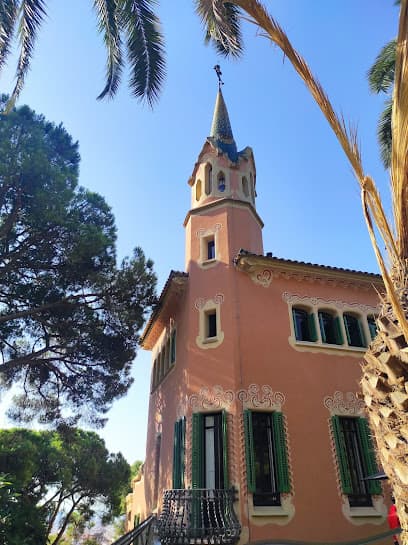
Most people come to Park Güell for the gingerbread houses and the mosaic lizard, but if you want to see the ghost of the man himself, you have to walk up the hill to the pink tower. This is the Casa Museu Gaudí, the place where Antoni Gaudí spent the last twenty years of his life. It’s a bit of a cosmic joke that the man who redefined the skyline of Barcelona lived in a house he didn’t even design. It was built by his friend Francesc Berenguer as a model home for a luxury housing estate that turned out to be a spectacular real estate failure. Nobody wanted to buy into Gaudí’s utopia, so the architect ended up buying the house himself and moving in with his elderly father and niece.
Walking through these rooms is like stepping into the mind of a religious fanatic who happened to be a visionary. It’s not 'charming' in the way the brochures tell you. It’s austere. It’s the home of a man who was slowly stripping away the distractions of the world to focus entirely on the Sagrada Família. You see his bedroom—a narrow, simple bed that looks more like a monk’s cot than the resting place of a world-renowned architect. There’s an oratory for prayer and a small library. It’s quiet, a sharp contrast to the technicolor madness of the park outside where tourists are currently fighting over selfie angles.
The real reason to pay the extra few Euros to get in here, though, is the furniture. Gaudí didn’t just design buildings; he designed the way people sat, the way they gripped a door handle, the way light hit a mirror. The house is packed with original pieces he created for Casa Calvet, Casa Batlló, and Casa Milà. These aren't just chairs; they are ergonomic experiments that look like they were grown in a lab from bone and sinew. A chair from Casa Calvet isn't just a place to sit; it’s a skeletal structure that seems to anticipate the shape of the human pelvis. It’s weird, it’s uncomfortable to look at, and it’s absolutely brilliant.
You’ll also find his personal belongings—his drawing tools, the books he read, the mundane artifacts of a life lived in the shadow of a cathedral that would never be finished in his lifetime. It’s a sobering experience. You realize that while the rest of Barcelona was moving toward modernity and decadence, Gaudí was retreating into a private world of prayer and geometry. He was a vegetarian, a loner, and a man who eventually started looking like a beggar because he cared so little for his own appearance.
Is it worth the detour? If you’re just here for the Instagram shots of the tiled benches, probably not. But if you want to understand why the stones of this city look the way they do, you need to see where the man slept. You need to see the drawing boards where the spires of the Sagrada Família were born. It’s a small, intimate look at a giant who lived like a hermit in a pink palace. By the time you walk back out into the sun-drenched chaos of the park, the mosaic dragons and the stone viaducts start to make a different kind of sense. They aren't just decorations; they’re the externalized dreams of the man who lived in this quiet, strange house on the hill.
Type
Museum, Heritage museum
Audio Guide
Available
What People Say
park(221)furniture(106)sagrada familia(92)genius(48)architect(32)casa batlló(18)la pedrera(14)memes(10)
Features
Museum
Heritage museum
Tourist attraction
Categories
ArchitectureHeritageGaudíArt
Opening Hours
- Monday9:30 AM to 5 PM
- Tuesday9:30 AM to 5 PM
- Wednesday9:30 AM to 5 PM
- Thursday9:30 AM to 5 PM
- Friday9:30 AM to 5 PM
- Saturday9:30 AM to 5 PM
- Sunday9:30 AM to 5 PM
Accessibility
- Wheelchair accessible ground floor and garden
- No lift access to upper floors
- Accessible toilets
Location
Parc Güell
Gràcia, Barcelona
Nearby
ATTRACTION
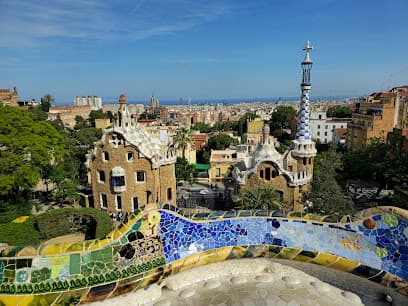
Park Güell
50 m · Gràcia
A failed housing project turned psychedelic playground where Gaudí’s broken-tile dreams collide with the crushing reality of ten thousand selfie sticks.
4.4(206K)
ParkTourist attraction
ATTRACTION
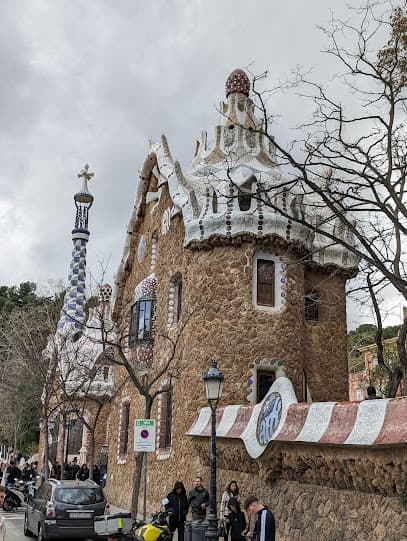
Entrada Marianao Park Güell
100 m · Gràcia
The threshold where Gaudí’s fever dream meets the brutal reality of the selfie-stick era. It’s crowded, it’s chaotic, and it’s still one of the most beautiful things ever built.
0.0(0)
Park
RESTAURANT
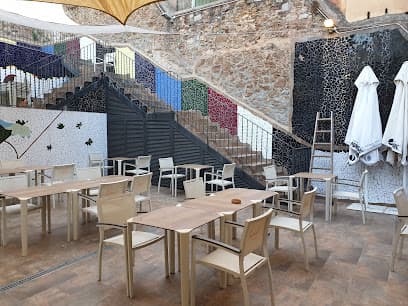
Restaurant Larrard 55
€€200 m · Gràcia
The inevitable pit stop on the climb to Park Güell, where the sangria is cold, the paella is predictable, and the view of passing tourists is better than the food.
3.0(466)
Mediterranean restaurant

RESTAURANT
Bar-Restaurant Piranya
€€200 m · Gràcia
A gritty, no-nonsense refueling station on the steep climb to Park Güell where the beer is cold, the pizza is safe, and the tourist gauntlet is in full, chaotic swing.
3.2(550)
BarFast food restaurant
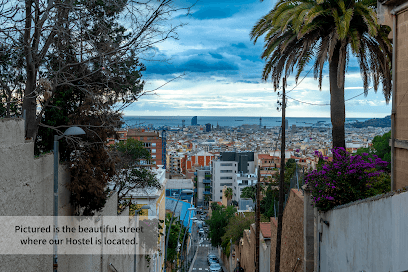
HOTEL
Factory Hostels Barcelona
€350 m · Gràcia
A gritty, industrial-chic refuge in the hills of Gràcia where privacy curtains and rooftop beers offer a sanctuary from the swarming tourist crowds of Park Güell.
4.1(588)
Youth hostel

HOTEL
Verdi 254
€500 m · Gràcia
At the quiet, uphill end of Gràcia, Verdi 254 is a no-nonsense guest house for those who’d rather spend their money on vermouth than a lobby bar they’ll never use.
4.4(14)
Guest house
Frequently Asked Questions
Is the Gaudí House Museum worth visiting?
Yes, if you are interested in the personal life of the architect and his furniture designs. It offers a quiet, intimate contrast to the crowded monumental zone of Park Güell.
Do I need a separate ticket for the Gaudí House Museum?
Yes, entry to the museum is not included in the general Park Güell ticket. You must purchase a specific Casa Museu Gaudí ticket, often available as a bundle with Sagrada Família entry.
What is inside the Gaudí House Museum?
The museum contains original furniture designed by Gaudí for his famous houses, his personal bedroom and oratory, and various personal belongings and drawings.
How long does it take to see the Gaudí House Museum?
Most visitors spend about 45 to 60 minutes exploring the house and the small surrounding garden.
Reviews
0 reviews for Gaudí House Museum
No reviews yet. Be the first to share your experience!