4.5
2 verified reviews
About
The Raval is a neighborhood that doesn't care if you like it. It’s loud, it’s crowded, and it smells of a thousand different lives being lived on top of each other. But if you duck off the main tourist artery of La Rambla and head down Carrer de la Unió, the volume drops just enough for you to notice the ghosts. Right there, at number 32, is the Font de la Unió. It’s a wall fountain, a piece of 18th-century street furniture that has seen more history than most museums in the Ciutat Vella.
Built in 1774, this fountain is a relic of the Enlightenment. Back then, the city was trying to pull itself out of the medieval muck, providing clean water to a population that was growing faster than the walls could contain. It’s a simple thing: a stone basin, a metal spout, and the coat of arms of Barcelona carved into the center. But look closer. The stone is pitted and grey, worn smooth in places by centuries of hands reaching for a drink. It’s not 'beautiful' in the way a Gaudí building is beautiful. It’s beautiful in the way a well-used tool is beautiful. This is authentic Barcelona history, stripped of the gift shops and the velvet ropes.
This part of the neighborhood, once known as the 'Barrio Chino,' has always been the city’s rough edge. While the bourgeoisie were dressing up for the opera at the nearby Gran Teatre del Liceu, the people on this street were living a much harder reality. This fountain was their lifeline. It’s a quiet witness to the strikes, the riots, and the everyday survival that defines the Raval. When you stand in front of it, you’re standing in the real Barcelona—the one that exists when the stage lights of the tourist shows are turned off. It’s a rare, unvarnished look at the city, a necessary stop if you actually want to feel the texture of the past.
If you’re the kind of person who needs a gift shop and a guided tour to feel like you’ve 'seen' something, you’ll walk right past it and wonder why you bothered. But if you’re the kind of traveler who finds more value in a weathered stone date—1774—than in a shiny new monument, then this is exactly where you need to be. It’s a small, honest piece of the city’s soul. It doesn't ask for your money, and it doesn't care if you take its picture. It just stands there, leaking history into the gutter. It’s an essential pause on a Ciutat Vella walking tour for those who want to avoid the usual traps.
The fountain is located just a few minutes from the Palau Güell, one of Gaudí’s early masterpieces. The contrast is jarring. On one hand, you have the dark, brooding luxury of a textile tycoon’s palace; on the other, a public water spout for the masses. That’s Barcelona in a nutshell—the extreme wealth and the extreme grit, separated by only a few narrow alleys. To understand one, you have to see the other. Don't expect a grand plaza; Carrer de la Unió is narrow, and the light rarely hits the bottom of the street. But that’s part of the charm. It’s a place where you can still feel the weight of the old city. The fountain is still functional, though it's more of a monument now than a hydration station. Just appreciate it for what it is: a survivor. In a city that is rapidly being turned into a theme park for foreigners, the Font de la Unió remains stubbornly, quietly itself.
Type
Tourist attraction
Duration
5-10 minutes
Best Time
Daylight hours to appreciate the stone carvings and the 1774 inscription.
Features
Tourist attraction
Categories
HistoryArchitectureRaval
Ticket Prices
Free Admission
No tickets required
Must-See Highlights
The 1774 date inscription
The weathered stone coat of arms of Barcelona
The original iron water spout
Visitor Tips
Combine this with a visit to the nearby Palau Güell to see the contrast between public and private 18th/19th-century architecture.
Look for the fountain at number 32; it is easy to walk past if you aren't paying attention.
The street is narrow and can be dark, so visit during the day for the best photos.
Good For
History buffsSolo travelersBudget travelersArchitecture enthusiasts
Why Visit
Original 1774 Enlightenment-era construction
Authentic Raval street-level history
Hand-carved 18th-century Barcelona coat of arms
Nearby Landmarks
- 3-minute walk from La Rambla
- 4-minute walk from Palau Güell
- 5-minute walk from Gran Teatre del Liceu
Accessibility
- Street level
- Wheelchair accessible
Location
Carrer de la Unió, 32
Ciutat Vella, Barcelona
Nearby Hotels
Nearby Restaurants
In Ciutat Vella
ATTRACTION
Park
Ciutat Vella
A thousand years of silence tucked behind a Romanesque monastery, where the grit of El Raval dissolves into ancient stone, cool shadows, and the heavy weight of history.
0.0(0)
Park
ATTRACTION
BARSHELONA
Ciutat Vella
Forget the plastic bulls and tacky magnets. This is where Barcelona’s soul is bottled into art, a small sanctuary of local design hidden in the shadows of the Gothic Quarter.
0.0(0)
Tourist attraction
ATTRACTION
Minajoe art
Ciutat Vella
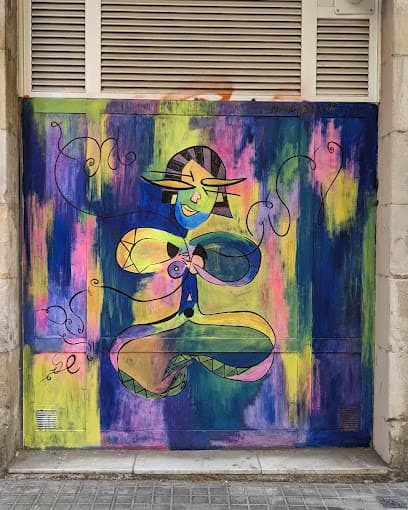
A raw, paint-splattered antidote to the sterile museum circuit. This is where pop-art meets the grit of the street, served straight from the artist’s hands in the heart of old Barcelona.
0.0(0)
Tourist attraction
Frequently Asked Questions
Is Font de la Unió worth visiting?
Only if you appreciate quiet, historical details. It is a simple 18th-century wall fountain, not a major monument, but it offers a glimpse into the authentic history of the Raval.
Where exactly is the fountain located?
It is attached to the wall at Carrer de la Unió, 32, in the Raval neighborhood, just a three-minute walk from La Rambla.
How much does it cost to see?
It is a public fountain on a city street, so it is completely free to view at any time of day.
What is the historical significance of the fountain?
Built in 1774 during the Enlightenment, it was part of the city's efforts to provide public water infrastructure and features the original Barcelona coat of arms.
Reviews
0 reviews for Fuente de la unión
No reviews yet. Be the first to share your experience!