4.5
64 verified reviews
About
Barcelona is a city built on layers of sweat, ego, and the desperate need for a cold drink. If you’re wandering through the Pla de Palau, dodging the scooters and the smell of salt air drifting up from the port, you’ll stumble across the Font del Geni Català. It’s not the kind of place where people queue up with selfie sticks, and that’s exactly why it matters. It’s a heavy, marble reminder of a time when 'public works' wasn't a boring line item in a budget, but a matter of life and death.
Back in the mid-1800s, Barcelona was choking. The city was still trapped behind its medieval walls, cramped, filthy, and bone-dry. Enter Francisco Bernaldo de Quirós, the Marquis of Campo Sagrado and Captain General of Catalonia. The man didn't just sit in a palace; he got things done. He brought water into a city that was dying for it. This fountain, inaugurated in 1856, is the city’s way of saying thanks. It’s a monument to the 'Catalan Genius,' but really, it’s a monument to the basic human necessity of not dying of thirst.
The architect was Francesc Daniel Molina—the same guy who gave us the iconic Plaça Reial—and he didn't hold back. At the base, you’ve got four statues representing the four Catalan provinces: Barcelona, Tarragona, Lleida, and Girona. They sit there, stoic and weathered, while water used to flow from the mouths of lions into the basins below. Higher up, you’ve got four figures representing the great rivers of the region: the Ebro, the Segre, the Llobregat, and the Ter. It’s a geography lesson carved in stone, a map of the lifeblood that keeps this rugged corner of the Mediterranean green.
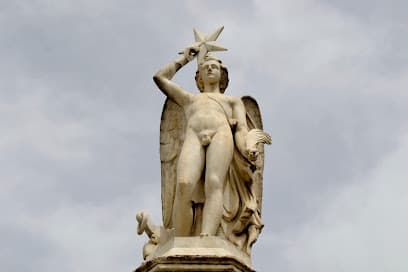
At the very top stands the 'Geni Català' himself—a winged youth holding a torch, looking out over the square. He’s been through some shit. The original statue was a bit of a mess by the mid-20th century, so Frederic Marès—Barcelona’s patron saint of collecting and restoring everything that wasn't nailed down—stepped in to fix it up. Marès had a knack for preserving the soul of the city, and his touch is all over this thing.
Standing in Pla de Palau today, it’s hard to imagine that this was once the beating heart of Barcelona’s administrative power. The old Royal Palace was right here before it burned down. The Llotja de Mar, the historic stock exchange, still looms nearby. This square was where the big decisions were made, where the money changed hands, and where the Captain General decided that the people deserved a drink.
Is it the most beautiful fountain in the world? Probably not. It’s a bit stiff, a bit formal, a bit '19th-century officialdom.' But it’s honest. It tells a story about a city that was growing too fast for its own skin and the people who tried to keep it hydrated. It’s a place to stop for a second, look up at that winged kid with the torch, and realize that every drop of water coming out of a tap in this city has a history of struggle behind it. Don't just walk past it on your way to a tapas bar in El Born. Give the Marquis a nod. He earned it.
Type
Sculpture, Tourist attraction
Duration
15-30 minutes
Best Time
Golden hour, when the low sun hits the marble and the square feels less like a transit hub.
What People Say
water(6)1856(5)captain general(3)architect(3)frederic mares(2)escutcheon(2)civilian(2)2007(2)
Features
Sculpture
Tourist attraction
Categories
SculptureHistoryPublic Art
Ticket Prices
Free Admission
No tickets required
Opening Hours
- MondayOpen 24 hours
- TuesdayOpen 24 hours
- WednesdayOpen 24 hours
- ThursdayOpen 24 hours
- FridayOpen 24 hours
- SaturdayOpen 24 hours
- SundayOpen 24 hours
Must-See Highlights
The 'Catalan Genius' winged statue at the peak
The four figures representing the Ebro, Segre, Llobregat, and Ter rivers
The allegorical statues of the four Catalan provinces at the base
Visitor Tips
Look for the lions' heads that once served as water spouts.
Combine this with a visit to the nearby Llotja de Mar to see the old administrative heart of the city.
It's a great meeting point if you're heading into the maze of El Born.
Good For
History buffsArchitecture enthusiastsBudget travelersPhotography
Why Visit
Tribute to the man who solved Barcelona's 19th-century water crisis
Designed by Francesc Daniel Molina, the architect of Plaça Reial
Restored by the legendary Barcelona sculptor and collector Frederic Marès
Nearby Landmarks
- 2-minute walk from Llotja de Mar
- 5-minute walk from Santa Maria del Mar
- 8-minute walk from Barceloneta Metro Station
- 10-minute walk from the Picasso Museum
Accessibility
- Outdoor public square
- Wheelchair accessible area
- Flat paved surfaces
Location
Pla de Palau, s/n
Ciutat Vella, Barcelona
Nearby Hotels
Nearby Restaurants
In Ciutat Vella
ATTRACTION
Park
Ciutat Vella
A thousand years of silence tucked behind a Romanesque monastery, where the grit of El Raval dissolves into ancient stone, cool shadows, and the heavy weight of history.
0.0(0)
Park
ATTRACTION
BARSHELONA
Ciutat Vella
Forget the plastic bulls and tacky magnets. This is where Barcelona’s soul is bottled into art, a small sanctuary of local design hidden in the shadows of the Gothic Quarter.
0.0(0)
Tourist attraction
ATTRACTION
Minajoe art
Ciutat Vella
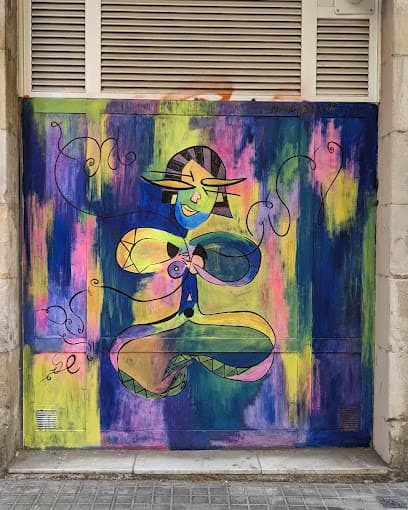
A raw, paint-splattered antidote to the sterile museum circuit. This is where pop-art meets the grit of the street, served straight from the artist’s hands in the heart of old Barcelona.
0.0(0)
Tourist attraction
Frequently Asked Questions
Is Font del Geni Català worth visiting?
Yes, if you appreciate 19th-century history and sculpture. It’s a quick, free stop that offers a glimpse into Barcelona's urban development and the history of its water supply.
Where is the Font del Geni Català located?
It is located in the center of Pla de Palau in the Ciutat Vella district, situated between the Gothic Quarter, El Born, and the Barceloneta neighborhood.
Who designed the Font del Geni Català?
The fountain was designed by architect Francesc Daniel Molina, with sculptures by Fausto Baratta and Josep Anicet Santigosa. It was later restored by the famous sculptor Frederic Marès.
What do the statues on the fountain represent?
The four statues at the base represent the Catalan provinces (Barcelona, Tarragona, Lleida, and Girona), while the figures above them represent the four major rivers of Catalonia.
Reviews
0 reviews for Font del Geni Català
No reviews yet. Be the first to share your experience!