4.4
222 verified reviews
About
You’re standing on Carrer de la Portaferrissa, a street that currently serves as a high-speed conveyor belt for fast fashion, polyester blends, and overpriced gelato. It’s loud, it’s crowded, and it smells faintly of city grit and diesel. But right there, at the junction where the chaos of La Rambla bleeds into the shopping district, is the Font de la Portaferrissa. It’s not a grand monument. It’s a tap in a wall. But it’s a tap with a long, stubborn memory.
This fountain dates back to 1680, a time when this spot wasn't a gauntlet of retail chains but a literal threshold. This was the site of the Porta Ferriça—the 'Iron Gate'—one of the eight primary entrances through the second medieval wall of Barcelona. The name wasn't just for show; the gate was fitted with iron bars that served as the city’s official units of measurement. If you were a merchant trying to sell cloth or a builder buying timber, these bars were the law. You measured your life and your livelihood against the iron of this gate. The wall is gone now, demolished in the 19th century to let the city breathe, but the fountain remains, a quiet witness to the transition from a fortified stronghold to a tourist playground.
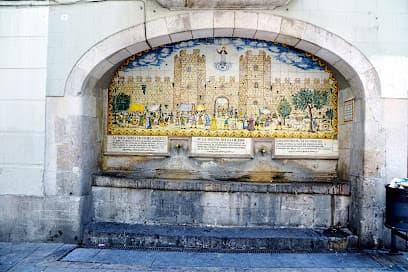
What stops you in your tracks today isn't the water—though it’s potable and perfectly fine for filling a bottle if you’re parched—but the ceramics. In 1959, the artist Pere Gratacós added a sprawling mural of 'trencadís' and painted tiles that depicts the scene as it would have looked centuries ago. You see the ramparts, the heavy wooden gates, and the citizens of old Barcelona going about their business in doublets and gowns. It’s a jarring, beautiful contrast: the hyper-modern shoppers in their Nikes walking past a 2D representation of their ancestors in leather boots. The colors are still vivid, a splash of Mediterranean blue and earthy ochre against the grey stone of the Ciutat Vella.
Most people walk right past it. They’re too busy looking for the next sale or checking their GPS to notice the history literally leaking out of the wall. But if you stop for a second, lean against the cool stone, and watch the water trickle, you get a sense of the layers of this city. Barcelona isn't just what’s on the surface; it’s a vertical stack of eras, each one built on the ruins of the last. The Font de la Portaferrissa is a small, accessible crack in that surface. It’s one of the best things to do in the Gothic Quarter if you want a hit of reality without paying an entrance fee.
Is it an essential stop? If you’re looking for the Sagrada Família, no. It’s a fountain. But if you give a damn about how a city evolves, how it remembers its own boundaries, and how it manages to keep a sliver of its medieval soul alive amidst the neon signs of a globalized shopping street, then yes, it’s worth the five minutes. It’s honest. It doesn't ask for your money, and it doesn't care if you take a selfie with it or not. It just stands there, offering a drink of water and a reminder that once, this was where the city ended and the rest of the world began.
Type
Historical landmark, Tourist attraction
Duration
5-15 minutes
Best Time
Early morning before the shopping crowds arrive on Carrer de la Portaferrissa.
What People Say
18th century(9)ceramic(7)ramparts(7)mosaic(6)medieval(5)13th century(4)1959(3)name(3)
Features
Historical landmark
Tourist attraction
Categories
ArchitecturePublic ArtMedieval HistoryCeramics
Ticket Prices
Free Admission
No tickets required
Opening Hours
- MondayOpen 24 hours
- TuesdayOpen 24 hours
- WednesdayOpen 24 hours
- ThursdayOpen 24 hours
- FridayOpen 24 hours
- SaturdayOpen 24 hours
- SundayOpen 24 hours
Must-See Highlights
The 1959 ceramic tiles showing the medieval wall
The iron-themed decorative elements
The small tap providing fresh drinking water
Visitor Tips
Look closely at the tiles to see the depiction of the 'Iron Gate' measurement bars
Bring a reusable bottle to refill with cold water
Combine this with a visit to the nearby Palau Moja for more local history
Good For
History buffsBudget travelersArt loversQuick photo stops
Why Visit
Original 1680 construction marking the site of the medieval city gate
Vibrant 1959 ceramic mural by Pere Gratacós depicting historical Barcelona
Functional public fountain providing free potable water in the city center
Nearby Landmarks
- 1-minute walk from La Rambla
- 3-minute walk from La Boqueria Market
- 5-minute walk from Barcelona Cathedral
- 2-minute walk from Palau Moja
Accessibility
- Street-level access
- Pedestrianized zone
- Wheelchair accessible
Location
Carrer de la Portaferrissa, 2
Ciutat Vella, Barcelona
Nearby Hotels
Nearby Restaurants
In Ciutat Vella
ATTRACTION
Park
Ciutat Vella
A thousand years of silence tucked behind a Romanesque monastery, where the grit of El Raval dissolves into ancient stone, cool shadows, and the heavy weight of history.
0.0(0)
Park
ATTRACTION
BARSHELONA
Ciutat Vella
Forget the plastic bulls and tacky magnets. This is where Barcelona’s soul is bottled into art, a small sanctuary of local design hidden in the shadows of the Gothic Quarter.
0.0(0)
Tourist attraction
ATTRACTION
Minajoe art
Ciutat Vella
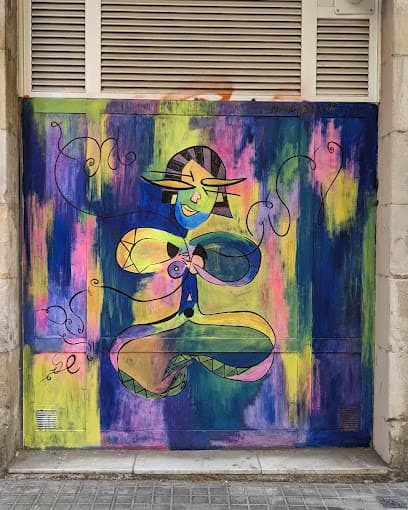
A raw, paint-splattered antidote to the sterile museum circuit. This is where pop-art meets the grit of the street, served straight from the artist’s hands in the heart of old Barcelona.
0.0(0)
Tourist attraction
Frequently Asked Questions
Is Font de la Portaferrissa worth visiting?
Yes, if you are already walking down La Rambla or shopping on Portaferrissa. It takes only five minutes to appreciate the 17th-century history and the 1959 ceramic mural depicting the old city gates.
Can you drink the water from Font de la Portaferrissa?
Yes, the water is potable and safe to drink. It is a functional public fountain used by locals and savvy travelers to refill water bottles for free.
What is the history behind the name Portaferrissa?
The name means 'Iron Gate.' It refers to one of the gates in Barcelona's medieval walls where iron bars were kept to serve as the official standard for length measurements in the city.
How do I get to Font de la Portaferrissa?
It is located at the intersection of La Rambla and Carrer de la Portaferrissa. The nearest Metro station is Liceu (L3), just a 3-minute walk away.
Reviews
0 reviews for Font de la Portaferrissa
No reviews yet. Be the first to share your experience!