4.5
22 verified reviews
About
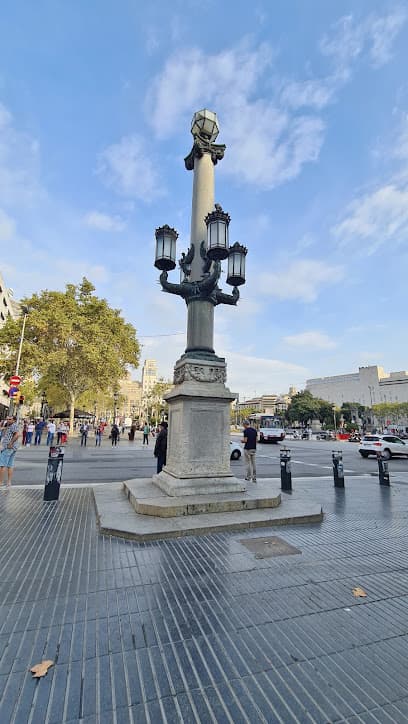
La Rambla is a meat grinder. It’s a gauntlet of human misery, overpriced sangria, and people who think they’re 'finding themselves' while buying a plastic bull made in China. It is the epicenter of everything wrong with modern tourism. But if you stop—really stop—at the very top, where the Rambla de Canaletes begins, you’ll see something that actually matters. It’s the Fanal Modernista, a streetlamp that has more soul in its rusted iron joints than the entire row of nearby souvenir shops combined.
Designed by Pere Falqués i Urpí in 1906, this isn't just a light source; it’s a statement. Falqués was the same madman responsible for the ornate benches and lamps on Passeig de Gràcia, but here, in the thick of the old city's entrance, the work feels more grounded, more utilitarian, yet somehow more aggressive. It’s a collision of heavy stone and whip-smart ironwork that looks like it was forged in a fever dream. While everyone else is looking for the 'best modernist architecture Barcelona' has to offer at the Sagrada Família, they’re walking right past a masterclass in ironmongery.
Most people are here for the Font de Canaletes, the legendary drinking fountain nearby. They drink the water because some guidebook told them it guarantees a return to Barcelona. Fine. Drink the water. But then turn around and look at the Fanal. Look at the way the iron curls like smoke, the way the stone base offers a seat to the weary and the hungover. It’s a piece of the city’s DNA, a remnant of a time when Barcelona decided that even the most mundane urban furniture deserved to be beautiful, or at least interesting. This is one of those essential things to do in La Rambla that doesn't cost a cent and requires zero queuing.
The base is solid, grey stone, carved with the city’s coat of arms. It’s been leaned against by millions of people—anarchists, tourists, street performers, and probably a few people who’ve had one too many vermouths. Above it, the ironwork explodes. It’s Gothic, it’s Art Nouveau, it’s quintessentially Catalan. It’s the kind of craftsmanship that doesn't exist anymore because it's too expensive and nobody has the patience for it. It stands as one of the most underrated modernist landmarks Barcelona possesses, hiding in plain sight.
Is it a 'must-see'? I hate that phrase. It’s a lamppost. You don't buy a ticket. You don't wait in line. You just stand there and appreciate that someone cared enough to make a streetlamp look like a weapon of war or a piece of jewelry. It’s the antidote to the bland, plasticized version of the city that’s being sold a few feet away. It represents the Barcelona that was—gritty, artistic, and unapologetically bold.
The tragedy is that it’s almost invisible. In the swirling chaos of the Rambla de Canaletes attractions, the Fanal is just background noise. But that’s also its charm. It doesn't demand your attention with neon lights or a barker at the door. It just stands there, doing its job, lighting the way for the pickpockets and the poets alike. If you’re looking for the 'real' Barcelona, it’s not in the VIP lounge of some club; it’s right here, covered in a thin layer of city grime and history.
So, here’s the play: get your water from the fountain, take a seat on the stone base of the Fanal, and watch the world go by for ten minutes. Don't look at your phone. Look at the iron. Look at the people. Feel the vibration of the city. Then, for the love of God, get off the Rambla and find a decent bar in the Raval. This is the best way to experience the Gothic Quarter and its fringes without losing your mind.
Type
Tourist attraction
Duration
5-10 minutes
Best Time
Early morning to avoid the heaviest Rambla crowds, or at night to see it illuminated.
What People Say
architect(2)
Features
Tourist attraction
Categories
ArchitectureModernismPublic Art
Ticket Prices
Free Admission
No tickets required
Opening Hours
- MondayOpen 24 hours
- TuesdayOpen 24 hours
- WednesdayOpen 24 hours
- ThursdayOpen 24 hours
- FridayOpen 24 hours
- SaturdayOpen 24 hours
- SundayOpen 24 hours
Must-See Highlights
The intricate wrought-iron 'crown' at the top of the lamp
The carved stone base featuring the Barcelona coat of arms
The contrast between the industrial iron and the classical stone seating
Visitor Tips
Don't confuse it with the drinking fountain; the Fanal is the tall, ornate lamp structure.
Watch your pockets while standing here; this area is prime territory for pickpockets.
Look closely at the ironwork to see the floral and organic motifs typical of Catalan Modernism.
Good For
Architecture buffsHistory loversBudget travelersPhotographers
Why Visit
Designed by Pere Falqués, the master of Barcelona's ornate urban ironwork
One of the few remaining 1906 modernist streetlamps in its original location
Combines a stone bench, the city coat of arms, and intricate wrought iron in one structure
Nearby Landmarks
- 1-minute walk from Font de Canaletes
- 2-minute walk from Plaça de Catalunya
- 5-minute walk from Mercat de la Boqueria
- 8-minute walk from Palau de la Música Catalana
Accessibility
- Fully accessible as it is located on a public pedestrian boulevard.
Location
Rambla de Canaletes
Ciutat Vella, Barcelona
Nearby Hotels
Nearby Restaurants
In Ciutat Vella
ATTRACTION
Park
Ciutat Vella
A thousand years of silence tucked behind a Romanesque monastery, where the grit of El Raval dissolves into ancient stone, cool shadows, and the heavy weight of history.
0.0(0)
Park
ATTRACTION
BARSHELONA
Ciutat Vella
Forget the plastic bulls and tacky magnets. This is where Barcelona’s soul is bottled into art, a small sanctuary of local design hidden in the shadows of the Gothic Quarter.
0.0(0)
Tourist attraction
ATTRACTION
Minajoe art
Ciutat Vella
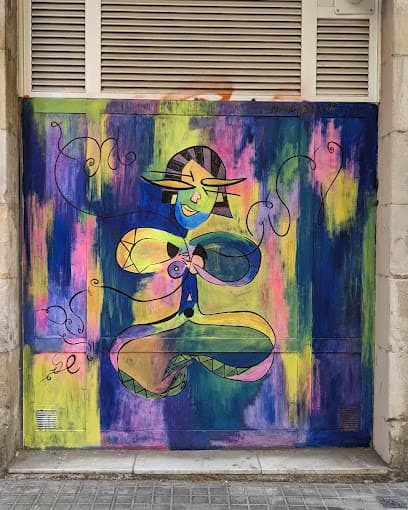
A raw, paint-splattered antidote to the sterile museum circuit. This is where pop-art meets the grit of the street, served straight from the artist’s hands in the heart of old Barcelona.
0.0(0)
Tourist attraction
Frequently Asked Questions
Is the Fanal Modernista worth visiting?
Yes, because it's a free, world-class piece of modernist art by Pere Falqués that you can appreciate in two minutes while walking down La Rambla.
Who designed the Fanal Modernista?
It was designed by the architect Pere Falqués i Urpí in 1906, the same man who designed the famous lamppost-benches on Passeig de Gràcia.
Where exactly is it located?
It is located at the very top of La Rambla, in the section known as Rambla de Canaletes, just a few steps from Plaça de Catalunya.
Do I need tickets for Fanal Modernista?
No, it is a public streetlamp and part of the city's urban furniture. You can view it for free 24/7.
Reviews
0 reviews for Fanal modernista
No reviews yet. Be the first to share your experience!