4.6
5 verified reviews
About
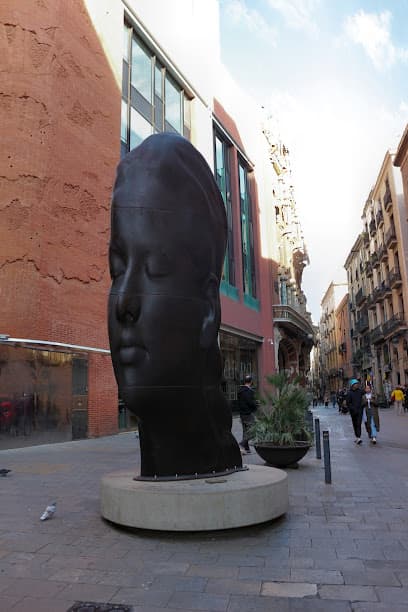
You’re walking down Carrer de Sant Pere Més Alt, dodging the usual suspects—lost tourists clutching maps like holy relics and delivery guys on scooters who have a personal vendetta against your shins. Then you see her. Carmela. She’s a 4.5-meter-tall slab of cast iron that shouldn't work, but somehow, in the shadow of the riotous, floral explosion of the Palau de la Música Catalana, she’s the only thing that makes sense.
Jaume Plensa, a local boy who made it big on the global stage, didn’t just dump a statue here. He created a ghost in iron. From the front, Carmela looks like a serene young girl with her eyes closed, caught in a moment of permanent Zen. But move a few inches to the left or right and the trick reveals itself. She’s flattened. It’s a technique called anamorphosis—a visual distortion that plays with your depth perception. One moment she’s a three-dimensional soul; the next, she’s a thin, ethereal slice of metal. It’s a reminder that everything we see depends entirely on where we’re standing, a lesson most travelers could stand to learn.
There’s a story here that isn't in the glossy brochures. Carmela wasn’t supposed to stay. She was part of a temporary exhibition in 2016. She was meant to be packed up, crated, and shipped off to some private collection or a museum where people whisper and wear expensive scarves. But the people of Barcelona—specifically the neighbors in Sant Pere—had other ideas. They fell for her. They saw this giant, rusted girl as one of their own. They petitioned the city, staged a quiet revolt of affection, and demanded she stay. Plensa, in a move that actually justifies the word 'legend,' agreed to lend her to the city for eight years, later extended. She belongs to the street now. She belongs to the guys drinking cortados at the corner bar and the grandmothers dragging shopping trolleys past her every morning.
The material itself is honest. It’s cast iron. It’s heavy, it’s industrial, and it weathers. It doesn't pretend to be gold or marble. It’s got the texture of the city’s industrial past, yet it depicts the soft features of a girl Plensa actually knew—a Barcelona local he scanned to create the work. That juxtaposition—the brutal weight of the iron versus the delicate peace on her face—is the whole point. It’s the same contrast you see in Barcelona itself: a city that is simultaneously tough as nails and heartbreakingly beautiful.
Don’t just take a selfie and move on. Stand there for a minute. Watch the light hit the iron as the sun dips behind the Gothic Quarter. Notice how she ignores the ornate, colorful mosaics of the Palau behind her. She doesn't need the flash. She doesn't need the attention. She’s just there, breathing in the chaos of the Ciutat Vella. If you’re looking for the 'best free art Barcelona' has to offer, this is it. It’s not a museum piece; it’s a neighbor. It’s a rare win for the locals in a neighborhood that often feels like it’s being sold off piece by piece to the highest bidder. Carmela is still here, eyes closed, dreaming of a Barcelona that still belongs to the people who live in it.
Type
Tourist attraction
Duration
15-30 minutes
Best Time
Early morning or late afternoon for the best shadows and fewer crowds near the Palau entrance.
Features
Tourist attraction
Categories
ArtSculptureContemporary ArtPublic Space
Ticket Prices
Free Admission
No tickets required
Must-See Highlights
The 'flattening' effect when viewed from the side
The contrast with the Modernista architecture of the Palau de la Música
The detailed texture of the weathered cast iron
Visitor Tips
Walk a full 360 degrees around the piece to see the perspective shift
Combine this with a visit to the Palau de la Música Catalana
Great spot for photography, especially when the sun is low
Good For
Art loversBudget travelersPhotography enthusiastsQuick stops
Why Visit
Anamorphosis visual effect that changes the sculpture's shape based on your viewing angle
A rare example of public art kept in place by a popular neighborhood petition
Striking contrast between industrial cast iron and the delicate features of a young girl
Nearby Landmarks
- Palau de la Música Catalana (1-minute walk)
- Santa Caterina Market (4-minute walk)
- Barcelona Cathedral (7-minute walk)
- Urquinaona Metro Station (3-minute walk)
Accessibility
- Fully accessible as it is located on a public sidewalk
- Tactile experience possible for visually impaired visitors
Location
Carrer de Sant Pere Més Alt
Ciutat Vella, Barcelona
Nearby Hotels
Nearby Restaurants
In Ciutat Vella
ATTRACTION
Park
Ciutat Vella
A thousand years of silence tucked behind a Romanesque monastery, where the grit of El Raval dissolves into ancient stone, cool shadows, and the heavy weight of history.
0.0(0)
Park
ATTRACTION
BARSHELONA
Ciutat Vella
Forget the plastic bulls and tacky magnets. This is where Barcelona’s soul is bottled into art, a small sanctuary of local design hidden in the shadows of the Gothic Quarter.
0.0(0)
Tourist attraction
ATTRACTION
Minajoe art
Ciutat Vella
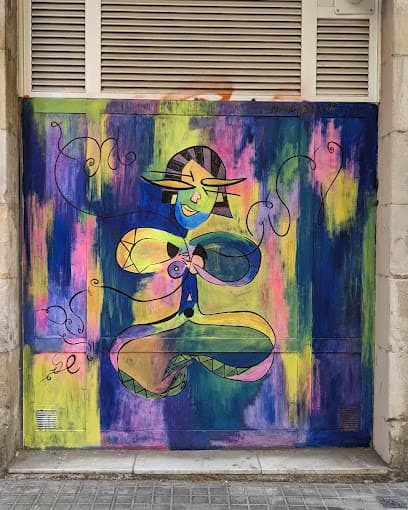
A raw, paint-splattered antidote to the sterile museum circuit. This is where pop-art meets the grit of the street, served straight from the artist’s hands in the heart of old Barcelona.
0.0(0)
Tourist attraction
Frequently Asked Questions
Is the Carmela sculpture worth visiting?
Absolutely. It is one of the most iconic pieces of public art in Barcelona, offering a unique optical illusion that changes as you walk around it. Plus, it's located right next to the Palau de la Música Catalana.
Where is the Jaume Plensa head in Barcelona?
The sculpture, titled Carmela, is located on Carrer de Sant Pere Més Alt, directly in front of the main entrance to the Palau de la Música Catalana in the Ciutat Vella district.
How much does it cost to see the Carmela sculpture?
It is completely free. The sculpture is located on a public sidewalk and can be viewed 24 hours a day without a ticket.
Who is the artist behind the Carmela sculpture?
It was created by Jaume Plensa, a world-renowned Barcelona-born sculptor famous for works like the Crown Fountain in Chicago and the Julia sculpture in Madrid.
Reviews
0 reviews for Escultura Carmela by Jaume Plensa
No reviews yet. Be the first to share your experience!