
About
If you want the version of Barcelona that’s been scrubbed, polished, and sold back to you on a postcard, stay in the Eixample. But if you want the city that breathes, sweats, and survives, you take the L5 metro to Vilapicina and start walking toward Nou Barris. You’re looking for the Escales d'Erta, a set of concrete ribs at the junction of Carrer d'Erta and Carrer de Travau that serve as the gateway to one of the city’s most underrated lungs: the Parc del Turó de la Peira.
This isn't a 'hidden gem'—I hate that phrase. It’s a neighborhood fortress. The climb up these stairs is a physical tax you pay to leave the noise of the city behind. As you ascend from the residential grit of Travau, the air changes. The smell of exhaust and frying oil gives way to the sharp, resinous scent of Mediterranean pine. This park was built on the bones of an old quarry, and it feels like it. It’s rugged, steep, and unapologetically vertical.
To your left as you begin the ascent, you’ll glimpse the low-slung, white-washed roofs of Can Peguera. These are the last of Barcelona’s 'Casas Baratas'—the 'cheap houses' built in 1929 to house workers for the International Exposition. They look like a small Andalusian village that’s been stubbornly holding its ground against the encroaching high-rises for nearly a century. This juxtaposition of the village-like Can Peguera and the rugged, pine-covered slopes of the Turó is where the real character of Nou Barris lies. It’s a reminder that the city isn't just a collection of monuments, but a layered history of people finding space to breathe and live with dignity on their own terms.
Once you pass through the entrance, you’re in an urban wood that covers nearly eight hectares. It’s one of the oldest public parks in Barcelona, opened in 1936 just as the world was falling apart, and it remains a sanctuary for the working-class families of Can Peguera and Turó de la Peira. You won’t find many influencers here posing for the ‘gram. You’ll find old men in flat caps arguing about football, grandmothers who have lived through three regimes, and kids playing on the same stone steps their parents did.
The history here is heavy. The surrounding neighborhood became a flashpoint in the 1990s during the 'aluminosis' crisis, where poorly constructed apartment blocks from the Franco era literally started to crumble. It’s a place defined by resilience, and the park is the reward for that endurance. As you spiral up the circular paths toward the summit—140 meters above sea level—the reward becomes clear.
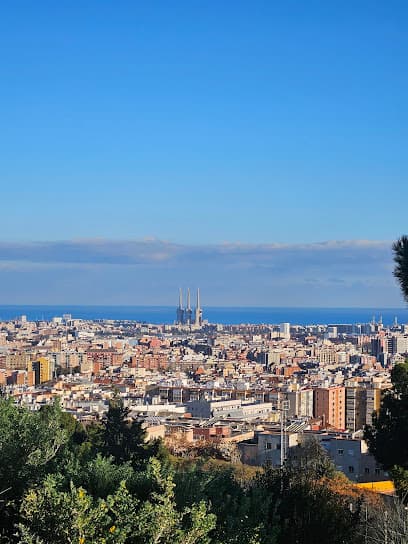
At the top, marked by a massive iron cross, you get the full 360. It’s a dizzying, panoramic gut-punch. To one side, the rolling green waves of the Collserola mountain range; to the other, the Mediterranean shimmering in the distance. In between, the dense, chaotic grid of Barcelona stretches out like a living map. You can see the Sagrada Família from here, looking like a strange sandcastle in the distance, but from this height, it’s just one more piece of the puzzle.
Is it worth the trek? If you care about seeing the soul of a city rather than just its highlights reel, then yes. It’s a place to sit on a weathered bench, crack a cold beer, and realize that the best views in Barcelona don't always come with a ticket price or a gift shop. It’s raw, it’s honest, and it’s exactly what travel should be.
Type
Park
Features
Park
Categories
NatureViewpointHikingLocal Culture
Accessibility
- Steep stairs at this specific entrance
- Limited accessibility for wheelchairs at Erta entrance
- Paved circular paths available once inside the park
Location
Nou Barris, Barcelona
Nearby
ATTRACTION
Mirador
50 m · Nou Barris
Forget the Bunkers; this is the raw, concrete edge of Barcelona where the city's working heart beats loudest against a backdrop of Mediterranean blue.
4.3(3)
Park
ATTRACTION
Parc del Turó de la Peira
100 m · Nou Barris
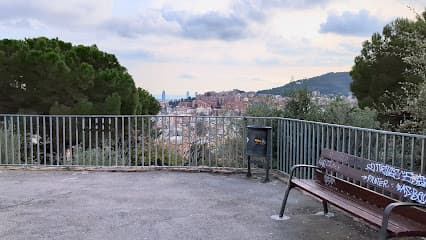
A jagged green lung in Nou Barris where pine scents battle the city's exhaust and the 360-degree views show you the Barcelona the tour buses conveniently forget.
4.2(3K)
City parkTourist attraction
RESTAURANT
Don Bratwurst L'Alemany
€€200 m · Nou Barris
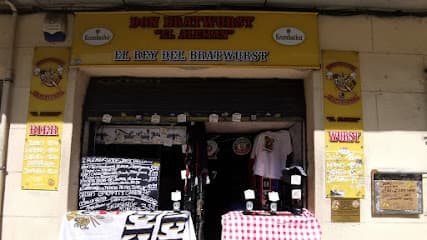
A loud, grease-slicked temple of rock 'n' roll and German sausages in Nou Barris, where the beer is cold, the music is heavy, and the tourists are nowhere to be found.
4.6(605)
German restaurant
RESTAURANT
La sabrosura Bar Restaurant
€€250 m · Municipality of Horta-Guinardó
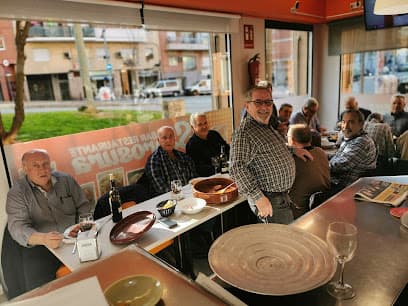
Forget the Gothic Quarter's overpriced tapas; head to Horta for massive plates of slow-cooked goat and cold Presidente beer in a room that vibrates with Bachata and real Dominican soul.
4.4(83)
Dominican restaurant

HOTEL
Mellow Hostel Barcelona
€750 m · Municipality of Horta-Guinardó
Perched high in Horta-Guinardó, this is where you trade central convenience for a killer rooftop view and the kind of quiet you won't find anywhere near the Ramblas.
3.0(932)
Hostel
HOTEL
Hotel Colors
€1.1 km · Municipality of Horta-Guinardó
A no-frills outpost in Horta where the walls are bright, the Metro is your lifeline, and you’re far enough from the Rambla to actually hear yourself think and find a parking spot.
3.5(450)
Hotel
Frequently Asked Questions
Is Parc del Turó de la Peira worth visiting?
Absolutely, if you want 360-degree views of Barcelona without the crowds of Park Güell. It offers a genuine local atmosphere and a beautiful pine forest setting that feels miles away from the city center.
How do I get to the Escales d'Erta entrance?
Take the L5 Metro to Vilapicina station. From there, it's about a 10-minute walk uphill toward the intersection of Carrer d'Erta and Carrer de Travau, where the stairs lead directly into the park.
Are there many stairs at this entrance?
Yes, the Escales d'Erta are steep. This entrance is designed for those who don't mind a bit of a climb. If you have mobility issues, there are more gradual paved paths entering the park from Passeig de Fabra i Puig.
What is the best time to visit?
Late afternoon is best. You'll catch the golden hour light hitting the city and the sea, and the temperature is much more manageable for the uphill climb.
Reviews
0 reviews for Escales d'Erta - Travau - entrada Turó de la Peira
No reviews yet. Be the first to share your experience!