4.2
22 verified reviews
About
Barcelona is a city that demands a lot from your hamstrings. It’s a vertical landscape, a series of hills that rise up from the Mediterranean like a challenge. And at the top of one of those hills sits Park Güell, Antoni Gaudí’s failed housing project turned UNESCO-listed fever dream. Most tourists, bless their hearts, follow the herd to the main entrance on Carrer d’Olot. They trudge up the steep incline, sweating through their linen shirts, arriving at the gates looking like they’ve just finished a marathon they didn't sign up for. Don't be that person.
The Entrada Sant Josep de la Muntanya is the back door, the mercy gate, the smart play. Located at the edge of the Gràcia neighborhood, this entrance is defined by one glorious, mechanical invention: the escalators of Baixada de la Glòria. These moving stairs are a godsend, whisking you up the brutal incline while you watch the laundry of ordinary Barcelonans flutter from balconies just inches away. It’s a voyeuristic, effortless ascent that offers a glimpse into the real city before you’re thrust into the curated madness of Gaudí.
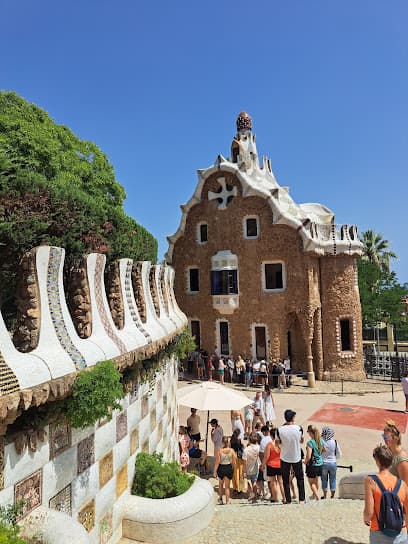
When you reach the top, the Sant Josep de la Muntanya entrance greets you with a bit more dignity. You aren't immediately hit with the crush of the main gate’s gift shops and tour bus exhaust. Instead, you enter through a more wooded, serene section of the park. You get the smell of pine needles and the sound of parakeets screaming in the palms before you see the first flash of trencadís—that iconic broken-tile mosaic that Gaudí used to turn stone into something that looks like it’s melting.
Let’s be clear about the best way to enter Park Güell: even through this 'secret' door, you still need a ticket. The days of wandering freely through the Monumental Zone are long gone, sacrificed at the altar of over-tourism. If you don't have a QR code on your phone for a specific time slot, the guards at this gate will turn you away with the practiced indifference of people who have done it a thousand times today. But if you’ve planned ahead, this entrance drops you perfectly into the park’s upper levels, allowing you to walk downhill toward the famous lizard and the hypostyle room. Walking downhill is always better than walking uphill. That’s just physics, and it’s a rule to live by in this city.
Is Park Güell worth it? Despite the crowds, despite the influencers posing until their smiles crack, the answer is an unequivocal yes. There is something genuinely hallucinogenic about the architecture here. It’s a place where nature and stone have an argument and both win. From the Sant Josep de la Muntanya side, you also get some of the best views of the Tibidabo mountain and the Sagrada Família poking its cranes into the skyline. It’s a reminder that Gaudí wasn't just building a park; he was trying to create a new world.
This entrance is the bridge between the gritty, lived-in reality of Gràcia and the high-art fantasy of the park. You start at the bottom, near the Lesseps metro, surrounded by old men in flat caps and the smell of roasting coffee, and ten minutes later, you’re standing in a forest of stone columns. It’s a transition that feels earned, even if the escalators did most of the work. If you’re looking to explore the best of Gràcia, starting here and working your way down into the neighborhood’s plazas for a vermouth afterward is the only way to do it right.
Type
Park
Duration
2-3 hours
Best Time
Early morning (9:00 AM) or two hours before sunset to avoid the worst heat and the largest tour groups.
Guided Tours
Available
Audio Guide
Available
Features
Park
Categories
ArchitectureUNESCO World HeritageGaudí
Ticket Prices
adult€10
child€0
senior€7
Opening Hours
- Monday9 AM to 7:30 PM
- Tuesday9 AM to 7:30 PM
- Wednesday9 AM to 7:30 PM
- Thursday9 AM to 7:30 PM
- Friday9 AM to 7:30 PM
- Saturday9 AM to 7:30 PM
- Sunday9 AM to 7:30 PM
Must-See Highlights
The Baixada de la Glòria escalators
Views of Tibidabo
The transition into the pine forest area
Proximity to the Santuari de Sant Josep de la Muntanya
Visitor Tips
Buy your tickets online at least 48 hours in advance; they sell out daily.
Bring water—the climb from the metro is thirsty work even with the escalators.
Use this entrance to walk DOWNHILL through the park toward the main exit.
Good For
Architecture loversPhotographersFamiliesBudget-conscious travelers who want the best route
Why Visit
The Escalator Shortcut: The only entrance that spares your legs the brutal climb from the valley floor.
Panoramic Approach: Offers sweeping views of Tibidabo and the city skyline before you even reach the ticket gates.
Local Context: Positioned in the upper reaches of Gràcia, providing a less touristy approach than the main bus-drop zones.
Nearby Landmarks
- 2-minute walk from Real Santuari de Sant Josep de la Muntanya
- 12-minute walk from Metro Lesseps (L3)
- 15-minute walk from Casa Vicens Gaudí
- 20-minute walk from Plaça de la Virreina
Accessibility
- Escalators available for the approach
- Some steep paths inside
- Accessible toilets available in the park
Location
Ptge. de Sant Josep la Muntanya, 46
Gràcia, Barcelona
Nearby Hotels
Nearby Restaurants
In Gràcia
ATTRACTION
Maison Sara
Gràcia
Forget the mass-produced kitsch on La Rambla. This is Gràcia at its best: a tactile, clay-smeared workshop where the art is as raw and honest as the neighborhood itself.
0.0(0)
Tourist attraction
ATTRACTION
Intercambiador de libros
Gràcia
A humble, weather-beaten box in the hills of Vallcarca where local history is traded one dog-eared paperback at a time. No tourists, no Wi-Fi, just paper and community.
0.0(0)
Park
ATTRACTION
View
Gràcia
Forget the elbow-to-elbow chaos of Park Güell. This is the raw, vertical soul of Gràcia, where the city unfolds in a silent, sun-drenched sprawl at your feet.
0.0(0)
Garden
Frequently Asked Questions
Is the Sant Josep de la Muntanya entrance better than the main entrance?
Yes, if you want to avoid a steep uphill climb. This entrance is served by outdoor escalators on Baixada de la Glòria, making the ascent much easier for those coming from the metro.
Do I need a ticket to use this entrance?
Yes. Since 2020, the entire park perimeter is restricted to ticket holders and local residents. There is no longer free access to the forest zones for tourists; you must have a pre-booked ticket to enter through this gate.
How do I get to this entrance from the Metro?
Take the L3 (Green Line) to Lesseps or Vallcarca. From there, follow the signs for Park Güell and look for the Baixada de la Glòria escalators which lead directly toward the Sant Josep de la Muntanya gate.
Is this entrance accessible for wheelchairs?
While there are escalators, the terrain inside the park from this entrance can be uneven and steep in sections. The main entrance on Carrer d'Olot is generally recommended for those with significant mobility issues.
Reviews
0 reviews for Entrada Sant Josep de la Muntanya Park Güell
No reviews yet. Be the first to share your experience!