5.0
10 verified reviews
About
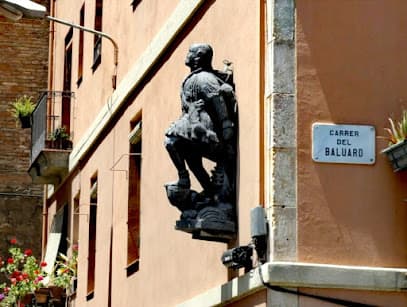
Barceloneta is a neighborhood with a permanent identity crisis, caught between the relentless tide of selfie-sticks and the stubborn, salt-crusted ghosts of its fishing past. If you want to find the latter, you have to turn your back on the Mediterranean, walk away from the overpriced mojitos, and head into the narrow, laundry-choked arteries where the real life happens. On the corner of Carrer d'Andrea Dòria and Carrer de la Maquinista, if you bother to look up, you’ll find him: El Negre de la Riba.
He’s a wooden figurehead, a relic from a mid-19th-century brigantine that supposedly limped into the port of Barcelona around 1860. The ship was destined for the scrap heap, but the figurehead—a stoic, dark-skinned man with a gaze that has seen more storms than you’ve had hot dinners—was saved from the furnace. He was bought by a man named Francesc Bonjoch, who owned a local winery and tavern. For decades, El Negre stood outside that tavern, becoming a silent witness to the evolution of the barrio. He became the neighborhood mascot, a landmark for sailors, dockworkers, and the kind of people who drink vermouth for breakfast. "Meet me at El Negre" wasn't just a direction; it was a way of life.
The thing you’re looking at now on the facade of the building at Carrer d'Andrea Dòria, 4, is a replica, placed there in 2003. The original, battered by a century of sea air and tavern brawls, is resting in the Museu Marítim de Barcelona. But don't let the "replica" tag put you off. In a city that is rapidly being polished into a frictionless, high-end shopping mall, El Negre represents the grit that remains. He represents a time when the sea wasn't just a backdrop for a sunset photo, but a source of livelihood, danger, and occasionally, a bit of mystery.
There’s a lot of talk about what El Negre actually represents. Some say the ship was involved in the slave trade—a dark chapter of Barcelona’s maritime history that the city is only recently starting to talk about honestly. Others see him simply as a symbol of the diverse, global reach of the 19th-century port. Whatever the truth, he is a piece of the neighborhood’s DNA. He’s survived the demolition of the old shantytowns, the Olympic makeover of 1992, and the current wave of gentrification. He’s still there, watching the locals hang their towels and the tourists wander by, looking for the nearest brunch spot.
Is it worth the walk? If you’re looking for a grand monument with a gift shop, no. But if you want to understand the marrow of Barceloneta—the part that smells like fried sardines and old wood—then yes. It’s one of the best things to do in Barceloneta if you actually give a damn about history. Stand there for a minute. Look at the way the light hits the wood. Then, do what the locals do: go find a dark, crowded bar nearby, order a glass of something strong, and toast to the ghosts of the Riba. This is the real Barcelona, hidden in plain sight, staring you right in the face.
Type
Sculpture, Tourist attraction
Duration
15-30 minutes
Best Time
Late afternoon when the neighborhood comes alive with locals heading to the nearby bars.
What People Say
1860(2)
Features
Sculpture
Tourist attraction
Categories
HistoryMaritimePublic ArtLocal Legend
Ticket Prices
Free Admission
No tickets required
Opening Hours
- MondayOpen 24 hours
- TuesdayOpen 24 hours
- WednesdayOpen 24 hours
- ThursdayOpen 24 hours
- FridayOpen 24 hours
- SaturdayOpen 24 hours
- SundayOpen 24 hours
Must-See Highlights
The detailed carving of the figurehead's face
The surrounding narrow streets of old Barceloneta
The original figurehead at the Maritime Museum nearby
Visitor Tips
Look up at the corner of the building or you'll walk right past it.
Combine this with a visit to La Cova Fumada for an authentic local lunch.
Visit the Maritime Museum afterward to see the original wooden carving.
Good For
History buffsPhotography enthusiastsSolo travelersBudget travelers
Why Visit
Authentic 19th-century maritime relic
Iconic symbol of Barceloneta's local identity
Located in the heart of the traditional fishing quarter
Nearby Landmarks
- Mercat de la Barceloneta (3-minute walk)
- Museu de Història de Catalunya (6-minute walk)
- Barceloneta Beach (5-minute walk)
- Museu Marítim de Barcelona (15-minute walk)
Accessibility
- Public street access
- Wheelchair accessible sidewalk
Location
Carrer d'Andrea Dòria, 4
Ciutat Vella, Barcelona
Nearby Hotels
Nearby Restaurants
In Ciutat Vella
ATTRACTION
Park
Ciutat Vella
A thousand years of silence tucked behind a Romanesque monastery, where the grit of El Raval dissolves into ancient stone, cool shadows, and the heavy weight of history.
0.0(0)
Park
ATTRACTION
BARSHELONA
Ciutat Vella
Forget the plastic bulls and tacky magnets. This is where Barcelona’s soul is bottled into art, a small sanctuary of local design hidden in the shadows of the Gothic Quarter.
0.0(0)
Tourist attraction
ATTRACTION
Minajoe art
Ciutat Vella
A raw, paint-splattered antidote to the sterile museum circuit. This is where pop-art meets the grit of the street, served straight from the artist’s hands in the heart of old Barcelona.
0.0(0)
Tourist attraction
Frequently Asked Questions
Is El Negre de la Riba worth visiting?
Yes, if you appreciate maritime history and neighborhood legends. It's a quick, free stop that offers a glimpse into the raw character of Barceloneta away from the tourist crowds.
Where is the original El Negre de la Riba figurehead?
The original 19th-century wooden figurehead is preserved in the Museu Marítim de Barcelona (Maritime Museum). The one on Carrer d'Andrea Dòria is a faithful replica installed in 2003.
What is the history of El Negre de la Riba?
It was originally the figurehead of a brigantine ship that arrived in Barcelona around 1860. After the ship was scrapped, it became a famous landmark at a local tavern owned by Francesc Bonjoch.
Reviews
0 reviews for el Negre de la Riba
No reviews yet. Be the first to share your experience!