4.4
726 verified reviews
About
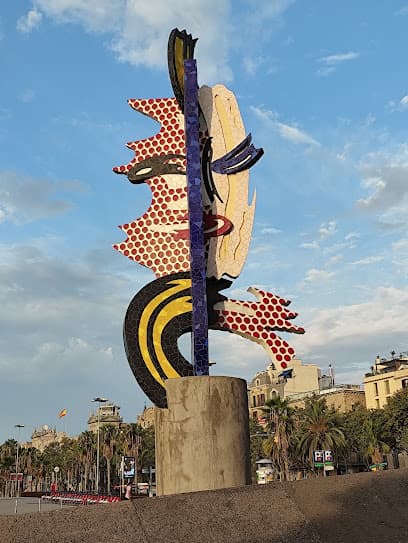
In 1992, Barcelona didn’t just host an Olympics; it underwent a radical, surgical face-lift. The city scrubbed the grime off its medieval walls, tore down the industrial warehouses blocking the sea, and invited the world’s heavy hitters to leave a mark on the new skyline. Among them was Roy Lichtenstein, the high priest of American Pop Art. The result is 'El Cap de Barcelona'—The Head of Barcelona—a fifteen-meter-tall, ceramic-tiled hallucination that looks like a comic book panel exploded over one of Gaudí’s chimneys.
Standing at the edge of the Passeig de Colom, where the Ciutat Vella finally breathes and meets the water of Port Vell, this thing is impossible to miss. It’s a vertical slab of concrete covered in primary colors—screaming reds, deep blues, and sunshine yellows. But look closer. This isn't just a New York artist parachuting into Catalonia to drop a generic monument. Lichtenstein was paying his respects. He took his signature Ben-Day dots—those tiny circles that define the texture of old-school printing—and rendered them in 'trencadís,' the broken-tile mosaic technique that Gaudí made famous a century earlier. It’s a collision of two worlds: the mass-produced, commercial aesthetic of 20th-century America and the artisanal, organic soul of Catalan Modernism.
The sculpture depicts a woman’s head, though you might have to squint through the Mediterranean glare to see it. It’s abstract, jagged, and unapologetically loud. The brushstrokes are thick and black, frozen in concrete. It’s the kind of art that makes traditionalists grind their teeth and makes everyone else reach for their cameras. There’s a certain irony in it, too. Lichtenstein, a man who built a career on the irony of the 'low-brow' comic, created something that has become a high-brow landmark for a city that prides itself on being both ancient and avant-garde.
Walking up to it, you feel the scale. It’s massive. It looms over the palm trees and the tourists shuffling toward the beach. The base is surrounded by the constant hum of traffic and the occasional skater using the smooth pavement of the Moll de la Fusta as a playground. It’s not a quiet place for reflection. It’s a loud, visceral piece of the city’s modern identity. You don't come here for a spiritual experience; you come here to see what happens when a city decides to stop looking backward and starts shouting at the future.
Is it 'beautiful' in the classical sense? Probably not. It’s jarring. It’s a bit weird. But that’s exactly why it works. Barcelona isn't just Gothic cathedrals and dusty museums; it’s a city that survived a dictatorship and celebrated by throwing a massive, colorful party that never really ended. El Cap is the leftover confetti from that party. It represents the moment the city turned its face back toward the sea, and if you’re wandering through the Gothic Quarter, take the ten-minute walk down to the water to see this jagged, colorful giant. It’s a reminder that even in a city steeped in history, there’s always room for a little bit of beautiful, colorful nonsense.
Type
Sculpture, Tourist attraction
Duration
15-30 minutes
Best Time
Late afternoon when the sun hits the ceramic tiles, making the colors pop against the blue sky.
What People Say
beach(13)pop art(12)1992 summer olympics(11)monument(11)gaudi(8)surreal(6)abstract(6)1991(5)
Features
Sculpture
Tourist attraction
Categories
Pop ArtModernismOlympic HeritagePublic Art
Ticket Prices
Free Admission
No tickets required
Opening Hours
- MondayOpen 24 hours
- TuesdayOpen 24 hours
- WednesdayOpen 24 hours
- ThursdayOpen 24 hours
- FridayOpen 24 hours
- SaturdayOpen 24 hours
- SundayOpen 24 hours
Must-See Highlights
The Ben-Day dots rendered in ceramic tiles
The contrast between the sculpture and the nearby historic Port Vell buildings
The jagged 'brushstroke' outlines typical of Lichtenstein's style
Visitor Tips
Walk from the Gothic Quarter through Carrer de l'Argenteria to reach it for a scenic route.
It's a great starting point for a walk along the Moll de la Fusta toward the beach.
Keep an eye out for the 'Gambrinus' giant lobster sculpture nearby for more 92-era art.
Good For
Art loversPhotographersFamiliesBudget travelers
Why Visit
Fusion of American Pop Art and traditional Catalan trencadís mosaic
Iconic 1992 Olympic landmark symbolizing the city's modernization
Massive 15-meter scale that dominates the Port Vell waterfront
Nearby Landmarks
- Port Vell (2-minute walk)
- Columbus Monument (8-minute walk)
- Basilica of Santa Maria del Mar (10-minute walk)
- Barceloneta Beach (12-minute walk)
Accessibility
- Fully accessible outdoors
- Paved flat surfaces surrounding the sculpture
- Visible from the street
Location
Pg. de Colom, s/n
Ciutat Vella, Barcelona
Nearby Hotels
Nearby Restaurants
In Ciutat Vella
ATTRACTION
Park
Ciutat Vella
A thousand years of silence tucked behind a Romanesque monastery, where the grit of El Raval dissolves into ancient stone, cool shadows, and the heavy weight of history.
0.0(0)
Park
ATTRACTION
BARSHELONA
Ciutat Vella
Forget the plastic bulls and tacky magnets. This is where Barcelona’s soul is bottled into art, a small sanctuary of local design hidden in the shadows of the Gothic Quarter.
0.0(0)
Tourist attraction
ATTRACTION
Minajoe art
Ciutat Vella
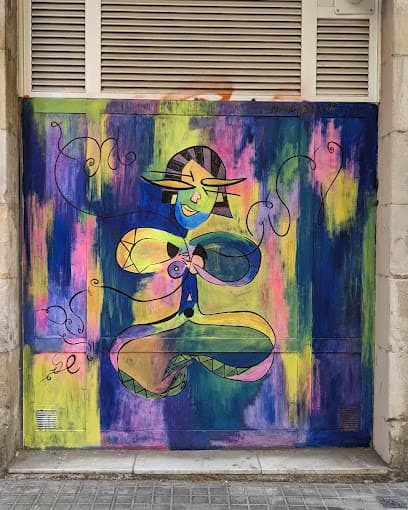
A raw, paint-splattered antidote to the sterile museum circuit. This is where pop-art meets the grit of the street, served straight from the artist’s hands in the heart of old Barcelona.
0.0(0)
Tourist attraction
Frequently Asked Questions
What makes El Cap de Barcelona unique?
The sculpture is significant for its intersection of Pop Art and local Catalan history. It's a quick, free stop that offers a great photo opportunity and a unique look at how the 1992 Olympics transformed the city's waterfront.
Who designed El Cap de Barcelona?
The sculpture was designed by American Pop Artist Roy Lichtenstein, in collaboration with sculptor Diego Delgado, who executed the ceramic tile work in the traditional Catalan 'trencadís' style.
Do I need tickets for El Cap de Barcelona?
No, it is a public sculpture located outdoors on the Passeig de Colom. You can view it for free at any time of day or night.
How do I get to El Cap de Barcelona?
It's located at the end of Passeig de Colom near Port Vell. The closest Metro station is Barceloneta (L4), about a 5-minute walk away, or Drassanes (L3), which is about 10 minutes away.
Reviews
0 reviews for El Cap de Barcelona
No reviews yet. Be the first to share your experience!