4.7
9 verified reviews
About
Forget the Sagrada Família for a second. Put down the overpriced gelato, step away from the Gothic Quarter’s claustrophobic stone alleys, and get on the L11 metro—the 'pocket metro'—heading north until the city starts to tilt upward. You’re going to Nou Barris, specifically to the steep, gravity-defying slopes of Torre Baró. This isn't the Barcelona they sell you in the glossy brochures. This is the Barcelona that was built by hand, brick by sweat-soaked brick, by immigrants who arrived with nothing but a suitcase and a refusal to be ignored.
El Campillo de la Virgen is a small, unassuming clearing perched on the edge of the Collserola hills. It’s not a park in the way the Eixample understands parks. There are no manicured rose bushes or 'keep off the grass' signs here. It’s raw, it’s dusty, and it smells of pine needles and the distant, metallic hum of the C-17 highway snaking through the valley below. At its heart sits a small shrine dedicated to the Virgen de la Fuensanta, the patroness of Murcia. This is the physical manifestation of a migration story. In the mid-20th century, thousands of Murcians and Andalusians settled here, building their own homes on these vertical plots because the city center had no room—and no heart—for them. They brought their saints with them, and they built this 'campillo' as a place to gather, to remember where they came from while looking out at where they landed.
The arrival is a workout. You’ll likely be huffing and puffing by the time you reach the clearing, your calves screaming at the incline. But then you turn around. The view is a protein rush to the cortex. From here, the grid of the Eixample looks like a discarded circuit board. You can see the Mediterranean shimmering in the distance, the Agbar Tower poking up like a neon thumb, and the sprawling mass of the city laid out in its entirety. But you’re seeing it from the perspective of the periphery. There’s a profound silence up here, broken only by the wind or the occasional bark of a neighborhood dog. It’s a place for contemplation, for realizing that the 'real' Barcelona isn't found in a tapas tour, but in the places where the people who actually run the city go to catch their breath.
There is no gift shop. There is no café selling five-euro espressos. If you want a drink, you’d better have brought a bottle of water or a can of Estrella in your bag. The ground is uneven, the shade is sparse, and the sun can be brutal. It’s honest. It doesn't care if you like it. The locals who walk their dogs here or sit on the low stone walls aren't there to perform 'authenticity' for you; they’re just living.
Is it worth the trek? If you’re the kind of person who needs a guided tour and a bathroom every twenty minutes, absolutely not. Stay in Las Ramblas and get your pockets picked. But if you want to understand the grit and the bone-deep resilience of this city—if you want to see the sunset hit the Tibidabo mountain from a place that feels like the edge of the world—then El Campillo de la Virgen is the only place that matters. It’s a reminder that the most beautiful things in life are often the ones that were the hardest to build and the easiest to overlook.
Type
Park
Duration
1-2 hours
Best Time
Late afternoon for the sunset, when the light hits the city and the heat of the day has faded.
Features
Park
Categories
ViewpointHistoryHikingReligious Site
Ticket Prices
Free Admission
No tickets required
Must-See Highlights
The Shrine of the Virgen de la Fuensanta
The panoramic view of the Besòs river and the sea
The self-built houses of the surrounding Torre Baró neighborhood
Visitor Tips
Bring a jacket, as it gets significantly windier and cooler at this elevation than in the city center.
Combine the visit with a stop at the nearby Castell de Torre Baró for more history.
Respect the neighborhood; this is a residential area where people value their quiet.
Good For
HikersPhotographersHistory buffsBudget travelers
Why Visit
Unfiltered 360-degree views of the entire Barcelona metropolitan area
Deep cultural connection to the Murcian immigrant history of Torre Baró
Complete absence of tourist crowds and commercial traps
Nearby Landmarks
- Castell de Torre Baró (10-minute walk)
- Mirador de Torre Baró (12-minute walk)
- Parc de Collserola (adjacent)
Accessibility
- Limited - the terrain is very steep and uneven, not suitable for wheelchairs or those with mobility issues.
Location
Nou Barris, Barcelona
In Nou Barris
ATTRACTION
Plaça Verda de la Prosperitat
Nou Barris
A concrete-and-chlorophyll middle finger to urban neglect, where Nou Barris locals reclaim their right to breathe, drink, and exist far from the suffocating Sagrada Familia crowds.
0.0(0)
Garden
ATTRACTION
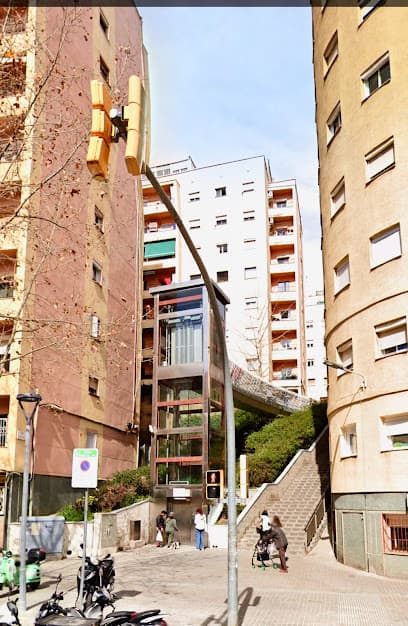
Ascensor Canfranc - Paseo de Fabra y Puig 08031 Nou Barris
Nou Barris
A glass-and-steel lifeline in Nou Barris that saves your knees and offers a gritty, honest view of the Barcelona tourists usually ignore. No gift shops, just gravity-defying utility.
0.0(0)
Hiking area
ATTRACTION
Carrer pimoli42
Nou Barris
The anti-tourist Barcelona. A gritty, honest stretch of Nou Barris where the Gaudí magnets disappear and the real city begins over cheap beer and the smell of rotisserie chicken.
0.0(0)
Tourist attraction
Frequently Asked Questions
Is El Campillo de la Virgen worth visiting?
Yes, if you want the most authentic, non-touristy view of Barcelona. It offers a 360-degree panorama of the city and the sea that puts the Bunkers del Carmel to shame in terms of peace and quiet.
How do I get to El Campillo de la Virgen?
Take the Metro Line 11 to Torre Baró | Vallbona. From there, it is a steep 15-20 minute hike uphill. Wear comfortable shoes; the terrain is rugged and vertical.
What is the history of El Campillo de la Virgen?
It was established by Murcian immigrants who settled in Torre Baró in the 1950s and 60s. They built the shrine to the Virgen de la Fuensanta to maintain their cultural traditions in their new home.
Are there facilities at El Campillo de la Virgen?
No. There are no toilets, shops, or restaurants at the clearing. Bring your own water and snacks, and be prepared for a rustic outdoor experience.
Reviews
0 reviews for El Campillo de la Virgen
No reviews yet. Be the first to share your experience!