4.5
48,566 verified reviews
About
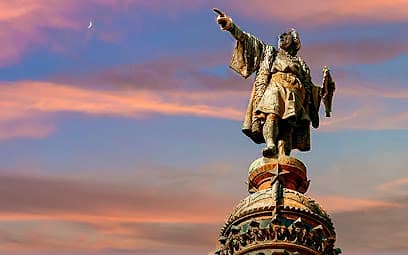
Christopher Columbus stands on a 60-meter pedestal at the foot of La Rambla, pointing his finger toward... well, not the Americas. He’s pointing toward the sea, toward his supposed home of Genoa, or maybe just toward the horizon where the money used to come from. It’s a massive, iron-and-stone exclamation point at the end of Barcelona’s most famous street, built for the 1888 Universal Exhibition to remind the world that Spain once owned the map. It is the anchor where the city’s chaotic urban energy finally spills into the Mediterranean.
At the base of the monument, you’ll find the eight massive bronze lions that have become the unofficial mascots of the Port Vell. Every day, hundreds of tourists climb onto their backs for a photo, their bronze hides polished to a golden sheen by a million pairs of jeans. Surrounding the base are intricate reliefs depicting scenes from Columbus’s life—the kind of heroic, sanitized history you’d expect from the 19th century. It’s grand, it’s heavy, and it’s unapologetically imperial. Most people just snap a photo of the lions and keep walking toward the water, but they’re missing the real story hidden inside the column.
Inside that Corinthian pillar is a lift. And when I say lift, I mean a tiny, rattling metal cage that feels like it was designed for someone much smaller and much less claustrophobic than a modern human. It drags you up to the top, 60 meters above the pavement, through the hollow center of the iron structure. It’s a slow, mechanical ascent that makes you appreciate the engineering of 1888 while simultaneously questioning your life choices.
When the doors finally open at the top, you’re in the Mirador—a circular gallery so narrow that two people can barely pass each other without an awkward apology. But the view? That’s the payoff. This is one of the best things to do in Barcelona if you want to understand the city's layout. To the north, the chaotic ribbon of La Rambla stretches toward Plaça de Catalunya. To the south, the Mediterranean, the Mare Nostrum, shimmers with an indifferent blue. You can see the Gothic Quarter’s jagged rooftops, the industrial cranes of the port, and the green hump of Montjuïc. It’s a perspective of Barcelona you can’t get anywhere else, stripped of the street-level noise and the smell of fried dough.
Let’s be real: Columbus is a complicated figure. In a city that prides itself on its progressive, Catalan identity, a giant monument to a guy who sailed for the Castilian crown and kickstarted a few centuries of colonial messiness is a point of contention. There have been calls to tear it down or recontextualize it. But for now, he stays—a permanent fixture of the skyline and a reminder of the era when Barcelona was reinventing itself for the world stage.
Is the Columbus Monument worth visiting? If you want the 'big picture' of how the city meets the sea, yes. If you want to see the Sagrada Família from a distance without the crowds of Park Güell, this is your spot. Just don't expect a luxury experience. It’s cramped, it’s old, and it’s a bit rough around the edges. But that’s Barcelona. It’s a relic of an era that loved its heroes tall and its monuments heavy. Stay on the ground to pat a lion, or take the ride up to see the world as the explorers imagined it—vast, beautiful, and waiting to be exploited.
Type
Tourist attraction, Memorial
Duration
30-45 minutes
Best Time
Late afternoon for the best light over the harbor, or early morning to avoid the elevator queue.
What People Say
lions(255)column(188)60 metres(108)1888(75)port(40)discovery of america(39)world's fair(32)montjuïc(30)
Features
Tourist attraction
Memorial
Scenic spot
Categories
HistoryArchitectureViewpointMemorial
Ticket Prices
adult€6.00
child€4.00
senior€4.00
Opening Hours
- Monday8:30 AM to 2:30 PM
- Tuesday8:30 AM to 2:30 PM
- Wednesday8:30 AM to 2:30 PM
- Thursday8:30 AM to 2:30 PM
- Friday8:30 AM to 2:30 PM
- Saturday8:30 AM to 2:30 PM
- Sunday8:30 AM to 2:30 PM
Must-See Highlights
The eight bronze lions at the base
The narrow viewing gallery (Mirador) at 60 meters
The bronze reliefs depicting the life of Columbus
The wine tourism center located in the basement
Visitor Tips
The elevator is very small; if you are claustrophobic, stick to the base.
Combine your visit with a walk through the nearby Maritime Museum.
Check for 'Wine and View' tickets which include a glass of local Alella wine at the bottom.
Good For
History buffsPhotography enthusiastsSolo travelersCouples
Why Visit
The only 360-degree viewpoint located directly between the historic center and the sea
Iconic 19th-century iron elevator experience inside the monument column
The famous bronze lions at the base, a staple of Barcelona street photography
Nearby Landmarks
- 1-minute walk from La Rambla
- 3-minute walk from Maritime Museum (Museu Marítim)
- 5-minute walk from Port Vell and Maremagnum
- 10-minute walk from Güell Palace (Palau Güell)
Accessibility
- The base and lions are fully accessible
- The elevator and viewing gallery are NOT wheelchair accessible due to extreme narrowness
Location
Plaça Portal de la Pau, s/n
Ciutat Vella, Barcelona
Nearby Hotels
Nearby Restaurants
In Ciutat Vella
ATTRACTION
Park
Ciutat Vella
A thousand years of silence tucked behind a Romanesque monastery, where the grit of El Raval dissolves into ancient stone, cool shadows, and the heavy weight of history.
0.0(0)
Park
ATTRACTION
BARSHELONA
Ciutat Vella
Forget the plastic bulls and tacky magnets. This is where Barcelona’s soul is bottled into art, a small sanctuary of local design hidden in the shadows of the Gothic Quarter.
0.0(0)
Tourist attraction
ATTRACTION
Minajoe art
Ciutat Vella
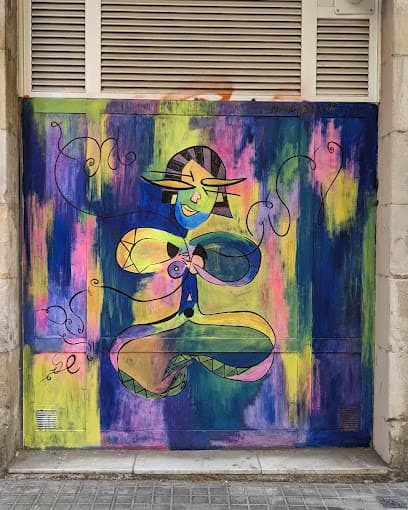
A raw, paint-splattered antidote to the sterile museum circuit. This is where pop-art meets the grit of the street, served straight from the artist’s hands in the heart of old Barcelona.
0.0(0)
Tourist attraction
Frequently Asked Questions
Is the Columbus Monument worth visiting?
Yes, if you want a 360-degree view of the port and La Rambla from 60 meters up. However, the elevator and viewing gallery are extremely narrow, so it is not recommended for those with severe claustrophobia.
How do I get to the Columbus Monument?
The monument is located at the southern end of La Rambla. The easiest way to get there is by taking the Metro Line 3 (Green) to the Drassanes station, which is just a two-minute walk away.
What should I see at the Columbus Monument?
Don't miss the eight bronze lions at the base, the detailed reliefs of Columbus's voyages, and the tiny elevator ride to the Mirador (viewing gallery) at the top for panoramic city views.
Do I need to book tickets in advance?
While you can buy tickets at the base, booking online is recommended during peak season to avoid waiting for the small-capacity elevator. Some tickets also include a wine tasting at the tourism office located beneath the monument.
Reviews
0 reviews for Columbus Monument
No reviews yet. Be the first to share your experience!