
4.6
71,673 verified reviews
About
Everyone goes to the Sagrada Familia. It’s the law, apparently. They stand in line for hours to see Gaudí’s hallucinogenic forest of stone. But if you want the heavy, brooding weight of actual history—the kind that smells like damp stone and a thousand years of melted wax—you come here. The Cathedral of the Holy Cross and Saint Eulàlia isn't a 'hidden gem.' It’s a massive, soot-stained pile of Gothic authority sitting right in the middle of the Barri Gòtic, and it doesn't care if you like it or not.
First, a reality check: the facade you see from the plaza is a bit of a lie. It’s a Neo-Gothic facelift from the late 19th century, added because the city felt the original, flatter front wasn't 'cathedral-y' enough for the world stage. But step inside and the artifice vanishes. It’s dark. Properly dark. The kind of darkness that makes you lower your voice without being told. This is the seat of the Archbishop, the actual spiritual heart of Barcelona, and it feels every bit of its seven hundred years.
Walk down to the crypt beneath the high altar. That’s where Santa Eulàlia rests in an alabaster sarcophagus. She’s the co-patron of the city, a thirteen-year-old girl who, according to legend, was subjected to thirteen different tortures by the Romans for her faith. It’s a grim backstory that anchors the place in a way that modern architecture just can't.
Then there’s the cloister, which is where the Cathedral gets weird in the best possible way. In the middle of the palm trees and the orange trees, there are thirteen white geese. They aren't there for decoration; they represent each year of Eulàlia’s life. They are loud, territorial, and they’ve been a fixture here for centuries. Watching a gaggle of honking geese patrol a medieval courtyard while tourists try to take selfies is the kind of beautiful, nonsensical friction that makes Barcelona great.
If you’re feeling claustrophobic from the incense and the shadows, pay the extra few euros for the elevator to the roof. It’s not a 'breathtaking vista' in the travel brochure sense; it’s a visceral look at the spine of the city. You’re standing on the lead-lined roof, looking out over the gargoyles at the labyrinth of the Gothic Quarter. You can see the Mediterranean shimmering in the distance and the cranes of the Sagrada Familia poking at the sky like needles. It’s the best perspective you’ll get on how this city was built—layer by layer, stone by stone.
Is it worth the entry fee? If you want the 'best Gothic architecture Barcelona' has to offer, yes. If you want to understand why this city feels different from Madrid or Seville, yes. Just remember there’s a dress code. They will turn you away for showing too much shoulder or knee, and they won't feel bad about it. This isn't a museum; it’s a living, breathing fortress of faith that has survived plagues, wars, and the relentless march of tourism. Respect the geese, respect the silence, and leave the Gaudí comparisons at the door.
Type
Cathedral, Catholic church
Duration
1-2 hours
Best Time
Early morning (10:00 AM) to avoid the largest tour groups and see the cloister in better light.
Guided Tours
Available
Audio Guide
Available
What People Say
cloister(607)sagrada familia(478)elevator(302)geese(264)gaudi(123)christmas market(75)street artists(37)catalan gothic(33)
Features
Cathedral
Catholic church
Tourist attraction
Categories
ArchitectureHistoryReligionGothic
Ticket Prices
adult€11.00
child€0.00
senior€11.00
Opening Hours
- Monday9 AM to 6:30 PM
- Tuesday9 AM to 6:30 PM
- Wednesday9 AM to 6:30 PM
- Thursday9 AM to 6:30 PM
- Friday9 AM to 6:30 PM
- Saturday9 AM to 6:30 PM
- Sunday9 AM to 6:30 PM
Must-See Highlights
The Crypt of Saint Eulàlia
The Cloister and the 13 Geese
The Rooftop Terraces
The Choir Stalls
The Lepanto Chapel
Visitor Tips
Bring a scarf to cover your shoulders if you're wearing a tank top.
The 'Cultural Visit' fee is mandatory during most of the day; free entry for worship is strictly for the pews only.
Don't skip the elevator to the roof; it's the highlight for most visitors.
Good For
History buffsArchitecture enthusiastsPhotographersReligious travelers
Why Visit
The 13 white geese of the cloister representing the martyrdom of Saint Eulàlia
Access to the rooftop via elevator for a bird's-eye view of the Gothic Quarter's labyrinth
The 15th-century choir stalls featuring the coats of arms of the Order of the Golden Fleece
Nearby Landmarks
- 3-minute walk from MUHBA (Museum of the History of Barcelona)
- 5-minute walk from Plaça de Sant Jaume
- 8-minute walk from La Rambla
- 6-minute walk from Els 4Gats
Accessibility
- Wheelchair accessible main floor
- Elevator to the roof (limited capacity)
- Accessible entrance via the side door
Location
Pla de la Seu, s/n
Ciutat Vella, Barcelona
Nearby Hotels
Nearby Restaurants
In Ciutat Vella
ATTRACTION
Park
Ciutat Vella
A thousand years of silence tucked behind a Romanesque monastery, where the grit of El Raval dissolves into ancient stone, cool shadows, and the heavy weight of history.
0.0(0)
Park
ATTRACTION
BARSHELONA
Ciutat Vella
Forget the plastic bulls and tacky magnets. This is where Barcelona’s soul is bottled into art, a small sanctuary of local design hidden in the shadows of the Gothic Quarter.
0.0(0)
Tourist attraction
ATTRACTION
Minajoe art
Ciutat Vella
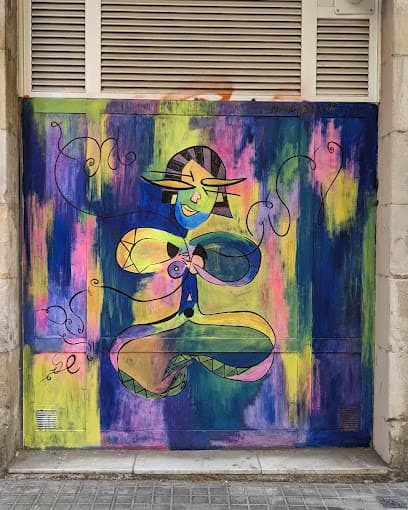
A raw, paint-splattered antidote to the sterile museum circuit. This is where pop-art meets the grit of the street, served straight from the artist’s hands in the heart of old Barcelona.
0.0(0)
Tourist attraction
Frequently Asked Questions
Is the Cathedral of Barcelona worth visiting?
Yes, especially for the 13th-century cloister and the rooftop views. While Sagrada Familia is more famous, this is the city's actual historical and spiritual heart, offering a much grittier, authentic Gothic experience.
What is the dress code for the Barcelona Cathedral?
It is strictly enforced: shoulders must be covered and skirts or shorts must reach the knee. If you're dressed for the beach, you'll be denied entry to the interior and cloister.
Why are there geese in the Barcelona Cathedral?
There are 13 white geese in the cloister to honor Saint Eulàlia, the city's co-patron, who was martyred at age 13. Each goose represents one year of her life.
How much are tickets for the Cathedral of Barcelona?
A cultural visit ticket typically costs around €11-€15 and includes access to the choir, the roof, and the museum. Entry for prayer is free during specific morning and evening hours, but access is restricted.
Reviews
0 reviews for Cathedral of Barcelona
No reviews yet. Be the first to share your experience!