4.6
17,408 verified reviews
About
Forget the melting ice cream cake of the Sagrada Família for a second. Forget the swarms of selfie sticks choking the life out of Passeig de Gràcia. If you want to see where the madness actually began, you have to head up to Gràcia. This wasn't always Barcelona; it was a village of radicals and workers, and in 1883, it became the site of Antoni Gaudí’s first real middle finger to architectural tradition. Casa Vicens is the opening act of a man who was about to change the world, and it’s arguably more honest than anything that came after.
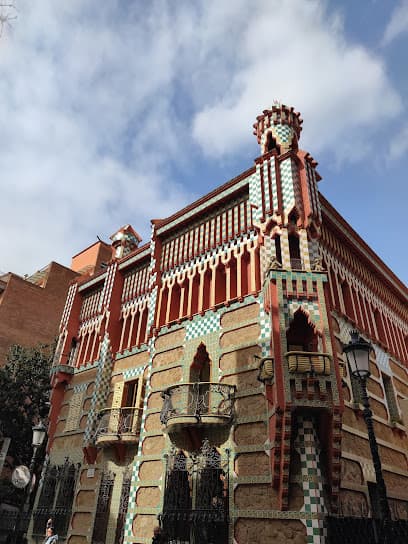
When you walk up Carrer de les Carolines, the house hits you like a technicolor punch to the throat. It’s a riot of green and white ceramic tiles, marigolds, and wrought iron. Manuel Vicens, the man who commissioned this thing, was a broker who clearly had a high tolerance for eccentricity. He gave a thirty-year-old Gaudí a blank canvas, and the kid responded by blending Orientalism, Mudéjar style, and a budding obsession with the natural world into something that shouldn't work, but absolutely does. It’s one of the best Gaudí buildings Barcelona has to offer precisely because it feels like a discovery rather than a choreographed tourist trap.
Inside, the air changes. It’s dense with detail. The smoking room is the highlight—a small, claustrophobic masterpiece of blue papier-mâché tiles and muqarnas that make you feel like you’ve been transported to a high-end opium den in 19th-century Damascus. It’s dark, moody, and deeply cool. Then you hit the dining room, where the walls are covered in ivy and birds, blurring the line between the garden outside and the life within. This is where Gaudí started his lifelong argument that there are no straight lines in nature, and therefore, there should be none in our homes.
The rooftop is where you see the first hints of the genius that would later define Park Güell and Casa Milà. It’s not the sprawling alien landscape of his later works, but the small, tiled turrets and the walkway show a man beginning to understand how to use a roof as more than just a lid for a building. It’s a functional piece of art. Because Casa Vicens only opened to the public in 2017, it still feels like you’re getting away with something. The crowds are thinner, the pace is slower, and you can actually hear yourself think.
Is Casa Vicens worth visiting? Absolutely. If you’re doing a Barcelona architecture tour, this is your baseline. It’s the raw, unedited version of Modernisme. It lacks the polished, corporate feel of Casa Batlló. It’s a bit cramped in places, the stairs are steep, and the neighborhood around it is still a living, breathing barrio where people actually buy bread and complain about the rent. That’s the magic of it. You aren't in a museum; you're in a house that was meant to be lived in, dreamed in, and probably argued in.
Don't expect the grand scale of the Eixample palaces. This is an intimate look at a young architect trying to prove he was the smartest guy in the room. He succeeded. By the time you leave and head back out into the sun-drenched streets of Gràcia, the rest of the city’s architecture is going to look a lot more boring. It’s a protein rush for the eyes, a reminder that before Gaudí was a saint of architecture, he was a young man with a lot of tiles and something to prove.
Type
Museum, Heritage museum
Duration
1.5 hours
Best Time
Weekday mornings at 10:00 AM to avoid the small groups and enjoy the quiet garden.
Guided Tours
Available
Audio Guide
Available
What People Say
gaudi(1618)casa batllo(199)casa mila(158)park guell(91)sagrada familia(66)art nouveau architecture(38)1883(28)tile(27)
Features
Museum
Heritage museum
Tourist attraction
Categories
ArchitectureUNESCOGaudíModernisme
Ticket Prices
adult€20
child€0 (under 6)
senior€18
Opening Hours
- Monday2:30 to 6 PM
- Tuesday9:30 AM to 6 PM
- Wednesday9:30 AM to 6 PM
- Thursday9:30 AM to 6 PM
- Friday9:30 AM to 6 PM
- Saturday9:30 AM to 6 PM
- Sunday9:30 AM to 6 PM
Must-See Highlights
The Smoking Room (Sala de fumador) with its blue muqarnas ceiling
The rooftop with the first Gaudí-designed chimneys and turrets
The dining room featuring original paintings by Francesc Torrescassana
The garden with the monumental brick arch and fountain
Visitor Tips
Check out the 'Ona' bookstore in the basement for high-quality architecture books.
The cafe in the garden, Hofmann, serves some of the best croissants in the city.
Combine this with a walk through Gràcia's plazas rather than heading back to the center immediately.
Good For
Architecture enthusiastsHistory buffsPhotographersCouples
Why Visit
Gaudí's first residential masterpiece and a UNESCO World Heritage site
Stunning Neo-Mudéjar smoking room with intricate blue honeycomb ceilings
Located in the authentic Gràcia neighborhood, away from the main tourist crush
Nearby Landmarks
- 5-minute walk from Fontana Metro Station
- 8-minute walk from Mercat de la Llibertat
- 10-minute walk from Plaça de la Virreina
- 20-minute walk from Park Güell (uphill)
Accessibility
- Wheelchair accessible (elevator to all floors)
- Accessible toilets
- Adapted tour routes
Location
Carrer de les Carolines, 20-26
Gràcia, Barcelona
Nearby Hotels
Nearby Restaurants
In Gràcia
ATTRACTION
Maison Sara
Gràcia
Forget the mass-produced kitsch on La Rambla. This is Gràcia at its best: a tactile, clay-smeared workshop where the art is as raw and honest as the neighborhood itself.
0.0(0)
Tourist attraction
ATTRACTION
Intercambiador de libros
Gràcia
A humble, weather-beaten box in the hills of Vallcarca where local history is traded one dog-eared paperback at a time. No tourists, no Wi-Fi, just paper and community.
0.0(0)
Park
ATTRACTION
View
Gràcia
Forget the elbow-to-elbow chaos of Park Güell. This is the raw, vertical soul of Gràcia, where the city unfolds in a silent, sun-drenched sprawl at your feet.
0.0(0)
Garden
Frequently Asked Questions
Is Casa Vicens worth visiting compared to Casa Batlló?
Yes, especially if you hate crowds. It’s Gaudí’s first house and offers a more intimate, less commercial experience than the famous buildings on Passeig de Gràcia for a lower price.
How long do you need at Casa Vicens?
Allocate about 60 to 90 minutes. The house is smaller than Casa Milà, but the level of detail in the smoking room and dining area warrants a slow pace.
Do I need to book Casa Vicens tickets in advance?
While it's less crowded than the Sagrada Família, booking online is highly recommended to secure your time slot and often saves you a few euros compared to the ticket office.
What is the best time to visit Casa Vicens?
Early morning right at opening (10:00 AM) or late afternoon. The light hitting the ceramic tiles on the facade during the 'golden hour' is spectacular for photography.
Reviews
0 reviews for Casa Vicens Gaudí
No reviews yet. Be the first to share your experience!