4.1
102 verified reviews
About
Park Güell is a masterpiece now, but in 1900, it was a spectacular real estate flop. Eusebi Güell and Antoni Gaudí had this grand, utopian vision of a gated community for Barcelona’s elite, perched high above the smog and the chaos of the industrial city. They planned sixty luxury villas. They got two. One was for Gaudí himself—now a museum—and the other, the one that actually looks like a home where a sane person might live, is Casa Trias. It is the silent witness to a grand ambition that the market simply wasn't ready for.
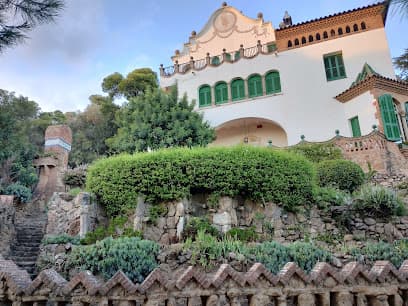
When you’re trudging up the hill, past the busloads of tourists snapping selfies with a ceramic lizard, Casa Trias sits there like a white ghost of what might have been. It’s a handsome, restrained piece of Modernista architecture designed by Juli Batllevell, a contemporary of Gaudí who worked on the Park’s entrance pavilions but didn't feel the need to make every surface look like it was melting. Martí Trias i Domènech, a lawyer and a friend of Güell, was the only person with enough faith—or perhaps enough money to burn—to actually buy a plot and build a life here in 1905.
You can’t go inside. Let’s get that out of the way. It’s still a private residence, owned by the Trias family, which is a minor miracle in a city that has turned almost every square inch of its history into a ticketed experience. There’s something deeply satisfying about the fact that while millions of people shuffle through the park every year, someone is in there probably drinking a coffee, reading the paper, and ignoring the madness outside their gates. It’s the ultimate 'get off my lawn' in a UNESCO World Heritage site. It remains one of the few places in the park that hasn't been sanitized for your protection.
The facade is what you’re here for. It’s elegant, with stone-framed windows and a clean, white finish that catches the Mediterranean light in a way that makes the rest of the park’s colorful trencadís look almost garish. It’s a reminder that Modernisme wasn't just about psychedelic chimneys and broken tiles; it was also about a new way of living for a rising bourgeoisie that wanted to be modern but still respected the old rules of symmetry and grace. The garden, though private, hints at the lush, Mediterranean paradise the entire hillside was supposed to become.
If you want to understand the human side of the Park Güell story, you have to look at this house. It represents the one guy who bought the pitch, the one guy who believed in the dream of a garden city. The rest of Barcelona’s high society stayed down in the Eixample, closer to the opera and the fancy shops, leaving Güell and Gaudí with a beautiful, expensive park and a failed housing development. It’s a monument to the risk of being too far ahead of your time.
Is it worth the walk? If you’ve already paid the ransom to get into the Monumental Zone of Park Güell, then yes. It’s a five-minute detour that provides the necessary context for the whole sprawling mess. It’s the anchor of reality in a place that often feels like a theme park. You stand there, look at the house, look at the view of the city stretching down to the sea, and you can almost see what they were thinking. You can see the appeal of the quiet, the air, and the distance from the world below. Don't expect a gift shop or a guided tour. Just appreciate it for what it is: a survivor. A private home that refused to become a museum. In a city that sometimes feels like it’s being eaten alive by its own fame, Casa Trias is a stubborn, beautiful holdout.
Type
Tourist attraction
What People Say
gaudi(5)architect(4)facade(3)stairs(3)pay(3)sagrada familia(2)sundial(2)lawyer(2)
Features
Tourist attraction
Categories
ArchitectureModernismeHistory
Opening Hours
- Monday9:30 AM to 5:30 PM
- Tuesday9:30 AM to 5:30 PM
- Wednesday9:30 AM to 5:30 PM
- Thursday9:30 AM to 5:30 PM
- Friday9:30 AM to 5:30 PM
- Saturday9:30 AM to 5:30 PM
- Sunday9:30 AM to 5:30 PM
Accessibility
- Viewable from paved paths
- Some steep inclines in the surrounding park area
Location
Ctra. del Carmel, 23B
Gràcia, Barcelona
Nearby
ATTRACTION
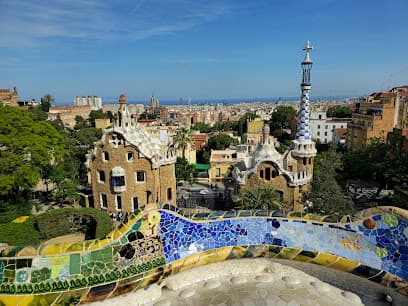
Park Güell
100 m · Gràcia
A failed housing project turned psychedelic playground where Gaudí’s broken-tile dreams collide with the crushing reality of ten thousand selfie sticks.
4.4(206K)
ParkTourist attraction
ATTRACTION
Mirador de Joan Sales
100 m · Gràcia
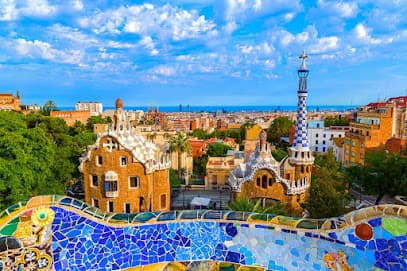
Forget the paid crowds at Park Güell. This is the sweat-equity version of Barcelona—a brutal climb for a panoramic payoff that makes the Sagrada Família look like a toy.
4.8(230)
Observation deck
RESTAURANT
Restaurant Larrard 55
€€300 m · Gràcia
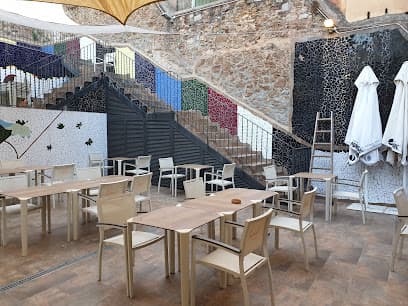
The inevitable pit stop on the climb to Park Güell, where the sangria is cold, the paella is predictable, and the view of passing tourists is better than the food.
3.0(466)
Mediterranean restaurant
RESTAURANT
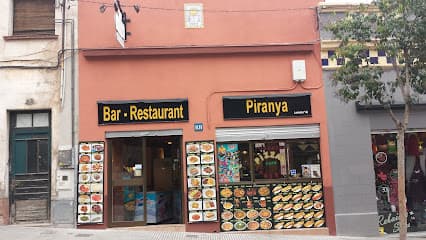
Bar-Restaurant Piranya
€€350 m · Gràcia
A gritty, no-nonsense refueling station on the steep climb to Park Güell where the beer is cold, the pizza is safe, and the tourist gauntlet is in full, chaotic swing.
3.2(550)
BarFast food restaurant
HOTEL
Factory Hostels Barcelona
€450 m · Gràcia
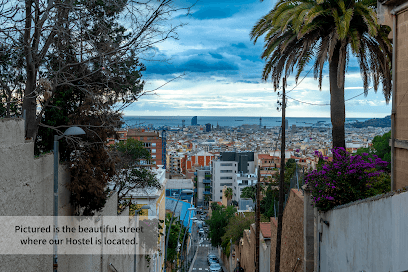
A gritty, industrial-chic refuge in the hills of Gràcia where privacy curtains and rooftop beers offer a sanctuary from the swarming tourist crowds of Park Güell.
4.1(588)
Youth hostel

HOTEL
Verdi 254
€550 m · Gràcia
At the quiet, uphill end of Gràcia, Verdi 254 is a no-nonsense guest house for those who’d rather spend their money on vermouth than a lobby bar they’ll never use.
4.4(14)
Guest house
Frequently Asked Questions
Is Casa Trias worth visiting?
It is worth a look if you are already inside Park Güell to understand the park's history as a failed housing project. However, since you cannot enter the building, it only requires a few minutes of your time to view the exterior.
Can you go inside Casa Trias?
No, Casa Trias is a private residence still owned by the descendants of the original owner, Martí Trias. Visitors are only permitted to view the facade and the exterior from the public paths of Park Güell.
Who designed Casa Trias?
The house was designed by the architect Juli Batllevell in 1905. While he was a contemporary and collaborator of Antoni Gaudí, the style is more restrained than Gaudí's more famous works in the park.
Do I need a separate ticket for Casa Trias?
No separate ticket is needed, but because it is located within the restricted Monumental Zone of Park Güell, you will need a general admission ticket for the park to get close to the house.
Reviews
0 reviews for Casa Trias
No reviews yet. Be the first to share your experience!