
4.6
4,753 verified reviews
About
Plaça del Rei is a stage set. It’s beautiful, sure—all soaring arches and medieval gravity—but it’s a bit of a lie. In the 1930s, they moved the Gothic palace known as Casa Padellà here, stone by stone, like a giant Lego set for historians. But when they started digging the foundations, they hit something. Not gold, but something better: the bones of the city itself. They found Barcino.
To see the real Barcelona, you have to leave the sunlight and the buskers behind and take the elevator down. The air changes instantly. It’s cooler, heavier, smelling of damp earth and ancient masonry. You aren't just looking at a museum exhibit; you are walking on metal catwalks suspended over a sprawling, 4,000-square-meter excavation of a Roman colony from the 1st century BC. This is the MUHBA (Museu d'Història de Barcelona), and it is arguably the most visceral history lesson in Europe.
Most Roman ruins are sanitized—white marble and broken columns. Not here. This was the industrial heart of the city. You’re looking at the fullonicae, the Roman laundries where they used human urine to bleach clothes. You’re staring into the vats of the cetaria, the factory where they produced garum—that funky, fermented fish sauce that the Romans poured over everything like a salty, ancient ketchup. You can almost smell the ghosts of the workers, the steam, and the brine. It’s messy, it’s functional, and it’s utterly human.
The scale is what gets you. You’re walking through entire city blocks—streets with drainage systems that still look like they could work, wine-making facilities where the juice of the grapes once flowed into massive ceramic jars, and the remains of the early Christian episcopal complex. It’s a subterranean labyrinth that makes the bustling Gothic Quarter above feel like a thin, modern veneer.
Eventually, the path leads you back up, transitioning from the Roman grid into the medieval vaults of the Palau Reial Major. You emerge into the Saló del Tinell, a room so vast and imposing it makes you feel small, which was exactly the point when the Kings of Aragon were sitting there. This is where, legend has it, Ferdinand and Isabella received Columbus after his first voyage. Whether that’s true or just good PR doesn't really matter; the room has enough weight to carry the story.
Don’t come here if you want shiny gold trinkets or interactive touchscreens that do the thinking for you. Come here if you want to feel the crushing weight of time. The MUHBA is for the traveler who understands that a city is a living organism, built on the ruins of its own past, layer upon layer. It’s quiet, it’s slightly eerie, and it’s the only place in Barcelona where you can truly hear the city breathing from two millennia ago. It’s a reminder that we’re all just passing through, building our lives on top of someone else’s laundry room.
Type
Local history museum, History museum
Duration
1.5-2 hours
Best Time
Sunday after 3:00 PM for free entry, or weekday mornings to avoid school groups.
Guided Tours
Available
Audio Guide
Available
What People Say
ruins(289)audio guide(119)excavated(106)muy interesante(85)medieval(52)basement(44)Romans(34)walled city(19)
Features
Local history museum
History museum
Museum
Tourist attraction
Categories
Roman RuinsArchaeologyGothic ArchitectureLocal History
Ticket Prices
adult€7
childFree under 16
senior€5
Opening Hours
- MondayClosed
- Tuesday10 AM to 7 PM
- Wednesday10 AM to 7 PM
- Thursday10 AM to 7 PM
- Friday10 AM to 7 PM
- Saturday10 AM to 7 PM
- Sunday10 AM to 8 PM
Must-See Highlights
The Garum Factory vats
The Roman Laundry (Fullonica)
The 4th-century Wine-making facility
Saló del Tinell (Great Hall)
The Chapel of Santa Àgata
Visitor Tips
The audio guide is essential; without it, the ruins are just piles of stone.
Bring a light sweater, as the underground ruins are significantly cooler than the street level.
Your ticket often includes entry to other MUHBA sites across the city for a limited time.
Good For
History buffsArchaeology enthusiastsFamilies with older childrenSolo travelers
Why Visit
Subterranean Roman City: Walk through 4,000 square meters of excavated Roman streets and industries.
Architectural Time Travel: Transition seamlessly from 1st-century Roman ruins to a 14th-century Gothic royal palace.
Industrial History: See the actual vats used for making garum (Roman fish sauce) and ancient wine-making facilities.
Nearby Landmarks
- Barcelona Cathedral (2-minute walk)
- Plaça de Sant Jaume (3-minute walk)
- Plaça de l'Àngel (2-minute walk)
- Basilica of Santa Maria del Mar (7-minute walk)
Accessibility
- Elevator access to underground ruins
- Accessible restrooms
- Catwalks are wheelchair friendly
Location
Pl. del Rei, s/n
Ciutat Vella, Barcelona
Nearby Hotels
Nearby Restaurants
In Ciutat Vella
ATTRACTION
Park
Ciutat Vella
A thousand years of silence tucked behind a Romanesque monastery, where the grit of El Raval dissolves into ancient stone, cool shadows, and the heavy weight of history.
0.0(0)
Park
ATTRACTION
BARSHELONA
Ciutat Vella
Forget the plastic bulls and tacky magnets. This is where Barcelona’s soul is bottled into art, a small sanctuary of local design hidden in the shadows of the Gothic Quarter.
0.0(0)
Tourist attraction
ATTRACTION
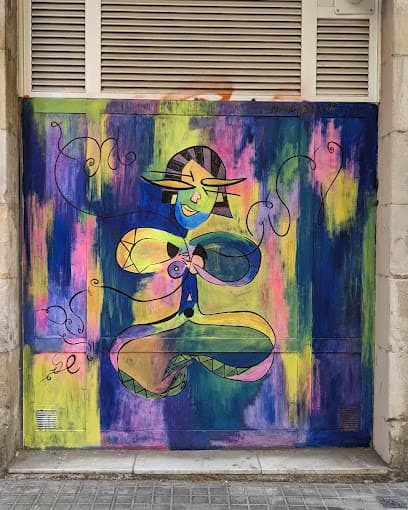
Minajoe art
Ciutat Vella
A raw, paint-splattered antidote to the sterile museum circuit. This is where pop-art meets the grit of the street, served straight from the artist’s hands in the heart of old Barcelona.
0.0(0)
Tourist attraction
Frequently Asked Questions
Is MUHBA Barcelona History Museum worth visiting?
Absolutely. It offers one of the most extensive underground Roman excavations in Europe, allowing you to walk through 2,000-year-old streets and factories beneath the modern city.
How much do MUHBA tickets cost?
General admission is typically €7, which includes the audio guide. Entry is free on the first Sunday of every month all day, and every Sunday after 3:00 PM.
How long do you need at MUHBA?
Expect to spend 1.5 to 2 hours. The underground portion is extensive, and the audio guide provides deep context that is worth listening to.
What should I see at MUHBA?
Don't miss the Roman laundry (fullonica), the fish-salting factory (garum), and the massive Saló del Tinell in the medieval palace.
Reviews
0 reviews for Casa Padellà (Barcelona History Museum MUHBA)
No reviews yet. Be the first to share your experience!