4.4
272 verified reviews
About
La Rambla is, for the most part, a gauntlet of human misery. It is a river of selfie sticks, overpriced frozen pizza, and people trying to sell you things you don’t want. It’s the kind of place that makes you want to retreat to a dark room with a bottle of Priorat and lock the door. But if you’re brave enough to navigate the tide of tourists near the Boqueria, stop. Look up. At number 82, you’ll find Casa Bruno Cuadros, and for a second, the chaos of the street fades into the background of a 19th-century marketing stunt gone gloriously right.
This isn’t a cathedral or a palace. It was an umbrella shop. Back in the 1880s, Bruno Cuadros was a man who understood that if you want to sell rain gear in a city that’s mostly sunny, you need to be loud. He hired Josep Vilaseca i Casanovas—the same guy who did the Arc de Triomf—and told him to make the place impossible to ignore. The result is a hallucinatory mashup of Japanese fans, Egyptian motifs, and stone umbrellas carved into the balconies. It’s a testament to a time when Barcelona was obsessed with the 'Orient,' or at least a romanticized, wrought-iron version of it.
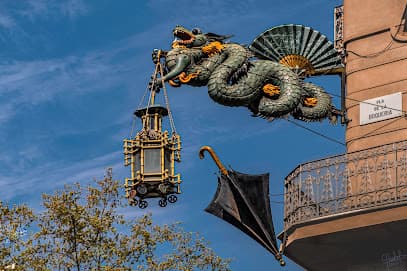
The star of the show is the dragon. It’s a massive, aggressive piece of Chinese-inspired ironwork jutting out from the corner of the building, clutching a lantern and a fan. It looks like it’s ready to breathe fire on the next person who asks for a 'traditional' sangria made from a plastic jug. It’s magnificent. It’s the kind of detail that reminds you that before this city became a theme park, it was a place of eccentric merchants and architects who didn't know when to quit.
Inside? Well, that’s the punchline. It’s a bank now. Specifically, a branch of Sabadell. There is something deeply ironic, and perhaps a little depressing, about a building this wild and imaginative serving as a place where people check their savings accounts. You can’t really 'tour' the interior in the traditional sense, but that’s fine. The soul of the place is on the outside, facing the street, enduring the humidity and the pigeons.
Don't just walk past it on your way to buy a cheap souvenir. Stand on the mosaic designed by Joan Miró—which is literally embedded in the pavement right in front of the building—and take it in. You have the high art of Miró under your boots and the commercial madness of Cuadros above your head. That is the real Barcelona. It’s a city of layers, where the beautiful and the bizarre are constantly fighting for space with the mundane.
Is it worth the detour? You’re already on La Rambla, so you might as well see something that doesn't suck. It costs nothing to look, and it’s a hell of a lot more interesting than the human statues three blocks down. It’s a reminder that even in the most tourist-choked veins of the city, there are still ghosts of a weirder, more interesting past if you just bother to lift your eyes from your phone.
Type
Historical landmark, Tourist attraction
Duration
15-30 minutes
Best Time
Morning light (9:00 AM - 11:00 AM) for the best photos of the facade before the Rambla gets too crowded.
What People Say
umbrella(35)dragon(32)architecture(19)facades(18)hand fan(11)1883(10)orientalism(5)angle(5)
Features
Historical landmark
Tourist attraction
Categories
ArchitectureModernismeHistory
Ticket Prices
Free Admission
No tickets required
Opening Hours
- MondayOpen 24 hours
- TuesdayOpen 24 hours
- WednesdayOpen 24 hours
- ThursdayOpen 24 hours
- FridayOpen 24 hours
- SaturdayOpen 24 hours
- SundayOpen 24 hours
Must-See Highlights
The wrought-iron dragon holding a lantern
The Japanese-inspired fans on the upper balconies
The Joan Miró mosaic on the ground directly in front
The Egyptian-style prints on the top floor facade
Visitor Tips
Watch your pockets; this is a prime spot for pickpockets because everyone is looking up at the dragon.
Combine this with a trip to the Boqueria market, which is less than a block away.
Look for the stone umbrellas carved into the window frames—they are easy to miss if you only focus on the dragon.
Good For
Architecture buffsPhotographersHistory loversBudget travelers
Why Visit
The massive wrought-iron Chinese dragon jutting over La Rambla
Intricate facade decorated with stone umbrellas and Japanese-style fans
Located directly above the famous Joan Miró pavement mosaic
Nearby Landmarks
- 1-minute walk from Mercat de la Boqueria
- 2-minute walk from Gran Teatre del Liceu
- 4-minute walk from Plaça Reial
Accessibility
- Viewable from the street
- Flat pavement on La Rambla
Location
La Rambla, 82
Ciutat Vella, Barcelona
Nearby Hotels
Nearby Restaurants
In Ciutat Vella
ATTRACTION
Park
Ciutat Vella
A thousand years of silence tucked behind a Romanesque monastery, where the grit of El Raval dissolves into ancient stone, cool shadows, and the heavy weight of history.
0.0(0)
Park
ATTRACTION
BARSHELONA
Ciutat Vella
Forget the plastic bulls and tacky magnets. This is where Barcelona’s soul is bottled into art, a small sanctuary of local design hidden in the shadows of the Gothic Quarter.
0.0(0)
Tourist attraction
ATTRACTION
Minajoe art
Ciutat Vella
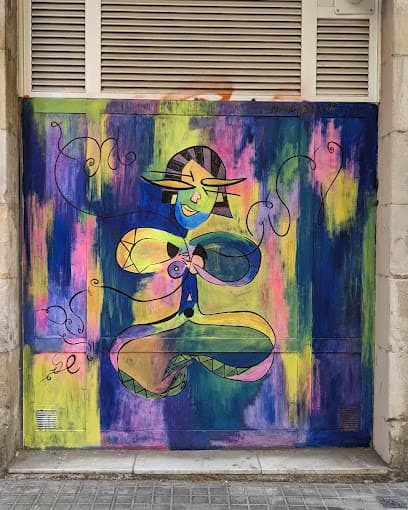
A raw, paint-splattered antidote to the sterile museum circuit. This is where pop-art meets the grit of the street, served straight from the artist’s hands in the heart of old Barcelona.
0.0(0)
Tourist attraction
Frequently Asked Questions
Is Casa Bruno Cuadros worth visiting?
Yes, but only for the exterior. It is one of the most unique examples of Modernista architecture on La Rambla, featuring a famous Chinese dragon and stone umbrellas.
Can you go inside Casa Bruno Cuadros?
The ground floor currently operates as a Sabadell bank branch. While you can walk in during banking hours, there is no 'museum' or tourist circuit inside; the main attraction is the facade.
What is the history of the Umbrella House?
Built in 1858 and remodeled in 1883 by Josep Vilaseca, it served as the shop and residence of umbrella merchant Bruno Cuadros, who used the exotic decor to advertise his wares.
How much does it cost to see Casa Bruno Cuadros?
Viewing the facade is completely free as it is located directly on the public thoroughfare of La Rambla.
Reviews
0 reviews for Casa Bruno Cuadros
No reviews yet. Be the first to share your experience!