5.0
2 verified reviews
About
The Gothic Quarter is a labyrinth designed to swallow you whole. It’s a place of damp stone, shadows that have lingered since the Middle Ages, and streets so narrow you can practically hear the neighbors’ dinner conversations through the walls. But if you navigate the tourist-clogged arteries near Carrer d’Avinyó and slip into the narrow slit of Carrer de Milans, the city does something unexpected. It breathes. Just for a second.
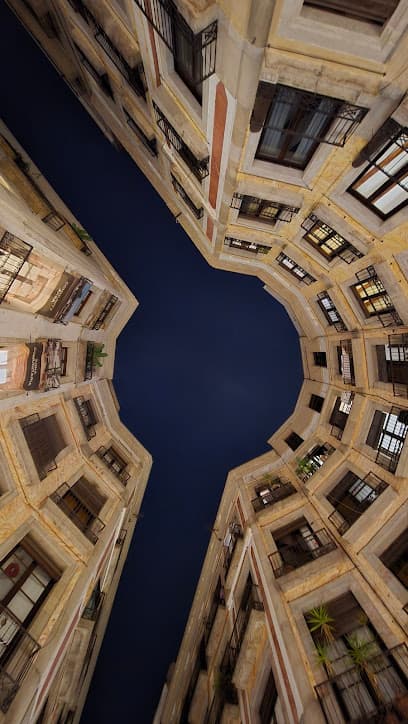
Carrer de Milans isn’t a grand boulevard or a sprawling plaza. It’s a short, unassuming stretch of pavement that leads you into a small, dodecagonal opening—a twelve-sided architectural quirk that feels like standing at the bottom of a very expensive, very old well. This is the work of Francesc Daniel Molina i Casamajó, the same mind behind the Plaça Reial. In the mid-19th century, Molina decided that even the most cramped corners of the Ciutat Vella deserved a bit of geometric flair. He designed the surrounding buildings with curved facades so that when you stand in the center of this tiny intersection and crane your neck toward the heavens, the rooftops form a perfect, jagged circle of blue sky.
It’s a protein rush for the eyes, a brief moment of symmetry in a neighborhood that is otherwise gloriously chaotic. For decades, this was just a quiet shortcut for locals, a place where the laundry of the residents above provided the only real scenery. Today, it’s become one of the best photo spots in Barcelona, a digital trophy for the Instagram set who come to capture that specific 'looking up' shot. You’ll see them there, tripods balanced on the cobblestones, ignoring the occasional delivery scooter or the weary local trying to get home with a bag of groceries.
There is a certain melancholy to it, though. Like much of the Barri Gòtic, Carrer de Milans feels caught between its history as a living, breathing neighborhood and its current role as a backdrop for the world’s vacation photos. The stone is worn smooth by centuries of footsteps, and the air carries that specific Barcelona scent—a mix of sea salt, old masonry, and the faint ghost of fried garlic from a nearby kitchen. It’s a place that demands you stop, if only for thirty seconds, to acknowledge that someone once cared enough about a tiny alleyway to give it a perfect, circular crown.
Don’t come here expecting a grand tour. There are no plaques, no gift shops, and no one is going to explain the significance of the 1850s urban reform to you. It’s just a street. You walk in, you look up, you feel a brief sense of wonder at the geometry of it all, and then you move on. It’s the kind of quiet, weird detail that makes Barcelona what it is—a city that hides its best tricks in plain sight, waiting for you to stop looking at your map and start looking at the sky. Is Carrer de Milans worth it? If you appreciate the effort it takes to make a straight line curve, then yes. If you’re looking for a theme park, keep walking toward the Rambla. This is for the observers, the wanderers, and the people who don't mind a little neck strain in exchange for a moment of clarity.
Type
Tourist attraction
Features
Tourist attraction
Categories
ArchitecturePhotographyHistoryUrban Design
Accessibility
- Flat cobblestone street
- Pedestrian-only zone
- Accessible by wheelchair, though stones can be uneven
Location
Carrer de Milans, 3
Ciutat Vella, Barcelona
Nearby
ATTRACTION
La carassa del carrer Carabassa
50 m · Ciutat Vella
A stone face staring from the shadows of a narrow alley, this 17th-century 'carassa' served as a silent, grimacing GPS for the city's ancient brothels.
0.0(0)
Tourist attraction
ATTRACTION
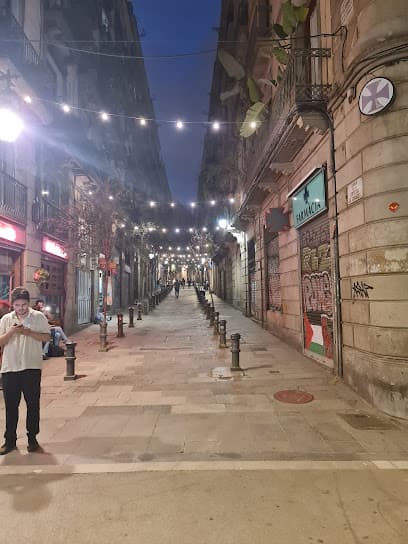
Carrer d'Avinyó
100 m · Ciutat Vella
The street that birthed Cubism. A narrow, winding artery of the Gothic Quarter where Picasso found his muses in a brothel and modern art changed forever.
4.0(3)
Tourist attraction
RESTAURANT
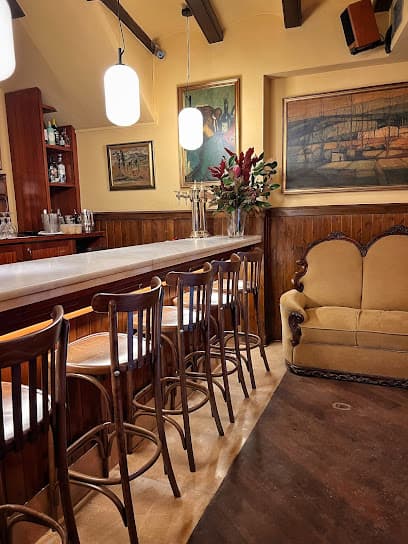
Ca l'Agut
€€€100 m · Ciutat Vella
A 1924 time capsule in the Gothic Quarter where white tablecloths meet uncompromising Catalan stews and the ghosts of old Barcelona still linger over a bottle of Priorat.
4.6(415)
Restaurant
RESTAURANT
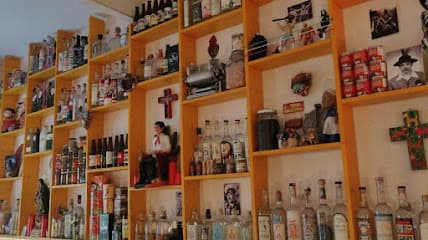
La Pachuca
€€100 m · Ciutat Vella
A cramped, neon-lit sanctuary in the Gothic Quarter where the mezcal flows like water and the cochinita pibil actually tastes like the unapologetic soul of Mexico.
4.4(3K)
Mexican restaurant
HOTEL
Wittmore Hotel
€€€50 m · Ciutat Vella
Tucked down a dead-end alley in the Gothic Quarter, this adults-only sanctuary swaps tourist chaos for velvet curtains, stiff cocktails, and a massive vertical garden.
4.6(382)
Hotel
HOTEL
Hotel Hesperia Barcelona Barri Gòtic
€€50 m · Ciutat Vella
A gritty, honest basecamp on Carrer Ample where the Gothic Quarter’s history meets the salt air of the port. No frills, just the raw, noisy heart of Barcelona at your doorstep.
4.0(726)
Hotel
Frequently Asked Questions
Is Carrer de Milans worth visiting?
Yes, if you are already exploring the Gothic Quarter. It only takes a few minutes to see, but the unique circular perspective of the buildings against the sky is one of the most interesting architectural quirks in the old city.
How do I find the circular part of Carrer de Milans?
Walk to the intersection of Carrer de Milans and Carrer d'en Gignàs. Stand in the center of the small plaza and look directly upward to see the circular rooftop alignment.
What is the best time to visit Carrer de Milans?
Early morning is best to avoid the crowds of photographers and to get the clearest light coming through the circular opening above.
Do I need tickets for Carrer de Milans?
No, it is a public street and free to visit at any time of day or night.
Who designed the circular corner of Carrer de Milans?
Francesc Daniel Molina i Casamajó, the architect of Plaça Reial, in the mid-19th century. He gave the buildings curved facades, so the corner forms a small twelve-sided space where the rooftops frame a circle of sky.
Reviews
0 reviews for Carrer de Milans
No reviews yet. Be the first to share your experience!