About
The Raval is not the Barcelona they sell you in the glossy brochures. It’s not the sun-drenched, Gaudí-fied wonderland of the Eixample or the sanitized, Disney-fied version of the Gothic Quarter. The Raval is something else entirely. It’s a neighborhood that has spent centuries being the city’s basement, its workshop, and its forbidden playground. When you stand at Rambla del Raval, 14, you are at the threshold of the 'callejones'—the narrow, dark, and deeply atmospheric alleys that form the circulatory system of this barrio. This isn't a 'tourist attraction' in the sense of having a gift shop or a turnstile; it is an attraction because it is one of the few places left in this city that still feels dangerously, beautifully alive.
Walking off the wide, modern expanse of the Rambla del Raval—presided over by Fernando Botero’s massive, bronze, and strangely lovable cat—you step into the shadows of the side streets. The transition is immediate. The air changes. It gets cooler, thicker with the scents of a hundred different lives being lived on top of one another. You’ll smell the sharp tang of turmeric and cumin from the Pakistani curry houses, the heavy scent of laundry detergent dripping from balconies, and the unmistakable, ancient musk of damp stone and history. This area was once known as the 'Barrio Chino,' a name given by a journalist in the 1920s who thought it looked like the underworld of San Francisco. It has always been a place of immigrants, rebels, and those living on the margins.
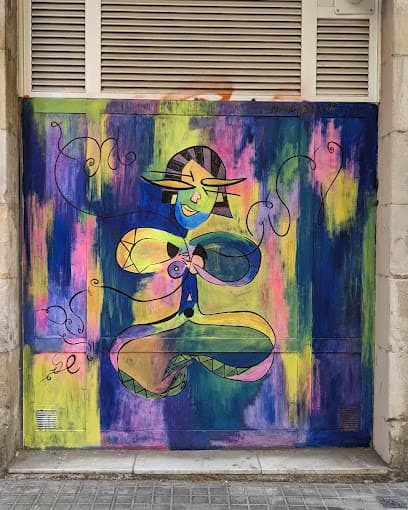
The street art here isn't something commissioned by a city council to 'beautify' a wall; it’s a constant, evolving conversation. Every shutter, every doorway, and every crumbling brick is a canvas. You’ll see world-class murals sitting right next to frantic, late-night tags. It’s messy, it’s chaotic, and it’s brilliant. As you navigate these callejones, you’ll find tiny bars that look like they haven't changed since Hemingway’s time, sitting next to cutting-edge galleries and skate shops. The Filmoteca de Catalunya is just a stone's throw away, a brutalist concrete temple to cinema that stands in stark contrast to the 18th-century tenements surrounding it.
Let’s be honest: the Raval has an edge. If you’re the kind of traveler who needs everything to be polished and predictable, stay on the tour bus. Here, you need to keep your wits about you. Pickpockets are a reality, and the neighborhood’s grit isn't a costume—it’s real. But that edge is exactly why you should come. It’s the friction that creates the heat. You’ll see old men playing dominoes in the squares, kids playing football against the walls of ancient churches, and a mix of cultures that makes the rest of the city look monochromatic.
Is it worth visiting? If you want to understand what makes Barcelona tick, then yes. It’s the city’s id. It’s the place where the secrets are kept. You don't come here to see a monument; you come here to feel the pulse of a neighborhood that refuses to be gentrified into oblivion. Grab a vermut at a corner bar, watch the world go by, and realize that this—the noise, the smell, the beautiful, crumbling mess of it all—is the real Barcelona. It’s a protein rush to the cortex, a reminder that the best parts of travel are the ones you can't find on a map.
Type
Tourist attraction
Duration
1-2 hours
Best Time
Late afternoon for the best light and atmosphere.
Features
Tourist attraction
Categories
Street ArtHistoryUrban CultureWalking Tour
Ticket Prices
Free Admission
No tickets required
Must-See Highlights
The Gato de Botero statue
Murals on Carrer de la Riereta
The brutalist Filmoteca de Catalunya building
Traditional vermut bars on the side streets
Visitor Tips
Keep your phone and wallet in your front pockets.
Look up at the balconies to see the 'real' Raval life.
Try a 'bocadillo' from one of the local corner shops.
Don't be afraid to get a little lost—that's the whole point.
Good For
Solo travelersPhotographersCulture seekersStreet art enthusiasts
Why Visit
Unfiltered urban street art gallery
The historical heart of the 'Barrio Chino'
A visceral contrast to the tourist-heavy Gothic Quarter
Nearby Landmarks
- Gato de Botero (1-minute walk)
- Filmoteca de Catalunya (2-minute walk)
- Bar Marsella (5-minute walk)
- Mercat de la Boqueria (8-minute walk)
Accessibility
- Flat terrain
- Narrow sidewalks
- Uneven pavement in some alleys
Location
Rambla del Raval, 14
Ciutat Vella, Barcelona
Nearby Hotels
Nearby Restaurants
In Ciutat Vella
ATTRACTION
Park
Ciutat Vella
A thousand years of silence tucked behind a Romanesque monastery, where the grit of El Raval dissolves into ancient stone, cool shadows, and the heavy weight of history.
0.0(0)
Park
ATTRACTION
BARSHELONA
Ciutat Vella
Forget the plastic bulls and tacky magnets. This is where Barcelona’s soul is bottled into art, a small sanctuary of local design hidden in the shadows of the Gothic Quarter.
0.0(0)
Tourist attraction
ATTRACTION
Minajoe art
Ciutat Vella
A raw, paint-splattered antidote to the sterile museum circuit. This is where pop-art meets the grit of the street, served straight from the artist’s hands in the heart of old Barcelona.
0.0(0)
Tourist attraction
Frequently Asked Questions
Why should you visit Callejón El Raval?
Absolutely, if you want to see the unvarnished, authentic side of Barcelona. It’s the best place in the city for street art, urban culture, and a sense of history that hasn't been polished for tourists.
Is El Raval safe for tourists?
It is generally safe during the day, but you must stay alert. Like any gritty urban area, pickpocketing is common, so keep your belongings secure and avoid dark, empty alleys late at night.
What is the best time to explore the Raval alleys?
Late afternoon is ideal. The light hits the narrow streets in dramatic ways, the neighborhood starts to wake up for the evening, and the atmosphere is at its most electric.
What should I see near Rambla del Raval 14?
Don't miss the Gato de Botero (the giant cat statue), the Filmoteca de Catalunya, and the incredible street art on Carrer de la Riereta and Carrer de Sant Rafael.
Reviews
0 reviews for Callejón El Raval
No reviews yet. Be the first to share your experience!