4.6
160 verified reviews
About
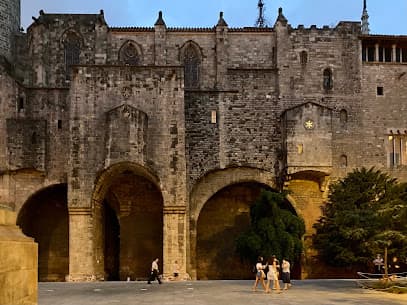
Barcelona is a city built like a lasagna—layers of history stacked one on top of the other, often with a complete lack of sentimentality. If you want to see the foundation, the literal bones of the place, you go to the Roman walls. We’re talking about Barcino, a retirement colony for Roman legionnaires that eventually realized it needed some serious protection. These aren't just decorative ruins; they are the scarred, soot-stained ribs of the city that have been holding the Ciutat Vella together for nearly two thousand years.\n\nWalking along Carrer de la Tapineria, you aren't looking at a museum exhibit curated with soft lighting and velvet ropes. You’re looking at survival. In the 4th century, when the Roman Empire was starting to look a little shaky and the so-called barbarians were knocking at the door, the locals didn't panic—they built. They took the original 1st-century wall and reinforced it, doubling its thickness by grabbing whatever was lying around. That meant stones from the circus, stones from the temples, and even headstones from the cemeteries. It was a desperate, massive DIY project that resulted in a defensive perimeter so formidable it dictated the city's shape for the next millennium.\n\nWhat makes this one of the best things to do in the Gothic Quarter is the sheer indifference the city shows toward its own antiquity. You’ll see a 14th-century royal palace, the Palau Reial Major, literally grafted onto the Roman towers. Medieval kings were practical people; why quarry new stone when the Romans already left a perfectly good wall to use as a back-rest? At Plaça de Ramon Berenguer el Gran, the juxtaposition is jarring and perfect: Roman bastions at the bottom, Gothic chapel on top, and modern life swirling around the base. It’s a mess of eras that shouldn't work, but in Barcelona, it’s just Tuesday.\n\nIf you’re looking for the most intact sections, head to Plaça Nova near the Cathedral. You’ll find two of the original towers that flanked the Decumanus, the main drag of the Roman town. There’s even a reconstructed section of the aqueduct nearby. But the real magic is found in the quiet stretches, like Carrer del Sots-Tinent Navarro. Here, the wall feels less like a tourist attraction and more like a silent witness. You can see the different textures of stone, the repairs made over centuries, and the way the city eventually outgrew its shell, knocking down parts of the wall in the 19th century to finally let the Eixample breathe.\n\nIs the Barcelona Roman wall worth it? Absolutely, because it’s free, it’s unavoidable, and it’s the only way to understand why the streets of the Barri Gòtic are so narrow and winding. They were cramped by design, huddled inside this stone circle. For the full experience, you can head underground at the MUHBA (Museum of History) to see the laundry mats and fish sauce factories that sat just inside these walls, but even from the street, the scale is humbling. It’s a reminder that before the tapas tours and the boutique hotels, this was a frontier town where people lived hard lives behind twelve meters of solid rock. Don't just walk past it. Touch the stone. It’s been there longer than almost anything else you’ll see in this city, and it’ll likely be there long after we’re gone.
Type
Historical landmark, Tourist attraction
Duration
45-60 minutes
Best Time
Early morning or late evening when the sun hits the stone at an angle, highlighting the textures of the ancient masonry without the midday crowds.
Guided Tours
Available
Audio Guide
Available
What People Say
architecture(5)ramparts(4)3rd century(3)structure(3)testimony(2)perimeter(2)
Features
Historical landmark
Tourist attraction
Categories
Roman HistoryArchitectureArchaeologyFree Activities
Ticket Prices
Free Admission
No tickets required
Must-See Highlights
The towers at Plaça Nova
The integrated chapel at Plaça de Ramon Berenguer el Gran
The reconstructed Roman aqueduct section
The defensive towers along Carrer del Sots-Tinent Navarro
Visitor Tips
Start at Plaça Nova and walk clockwise around the perimeter to follow the natural flow of the old city boundary.
Look closely at the stones; you can often see fragments of Roman inscriptions or decorative carvings reused as building material.
Combine this with a visit to the MUHBA to see the walls from the inside out.
Good For
History buffsArchitecture loversBudget travelersPhotography enthusiasts
Why Visit
Architectural Lasagna: See medieval palaces built directly onto 4th-century Roman towers.
The Barcino Gateway: View the original entrance towers to the Roman city at Plaça Nova.
Free History: One of the most significant historical sites in the city that costs absolutely nothing to explore.
Nearby Landmarks
- Barcelona Cathedral (2-minute walk)
- Plaça de Sant Jaume (5-minute walk)
- MUHBA - Museu d'Història de Barcelona (3-minute walk)
- Plaça del Rei (4-minute walk)
Accessibility
- Street-level viewing is fully accessible
- MUHBA museum sections are wheelchair accessible via elevators
Location
Carrer de la Tapineria, 5, 19
Ciutat Vella, Barcelona
Nearby Hotels
Nearby Restaurants
In Ciutat Vella
ATTRACTION
Park
Ciutat Vella
A thousand years of silence tucked behind a Romanesque monastery, where the grit of El Raval dissolves into ancient stone, cool shadows, and the heavy weight of history.
0.0(0)
Park
ATTRACTION
BARSHELONA
Ciutat Vella
Forget the plastic bulls and tacky magnets. This is where Barcelona’s soul is bottled into art, a small sanctuary of local design hidden in the shadows of the Gothic Quarter.
0.0(0)
Tourist attraction
ATTRACTION
Minajoe art
Ciutat Vella
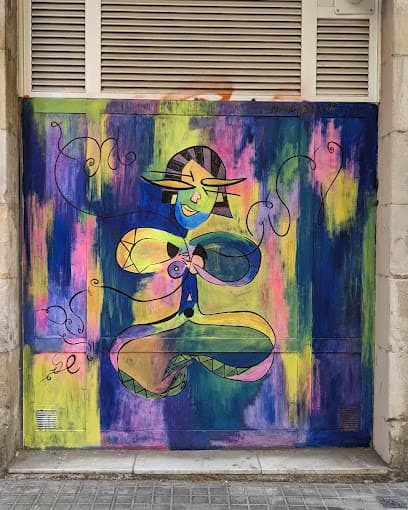
A raw, paint-splattered antidote to the sterile museum circuit. This is where pop-art meets the grit of the street, served straight from the artist’s hands in the heart of old Barcelona.
0.0(0)
Tourist attraction
Frequently Asked Questions
Is the Barcelona Roman city wall worth visiting?
Yes, it is the literal foundation of the city and offers a visceral look at how Barcelona evolved from a Roman colony to a medieval powerhouse. Plus, most of it is visible for free from the street.
Where is the best place to see the Roman walls?
Plaça de Ramon Berenguer el Gran offers the most dramatic view, where you can see medieval buildings constructed directly on top of the Roman bastions. Plaça Nova also features two prominent original towers.
Do I need tickets to see the Roman walls?
No tickets are required to view the walls from the street. However, if you want to see the Roman ruins from the inside or go underground, you must purchase a ticket for the MUHBA (Museu d'Història de Barcelona).
How long does it take to see the walls?
A self-guided walk along the perimeter of the ancient walls takes about 30 to 45 minutes, depending on how often you stop to admire the architecture.
Reviews
0 reviews for Barcelona Roman city walls
No reviews yet. Be the first to share your experience!