3.0
1 verified reviews
About
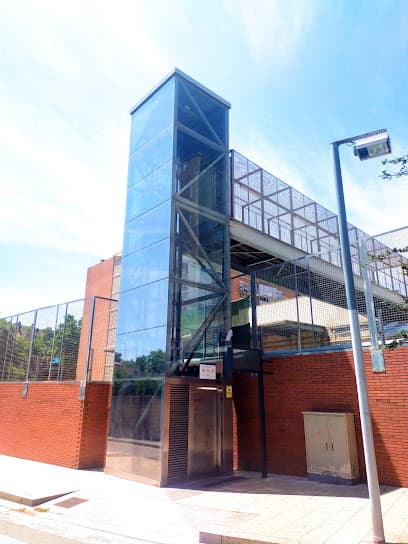
Barcelona is a city that likes to pretend it’s all flat boulevards and breezy beaches, but that’s a lie sold to people who never leave the Eixample. If you want the truth, you head north. You head to Nou Barris, specifically to the steep, gravity-defying slopes of Roquetes and Torre Baró. This is where the city stops being a postcard and starts being a challenge. The Ascensor Pasage de Grau 17 isn’t a tourist attraction. It wasn’t designed by a starchitect, and there isn’t a gift shop selling miniature versions of it. It’s a box of metal and glass, a mechanical lung that helps the people of this neighborhood survive the daily verticality of their lives.
When you step out of the Roquetes metro station, the humidity hits you differently. It’s trapped between the hills and the sea. You walk toward Passatge de Grau and you see it: a vertical shaft cut into the hillside. This is urban infrastructure as an act of mercy. Before these lifts and escalators were installed, getting home with a bag of groceries was an Olympic event. Now, you step inside, press a button, and listen to the hum of the motor as it hauls you up the side of the mountain. It’s a quiet, indifferent sort of transit, shared with grandmothers who have seen the neighborhood transform from shacks to concrete and teenagers staring at their phones, oblivious to the fact that they’re floating over the rooftops.
The lift itself is functional, bordering on austere. The glass is often etched with tags, and the floor might be scuffed from a thousand work boots, but that’s the point. It’s used. It’s vital. As you rise, the perspective shifts. The dense grid of the city begins to blur into a hazy sprawl. You aren’t looking at the Sagrada Familia from a curated rooftop bar; you’re looking at the laundry hanging from balconies, the satellite dishes angled toward the sun, and the winding, narrow streets that look like they were laid out by someone with a grudge against right angles. It’s a view of the Barcelona that works, the Barcelona that struggles, and the Barcelona that—despite everything—has a better view than the millionaires in Sarrià.
Once you reach the top of the Passatge de Grau lift, you’re on the doorstep of the Collserola Natural Park. This is why the category says 'hiking area.' From here, the concrete starts to give way to pine trees and scrubland. You can keep climbing toward the Torre Baró castle, a half-finished monument to a dream that never quite took off, or you can just stand at the railing and breathe. The air is thinner here, cooler, and it smells less like exhaust and more like the Mediterranean hills.
Is it worth the trip? If you’re looking for a 'hidden gem' to put on a list of 'top ten things to do,' probably not. But if you want to understand the geography of class in this city, if you want to see how a community fought for the right to not have their knees destroyed by their own streets, then yes. It’s a three-minute ride that tells a bigger story than any museum in the Gothic Quarter. It’s honest, it’s gritty, and it’s free. Just don’t expect a cocktail at the top. Bring your own water, wear decent shoes, and leave the selfie stick in the hotel. This is a place for looking, not for posing.
Type
Hiking area
Duration
15-30 minutes
Best Time
Late afternoon for golden hour views over the city without the midday heat.
Features
Hiking area
Categories
Urban InfrastructureViewpointHiking
Ticket Prices
Free Admission
No tickets required
Must-See Highlights
The view of the city sprawl from the top station
The transition from urban concrete to the greenery of Collserola
The 'autocostrucció' architecture of the surrounding Roquetes neighborhood
Visitor Tips
Use this as a shortcut if you're planning to hike up to the Torre Baró castle.
Don't expect tourist facilities; there are no public toilets or cafes immediately at the lift.
Respect the locals; this is their primary way of getting home, not a carnival ride.
Good For
Urban explorersBudget travelersHikersPhotography enthusiasts
Why Visit
Authentic working-class urban infrastructure
Gateway to the rugged hiking trails of Collserola
Unfiltered panoramic views of the Barcelona sprawl
Nearby Landmarks
- Metro Roquetes (L3) - 5-minute walk
- Castell de Torre Baró - 20-minute uphill walk
- Parc de Collserola - 10-minute walk
Accessibility
- Wheelchair accessible lift
- Level access at both top and bottom stations
Location
Passatge de Grau, 17
Nou Barris, Barcelona
Nearby Restaurants
In Nou Barris
ATTRACTION
Plaça Verda de la Prosperitat
Nou Barris
A concrete-and-chlorophyll middle finger to urban neglect, where Nou Barris locals reclaim their right to breathe, drink, and exist far from the suffocating Sagrada Familia crowds.
0.0(0)
Garden
ATTRACTION
Ascensor Canfranc - Paseo de Fabra y Puig 08031 Nou Barris
Nou Barris
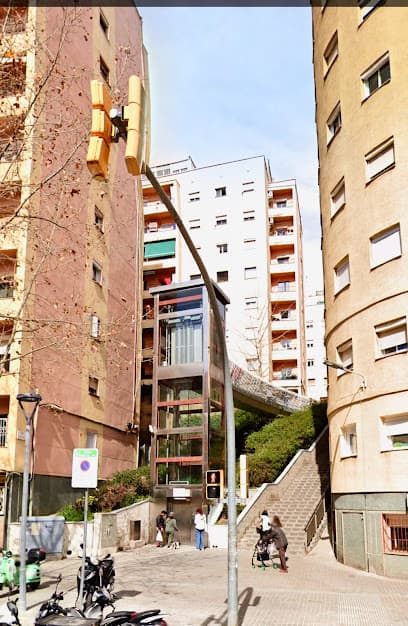
A glass-and-steel lifeline in Nou Barris that saves your knees and offers a gritty, honest view of the Barcelona tourists usually ignore. No gift shops, just gravity-defying utility.
0.0(0)
Hiking area
ATTRACTION
Carrer pimoli42
Nou Barris
The anti-tourist Barcelona. A gritty, honest stretch of Nou Barris where the Gaudí magnets disappear and the real city begins over cheap beer and the smell of rotisserie chicken.
0.0(0)
Tourist attraction
Frequently Asked Questions
Is the Ascensor Pasage de Grau 17 free to use?
Yes, this is a public municipal elevator operated by the city of Barcelona and is completely free for both residents and visitors.
How do I get to the Passatge de Grau elevator?
Take the Metro L3 (Green Line) to the Roquetes station. From there, it is a short, uphill walk to the entrance of the lift on Passatge de Grau.
Is it safe to visit Nou Barris as a tourist?
Yes, it is a safe, working-class residential area. While it lacks the polish of the city center, it is perfectly fine to visit during the day, especially if you are heading toward the hiking trails of Collserola.
What is near the Ascensor Pasage de Grau 17?
The lift provides access to the upper parts of the Roquetes neighborhood and leads toward the hiking paths of the Serra de Collserola and the Torre Baró viewpoint.
Reviews
0 reviews for Ascensor Pasage de Grau 17
No reviews yet. Be the first to share your experience!