4.8
5 verified reviews
About
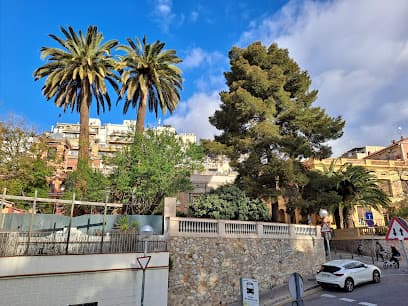
Most people come to Barcelona for the stone. They want the jagged spires of the Sagrada Família, the sun-bleached blocks of the Gothic Quarter, or the undulating, trippy masonry of Gaudí. But if you walk far enough uphill, away from the guys selling plastic lizards and the crowds shuffling toward Park Güell, you find a different kind of monument. It’s not carved, it’s grown. It’s the Pi Josep, a century-old stone pine (Pinus pinea) that stands like a weary sentinel on Carrer de Sant Camil.\n\nThis isn't a 'destination' in the way the guidebooks define it. There is no gift shop. There are no velvet ropes. It’s a tree. But it’s a hell of a tree. Cataloged by the city council as an 'Arbre d’Interès Local' (Tree of Local Interest), it’s one of those rare living things that the city decided was worth more than the real estate it occupies. In a city as dense and hungry for space as Barcelona, that’s a minor miracle. The Pi Josep has survived the relentless urbanization of the Gràcia and Putxet neighborhoods, watching the old masias (farmhouses) disappear and the apartment blocks rise up to meet its lower branches.\n\nWhen you stand under its massive, umbrella-like canopy, you feel the scale of time. The bark is thick, rugged, and deeply fissured, looking like a topographical map of a mountain range you’ll never visit. It smells of resin, sun-baked needles, and that specific, dusty Mediterranean heat. It’s located within a private garden at number 36, but its presence is entirely public. It claims the airspace of the street, casting a deep, cool shadow that feels like a benediction on a brutal July afternoon. This is the upper reach of Gràcia, a place where the tourists thin out and you start to see the Barcelona that actually belongs to the people who live here—the sound of a radio drifting from an open window, the clatter of a scooter, the smell of someone’s lunch.\n\nIs it worth the trek? That depends on what you’re looking for. If you need a checklist of 'must-see' sights to feel like your vacation was a success, don't bother. You’ll just see a big tree behind a wall and feel cheated. But if you want to understand the soul of a neighborhood, you look at what it chooses to protect. The Pi Josep is a middle finger to the concrete jungle. It’s a reminder that before the grid, before the asphalt, and before the tourism booms, there was the soil and the sea breeze. It’s a quiet, dignified piece of natural history that asks for nothing but to be left alone to grow.\n\nTo get here, you’re going to have to work for it. The streets are steep, and the air gets a little thinner as you climb toward the Putxet hill. But that’s the point. The reward isn't just the tree; it’s the silence. It’s the realization that you’ve found a corner of Barcelona that doesn't care if you’re there or not. Grab a cold beer from a corner colmado, find a spot on the sidewalk with a view of that massive green crown, and just sit. Watch the light change through the needles. It’s the most honest experience you’ll have in this city, and it won't cost you a single Euro.
Type
Arboretum
Duration
15-30 minutes
Best Time
Late afternoon when the sun hits the canopy and the neighborhood is quiet.
Features
Arboretum
Categories
NatureBotanyHistory
Ticket Prices
Free Admission
No tickets required
Must-See Highlights
The massive trunk diameter and rugged bark texture
The expansive 'umbrella' canopy typical of Mediterranean stone pines
The contrast between the ancient tree and the surrounding modern apartment blocks
Visitor Tips
Combine this with a walk through the Jardins del Turó del Putxet for great city views.
The walk from the Vallcarca metro station is very steep; wear comfortable shoes.
Don't expect a park; it's a single, monumental tree on a residential street.
Good For
Nature loversSolo travelersPhotography enthusiastsBudget travelers
Why Visit
One of Barcelona's officially cataloged 'Trees of Local Interest'
A rare survivor of the city's pre-urbanization landscape
Located in a quiet, residential part of Gràcia far from tourist crowds
Nearby Landmarks
- 12-minute walk from Park Güell
- 10-minute walk from Jardins del Turó del Putxet
- 15-minute walk from Casa Vicens Gaudí
Accessibility
- Visible from the public sidewalk
- Steep streets in the surrounding area may be challenging for some
Location
Carrer de Sant Camil, 36
Gràcia, Barcelona
Nearby Hotels
Nearby Restaurants
In Gràcia
ATTRACTION
Maison Sara
Gràcia
Forget the mass-produced kitsch on La Rambla. This is Gràcia at its best: a tactile, clay-smeared workshop where the art is as raw and honest as the neighborhood itself.
0.0(0)
Tourist attraction
ATTRACTION
Intercambiador de libros
Gràcia
A humble, weather-beaten box in the hills of Vallcarca where local history is traded one dog-eared paperback at a time. No tourists, no Wi-Fi, just paper and community.
0.0(0)
Park
ATTRACTION
View
Gràcia
Forget the elbow-to-elbow chaos of Park Güell. This is the raw, vertical soul of Gràcia, where the city unfolds in a silent, sun-drenched sprawl at your feet.
0.0(0)
Garden
Frequently Asked Questions
Is Pi Josep worth visiting?
Yes, if you enjoy quiet, non-touristy spots and natural history. It is a massive, protected 100-year-old tree that offers a rare glimpse of the area's original landscape.
Can you enter the garden where the tree is located?
No, the tree is on private property at Carrer de Sant Camil, 36, but it is fully visible from the street and its canopy extends over the public sidewalk.
How do I get to Pi Josep?
The easiest way is to take the L3 Metro to Vallcarca or Lesseps and walk uphill for about 10-15 minutes. It is located in the upper part of the Gràcia district.
Is there an entrance fee?
No, it is a public landmark visible from the street, so there is no cost to view it.
Reviews
0 reviews for Arbre centenari catalogat "Pi Josep"
No reviews yet. Be the first to share your experience!