4.6
5 verified reviews
About
If you’re looking for the Barcelona of the postcards—the sun-drenched balconies and the soft, golden glow of the Gothic Quarter—keep walking. Or better yet, take the L3 metro and get off at Lesseps. What you’ll find here isn’t 'pretty' in any conventional sense. It’s a scar. A concrete-and-steel tectonic shift in the landscape of Gràcia that serves as a reminder that cities aren’t just for tourists; they are machines for living, and sometimes those machines are loud, grey, and indifferent to your feelings.
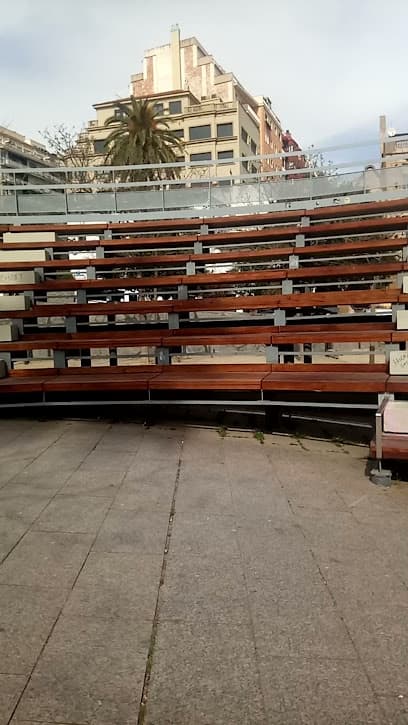
The Amfiteatre at Plaça Lesseps is part of a massive, controversial urban redesign by the late architect Albert Viaplana. For years, this place was a nightmare of construction, a gaping wound where the Ronda de Dalt—the city’s roaring ring road—plunges underground. When the dust settled, we were left with this: a 'hard square.' It’s a garden, technically, but one where the trees are often made of iron and the ground is a multi-leveled expanse of stone and cement. The amphitheater itself is a recessed depression, a series of wide concrete steps that look like they were designed for a futuristic play that never quite got staged.
Don’t expect lush lawns. This is a place of hard angles and sharp shadows. On any given afternoon, the air is thick with the sound of urethane wheels hitting pavement. This is a holy site for the city’s skaters. They don’t care about the architectural intent; they care about the ledges, the transitions, and the fact that the concrete is smooth enough to bleed on. They share the space with grandmothers sitting on metal benches, stoically ignoring the chaos, and commuters rushing toward the Biblioteca Jaume Fuster—the massive, angular library that looms over the square like a silent sentinel.
There is a strange, industrial poetry here if you know how to look for it. The giant metal structures that crisscross the space are meant to evoke the Suez Canal—a nod to Ferdinand de Lesseps, the man the square is named after. It’s a bit of high-concept intellectualism that most people ignore as they dodge a teenager on a BMX bike. But that’s the beauty of it. It’s a public space that refuses to be easy. It’s hot in the summer, reflecting the sun like a magnifying glass, and it’s wind-swept in the winter. It is unapologetically modern, a rejection of the 'Disney-fication' that has swallowed so much of the city center.
Is it worth visiting? If you’re an architecture student or a skater, it’s a pilgrimage. If you’re a traveler who wants to see how the neighborhood of Gràcia actually functions—how it bridges the gap between the old village streets and the steep hills of Vallcarca—then yes, sit on those concrete steps for twenty minutes. Watch the sunset hit the metal beams. Listen to the hum of the traffic below and the clatter of the boards above. It’s not a 'hidden gem.' It’s a loud, proud, concrete heart. It’s the real Barcelona, stripped of its finery and left to bake in the sun. It’s honest, it’s ugly, and it’s absolutely essential to understanding what this city has become in the 21st century.
Type
Garden
Duration
30-45 minutes
Best Time
Late afternoon to watch the skaters and see the sunset hit the metal structures.
Features
Garden
Categories
ArchitectureUrban ParkSkate Spot
Ticket Prices
Free Admission
No tickets required
Must-See Highlights
The 'Iron Trees' and metal canal structures
The recessed concrete amphitheater steps
The view of the Jaume Fuster Library's angular facade
Visitor Tips
Don't expect shade; it's a concrete heat trap in mid-summer.
Great spot for street photography, especially the contrast of old Gràcia buildings against the modern square.
Use the library's public restrooms if needed.
Good For
Architecture enthusiastsSkatersUrban explorersBudget travelers
Why Visit
Viaplana's 'Hard Square' Architecture
Authentic Local Skater Culture
Industrial Suez Canal Themed Design
Nearby Landmarks
- Biblioteca Jaume Fuster (1-minute walk)
- Casa Vicens Gaudí (8-minute walk)
- Park Güell (15-minute walk)
- Carrer Gran de Gràcia (2-minute walk)
Accessibility
- Elevator access from Metro
- Ramped levels throughout the square
- Wide paved areas
Location
Gràcia, Barcelona
Nearby Hotels
Nearby Restaurants
In Gràcia
ATTRACTION
Maison Sara
Gràcia
Forget the mass-produced kitsch on La Rambla. This is Gràcia at its best: a tactile, clay-smeared workshop where the art is as raw and honest as the neighborhood itself.
0.0(0)
Tourist attraction
ATTRACTION
Intercambiador de libros
Gràcia
A humble, weather-beaten box in the hills of Vallcarca where local history is traded one dog-eared paperback at a time. No tourists, no Wi-Fi, just paper and community.
0.0(0)
Park
ATTRACTION
View
Gràcia
Forget the elbow-to-elbow chaos of Park Güell. This is the raw, vertical soul of Gràcia, where the city unfolds in a silent, sun-drenched sprawl at your feet.
0.0(0)
Garden
Frequently Asked Questions
Is Amfiteatre Plaça Lesseps worth visiting?
It depends on what you like. If you appreciate brutalist, modern architecture or want to see a local skater hub, it's fascinating. If you're looking for a traditional green park, you'll be disappointed by the concrete-heavy design.
How do I get to Plaça Lesseps?
The easiest way is via the L3 (Green Line) Metro to the Lesseps station. Multiple bus lines also stop here, as it is a major transit junction between Gràcia and the northern districts.
What is near the Amfiteatre at Plaça Lesseps?
The award-winning Biblioteca Jaume Fuster is right on the square. It's also a 15-minute uphill walk to Park Güell and a 5-minute walk into the heart of the Gràcia neighborhood's narrow streets.
Reviews
0 reviews for Amfiteatre Plaça Lesseps
No reviews yet. Be the first to share your experience!