4.7
2,325 verified reviews
About
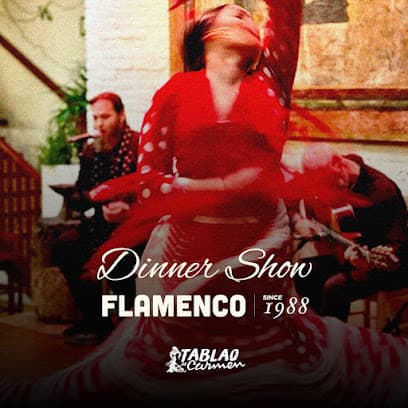
In 1929, a young girl from the Somorrostro slums—a place that barely exists in the collective memory of modern Barcelona—danced on this very spot for the King of Spain. Her name was Carmen Amaya, and she didn’t just dance; she ignited. She was a force of nature in a polka-dot dress, and Tablao de Carmen was built as a temple to that specific, unbridled ferocity. If you’re looking for the sanitized, dinner-theater version of Spanish culture where everyone smiles and the castanets are on a loop, keep walking. This isn't that. This is the real deal, tucked away in the strange, architectural Frankenstein’s monster that is Poble Espanyol.
Let’s talk about the setting first. Poble Espanyol is, on paper, a traveler’s nightmare: a 'village' built for the International Exposition that replicates different Spanish regions. It sounds like a theme park. It feels like a movie set. But once you cross the threshold of the Tablao, the artifice of the surrounding village evaporates. You are in a room designed for one thing: the transmission of 'duende'—that elusive, dark, and soulful spirit that defines true flamenco. The room is intimate, tiered so that every seat feels the vibration of the stage, and mercifully free of the over-amplified speakers that ruin lesser venues. Here, the sound of a heel hitting wood sounds like a gunshot, and the singer’s lament doesn't need a microphone to break your heart.
The food, often an afterthought in these 'dinner and a show' setups, holds its own. You aren't getting molecular gastronomy or foams; you’re getting the hits, played with respect. We’re talking about hand-carved jamón ibérico that glistens with the right kind of fat, croquetas that actually taste like the béchamel was stirred by someone who gives a damn, and a gazpacho that hits the back of the throat with a bright, acidic punch. The tapas menu is a steady parade of Spanish essentials—patatas bravas, tortilla, and perhaps some slow-cooked oxtail—designed to be eaten while you wait for the lights to dim. It’s honest, it’s solid, and it’s a hell of a lot better than the overpriced tourist swill served down on La Rambla.
When the show starts, the room goes quiet in a way that feels heavy. The performers at Tablao de Carmen aren't just clocking in. You see the sweat flying off the guitarist's brow; you see the dancers' faces contort in expressions of genuine agony and ecstasy. It is visceral. It is loud. It is occasionally uncomfortable in its intensity. That is exactly what you want. The rhythm—the 'compás'—is a physical thing here. You’ll find yourself tapping your fingers on the tablecloth, trying to keep up with a beat that seems to defy the laws of physics.
Is it expensive? Yeah, a bit. But here’s the kicker: your ticket includes entrance to Poble Espanyol itself. Show up an hour or two early, wander through the empty plazas of the 'village' as the sun sets over Montjuïc, and then duck into the Tablao for a glass of dry sherry and a masterclass in human emotion. It’s one of the few places in this city where the weight of history actually feels present. You aren't just watching a show; you’re sitting in the shadow of Carmen Amaya, and in a city that is rapidly being polished into a generic European backdrop, that kind of raw, unvarnished soul is worth every cent. Go for the history, stay for the heartbreak, and leave with the rhythm still rattling around in your ribcage.
Cuisine
Flamenco theater, Mediterranean restaurant
What People Say
tapas(301)sangria(142)passion(65)village(48)guitarist(19)dinner and a show(13)olives(12)food and wine(9)
Cuisine & Features
Flamenco theater
Mediterranean restaurant
Performing arts theater
Spanish restaurant
Dietary Options
Vegetarian options availableGluten-free options available
Good For
Romantic datesCultural enthusiastsSpecial occasionsSmall groups
Why Visit
Historical site where Carmen Amaya performed for the King in 1929
Intimate, non-amplified acoustic flamenco for a raw sensory experience
Ticket price includes full access to the Poble Espanyol village
Nearby Landmarks
- 10-minute walk from the Magic Fountain of Montjuïc
- 12-minute walk from the Museu Nacional d'Art de Catalunya (MNAC)
- 8-minute walk from the Mies van der Rohe Pavilion
Location
Poble Espanyol de Montjuïc, Av. de Francesc Ferrer i Guàrdia, 13
Sants-Montjuïc, Barcelona
In Sants-Montjuïc
ATTRACTION
Bolets1
Sants-Montjuïc
A gritty, earthy temple to the Catalan obsession with wild mushrooms, where the dirt is real, the fungi are seasonal gold, and the air smells like the damp floor of a Pyrenean forest.
0.0(0)
ATTRACTION
Montjuic aparca
Sants-Montjuïc
The unglamorous base camp for your Montjuïc assault. A tactical slab of asphalt where the city's chaos fades into the pine-scented ghosts of the 1992 Olympics.
0.0(0)
ATTRACTION
Паркінг Барселона
Sants-Montjuïc
A sprawling slab of industrial reality in the Zona Franca. No Gaudí here—just hot asphalt, diesel fumes, and the honest utility of a secure place to park your rig.
0.0(0)
Frequently Asked Questions
Is Tablao de Carmen worth visiting?
Yes, it is widely considered one of the most authentic flamenco venues in Barcelona. Unlike many tourist-heavy spots, it focuses on traditional, non-amplified performances and honors the legacy of legendary dancer Carmen Amaya.
What should I order at Tablao de Carmen?
The tapas menu is the way to go. Focus on the jamón ibérico, the house-made croquetas, and the traditional gazpacho. Pair it with a bottle of dry Fino or a well-made sangria.
How do I get to Tablao de Carmen?
It is located inside Poble Espanyol on Montjuïc hill. Take the Metro to Plaça d'Espanya (L1 or L3) and then it's a 10-15 minute walk uphill or a short ride on the 150 or 13 bus.
Does the ticket include entry to Poble Espanyol?
Yes, a reservation at Tablao de Carmen includes free entrance to the Poble Espanyol architectural museum, which is a great value add if you arrive early to explore.
Reviews
0 reviews for Tablao de Carmen
No reviews yet. Be the first to share your experience!