4.6
496 verified reviews
About
In the shadow of Montjuïc, on a street that feels more like a residential shortcut than a culinary destination, sits Alapar. It’s the kind of place that doesn’t need a neon sign or a PR firm screaming in your ear. The lineage here is heavy—Chef Jaume Marambio spent years in the trenches of the Adrià empire, specifically at Tickets and Pakta. You can see that DNA in the precision, but Alapar has stripped away the circus. This is what they call an 'Izakaya Mediterránea,' and it’s one of the most honest expressions of Japanese-Catalan fusion you’ll find in Barcelona.
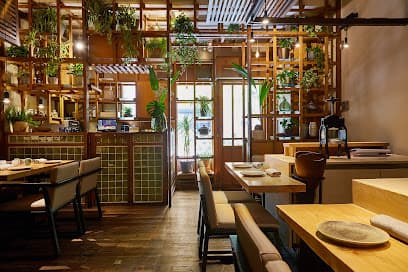
Walking in, the vibe is minimalist, almost clinical, but warmed by the hum of an open kitchen. You want to sit at the bar. That’s where you get a front-row seat to the operation. You’re not just watching a chef; you’re watching a surgeon. There’s no wasted movement. Marambio and his partner Victoria Maccarone have created a space that feels intimate, focused, and entirely devoid of the 'fusion' clichés that usually involve throwing truffle oil at everything until it tastes like a luxury car interior.
The food is a masterclass in restraint. Take the striped red mullet (salmonete) nigiri. In most hands, red mullet is a finicky, bony little fish. Here, it’s treated with a reverence usually reserved for religious relics. The skin is kissed by a torch just enough to release the fat, the flesh is firm but yielding, and the rice—the often-ignored backbone of any serious sushi—is seasoned with a precision that makes you realize how much bad rice you’ve tolerated in your life. It’s a protein rush to the cortex, a clean, high-wire act of flavor.
Then there’s the Mediterranean side of the ledger. They aren't just slapping fish on rice; they’re integrating local ingredients into Japanese structures. You might find squab (pichón) served with a depth of sauce that speaks to classic French-Catalan training, or oysters swimming in a dashi that tastes like the essence of the Mediterranean sea filtered through a Japanese lens. The menu changes, as it should, following the whims of the market and the seasons. If the razor clams are good, they’re on the plate. If the sea urchin is creamy and briny, it’s there.
Don’t skip the mochi. People talk about the mochi here like it’s a spiritual experience, and for once, the hype is justified. Whether it’s the cheesecake version or the chocolate, the texture is a perfect, elastic cloud. It’s the kind of dessert that makes you angry at every supermarket mochi you’ve ever choked down.
Is it expensive? Yes. Is it worth it? If you care about technique, if you care about the lineage of the elBulli diaspora, and if you want to eat food that hasn't been dumbed down for the tourist masses, then absolutely. This isn't a place for a rowdy group or someone looking for a cheap spicy tuna roll. This is a place for people who want to sit quietly and witness what happens when a master of his craft decides to stop performing and start cooking. It’s raw, it’s sophisticated, and it’s one of the best restaurants in Sants-Montjuïc for anyone who takes their dinner seriously.
Cuisine
Fine dining restaurant
What People Say
nigiri(39)taste(32)mochi(19)mediterranean(18)striped red mullet(11)omakase(9)izakaya(8)suquet de peix(7)
Cuisine & Features
Fine dining restaurant
Opening Hours
- MondayClosed
- TuesdayClosed
- WednesdayClosed
- ThursdayClosed
- FridayClosed
- SaturdayClosed
- SundayClosed
Dietary Options
Pescatarian friendlyGluten-free options available upon request
Good For
Date nightFood enthusiastsBusiness dinnersSolo dining at the bar
Why Visit
Chef Jaume Marambio's elBulli and Tickets lineage
Unique 'Izakaya Mediterránea' concept blending Japanese and Catalan flavors
Exceptional homemade mochis with rotating seasonal flavors
Nearby Landmarks
- 8-minute walk from the Mies van der Rohe Pavilion
- 10-minute walk from the Magic Fountain of Montjuïc
- 12-minute walk from Poble Espanyol
Location
Carrer de Lleida, 5
Sants-Montjuïc, Barcelona
In Sants-Montjuïc
ATTRACTION
Bolets1
Sants-Montjuïc
A gritty, earthy temple to the Catalan obsession with wild mushrooms, where the dirt is real, the fungi are seasonal gold, and the air smells like the damp floor of a Pyrenean forest.
0.0(0)
ATTRACTION
Montjuic aparca
Sants-Montjuïc
The unglamorous base camp for your Montjuïc assault. A tactical slab of asphalt where the city's chaos fades into the pine-scented ghosts of the 1992 Olympics.
0.0(0)
ATTRACTION
Паркінг Барселона
Sants-Montjuïc
A sprawling slab of industrial reality in the Zona Franca. No Gaudí here—just hot asphalt, diesel fumes, and the honest utility of a secure place to park your rig.
0.0(0)
Frequently Asked Questions
Is Alapar worth visiting?
Yes, especially if you appreciate high-level Japanese technique combined with Mediterranean ingredients. It is run by alumni of the elBulli group, ensuring world-class precision without the pretension.
What should I order at Alapar?
The striped red mullet (salmonete) nigiri is the signature dish. Also, do not leave without trying their homemade mochis, which are widely considered some of the best in the city.
Do I need a reservation for Alapar?
Yes, reservations are highly recommended as the space is intimate and the bar seating fills up quickly. You can book through their official website.
How much does a meal at Alapar cost?
Expect to pay between €70 and €120 per person, depending on whether you go for the tasting menu or a la carte with wine pairings.
Reviews
0 reviews for Alapar
No reviews yet. Be the first to share your experience!