4.2
5 verified reviews
About
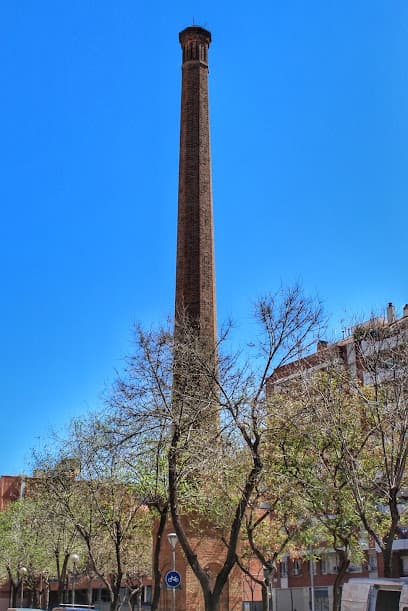
Look, if you’re looking for the Sagrada Família, you’re in the wrong neighborhood. You’ve wandered off the path of the glittery, the polished, and the Instagram-filtered. You’re in Sants-Montjuïc, specifically La Bordeta, and what you’re looking at is the Xemeneia de la Bordeta. It’s a chimney. A big, tall, tapering column of brick that stands like a lonely, defiant middle finger against the skyline. It doesn’t sell tickets. It doesn’t have a gift shop. It just exists, a silent witness to a time when Barcelona wasn’t a playground for digital nomads, but the 'Manchester of the South.'
This isn't 'pretty' architecture. It’s functional, industrial masonry. This chimney belonged to the former Fàbrica de la Bordeta, a massive textile bleaching and dyeing works that once pumped out smoke and provided the lifeblood—and the lung disease—for the local working class. While the wealthy bourgeoisie were uptown in Eixample, commissioning Gaudí to build them psychedelic palaces, the people down here were clocking into 14-hour shifts in the heat and the noise. This chimney is what’s left of that world. It’s a relic of the industrial revolution that built the modern city, stripped of its factory walls and left standing in a modern plaza like a guest who stayed too long at the party.
When you stand at the base of it on Carretera de la Bordeta, you can feel the scale of the thing. The brickwork is a masterclass in utilitarian craftsmanship—thousands of individual pieces laid with a precision that was meant to withstand the constant heat and pressure of industrial exhaust. It’s weathered, stained by decades of soot and the humid Mediterranean air, and that’s exactly why it’s worth your time. It’s honest. It doesn't pretend to be anything other than a vent for a furnace that died out a long time ago.
The neighborhood around it, Sants, is one of the last bastions of 'real' Barcelona. It’s a place of narrow streets, local cooperatives, and people who actually live here. Just a short walk away is Can Batlló, a massive former industrial complex that the community literally took over and turned into a self-managed cultural center. That’s the spirit of this area: grit, resilience, and a refusal to be gentrified into oblivion. The chimney is the totem for that spirit.
Is it worth visiting? If you need a guided tour and a mojito to enjoy a landmark, then no, stay on La Rambla. But if you want to see the bones of the city, if you want to stand in the shadow of the ghosts of the workers who built this place, then yes. It’s a quiet, heavy experience. There’s a certain melancholy to it, seeing this massive structure isolated from its original purpose, surrounded by modern apartment blocks and the hum of traffic. It’s a reminder that cities change, industries die, but the physical markers of human labor—the sweat and the brick—they linger. Go at sunset. When the light hits the red brick, for a few minutes, the chimney looks like it’s glowing from an internal fire that went out a century ago. It’s a protein rush of history, served raw and without a side dish.
Type
Tourist attraction
Duration
15-30 minutes
Best Time
Late afternoon or sunset for the best lighting on the brickwork.
Features
Tourist attraction
Categories
Industrial HeritageArchitectureHistoryPublic Art
Ticket Prices
Free Admission
No tickets required
Must-See Highlights
The intricate brickwork patterns at the crown of the chimney
The contrast between the 19th-century masonry and surrounding modern architecture
The nearby Can Batlló complex for a deeper dive into local industrial history
Visitor Tips
Combine this with a visit to Can Batlló to see how the neighborhood is repurposing its industrial past.
Don't expect a museum; this is a standalone monument in a public area.
The area has great, cheap local vermut bars that are much better than anything in the city center.
Good For
History buffsArchitecture studentsSolo travelersBudget travelers
Why Visit
Authentic industrial relic from Barcelona's 'Manchester of the South' era
Located in the heart of the fiercely local, non-touristy Sants neighborhood
A rare, preserved example of 19th-century industrial masonry and engineering
Nearby Landmarks
- Can Batlló Cultural Center (5-minute walk)
- Magòria-La Campana Station (2-minute walk)
- Plaça d'Espanya (15-minute walk)
- Poble Espanyol (20-minute walk)
Accessibility
- Fully accessible (located in a public plaza)
- Flat terrain
- Outdoor viewing
Location
Carretera de la Bordeta, 49
Sants-Montjuïc, Barcelona
Nearby Hotels
Nearby Restaurants
In Sants-Montjuïc
ATTRACTION
Bolets1
Sants-Montjuïc
A gritty, earthy temple to the Catalan obsession with wild mushrooms, where the dirt is real, the fungi are seasonal gold, and the air smells like the damp floor of a Pyrenean forest.
0.0(0)
Tourist attraction
ATTRACTION
Montjuic aparca
Sants-Montjuïc
The unglamorous base camp for your Montjuïc assault. A tactical slab of asphalt where the city's chaos fades into the pine-scented ghosts of the 1992 Olympics.
0.0(0)
Tourist attraction
ATTRACTION
Паркінг Барселона
Sants-Montjuïc
A sprawling slab of industrial reality in the Zona Franca. No Gaudí here—just hot asphalt, diesel fumes, and the honest utility of a secure place to park your rig.
0.0(0)
Park
Frequently Asked Questions
Is Xemeneia de la Bordeta worth visiting?
Yes, if you appreciate industrial history and want to see a side of Barcelona far removed from the typical tourist trail. It is a powerful, free monument to the city's working-class roots.
How do I get to Xemeneia de la Bordeta?
The easiest way is via the L8 or S-line trains to the Magòria-La Campana station, which is just a 2-minute walk from the chimney.
What is the history of the chimney?
It was part of the Fàbrica de la Bordeta, a 19th-century textile factory specializing in bleaching and dyeing. It remains as a protected local heritage site (BCIL) representing Barcelona's industrial past.
Are there any fees to see the chimney?
No, it is located in a public space and is completely free to view at any time of day.
Reviews
0 reviews for Xemeneia de la Bordeta
No reviews yet. Be the first to share your experience!