4.0
3,765 verified reviews
About
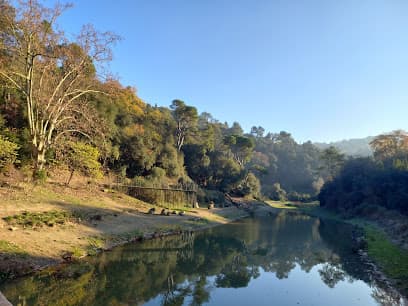
Most people come to Barcelona and never leave the gravity well of the Gothic Quarter. They suffocate in the humidity and the crowds, oblivious to the fact that there’s a massive, green lung breathing right above their heads. The Vallvidrera Reservoir—the Pantà—isn't a postcard-perfect alpine lake. It’s an old, industrial scar that nature decided to heal in its own messy way. Built in 1864 to quench the thirst of the then-independent village of Sarrià, it’s a relic of Elies Rogent’s engineering, the same guy who built the University of Barcelona. Today, it’s where the city stops screaming.
Getting here is the first part of the decompression. You hop on the FGC train at Plaça de Catalunya, and within twenty minutes, the train plunges into a tunnel and spits you out at Baixador de Vallvidrera. The air changes instantly. It’s cooler, smelling of damp earth and pine needles instead of exhaust and fried dough. You walk past the old Vil·la Joana—where the poet Verdaguer took his final breath—and follow the path down to the water. Or what’s left of it.
Let’s be honest: depending on when you visit, the 'reservoir' might look more like a glorified puddle or a dusty bowl. Catalonia has been parched lately, and the Pantà shows the ribs of the earth when the rain stays away. But even when the water is low, the place has a magnetic, melancholy pull. It’s a protected wetland now, a sanctuary for the Mediterranean tree frog. If you sit still enough, you’ll hear them—a rhythmic, ribbiting soundtrack that drowns out the ghost of the city you left behind. The dam itself is a beautiful piece of masonry, a curved wall of red brick that feels like it belongs in a different century, which, of course, it does.
Then there are the locals. Not the ones in Lycra running up the hills, but the senglars—the wild boars. These are the undisputed gangsters of Collserola. They are habituated, bold, and frankly, they don't give a damn about your personal space. You’ll see them rooting around the undergrowth or brazenly patrolling the paths near the Casa del Pantaner. They aren't pets. Don't feed them, don't try to selfie with them unless you want a very visceral souvenir from a Catalan hospital. They are a reminder that despite the proximity to the luxury boutiques of Passeig de Gràcia, this is still the wild.
The Casa del Pantaner, the old dam keeper’s house, sits at the edge of the water. It’s been restored into a small interpretation center where you can learn about the history of the dam and the biodiversity of the park. It’s modest, quiet, and perfectly suited to the vibe of the place. There are no gift shops selling plastic Sagrada Familias here. There are just trails that spider-web out into the hills, leading you toward Tibidabo or deeper into the 8,000 hectares of the Collserola Natural Park.
Is it worth the trip? If you need a 'must-see' attraction to tick off a list, probably not. But if you need to remember what silence sounds like, if you want to see the sun filtering through the canopy while you walk off a heavy lunch of botifarra and beans, then yes. It’s a place for the weary, for the dog-walkers, and for anyone who understands that the best parts of a city are often the ones where the city finally gives up and lets the trees take over.
Type
Park, Tourist attraction
Duration
1-2 hours
Best Time
Weekday mornings for total silence, or late afternoon for the best light on the brickwork.
What People Say
wild boar(86)dogs(58)vacuum(54)puddle(28)station(18)fauna(16)invasive(8)railway(7)
Features
Park
Tourist attraction
Categories
NatureHikingHistoryWildlife
Ticket Prices
Free Admission
No tickets required
Opening Hours
- MondayOpen 24 hours
- TuesdayOpen 24 hours
- WednesdayOpen 24 hours
- ThursdayOpen 24 hours
- FridayOpen 24 hours
- SaturdayOpen 24 hours
- SundayOpen 24 hours
Must-See Highlights
The 19th-century curved brick dam wall
The Casa del Pantaner interpretation center
The Mediterranean tree frog habitat (listen for the sound)
The view of the reservoir from the upper forest trails
Visitor Tips
Do not bring visible food bags if you want to avoid being harassed by wild boars.
Check the local weather and drought status; the reservoir can be nearly empty during dry spells.
Combine the visit with a trip to Vil·la Joana to see where the famous poet Jacint Verdaguer lived.
Good For
HikersNature loversFamilies with dogsBudget travelers
Why Visit
Historic 1864 brick dam designed by Elies Rogent
Direct access to the wilder side of Collserola Natural Park via FGC
Protected habitat for the rare Mediterranean tree frog
Nearby Landmarks
- Vil·la Joana (MUHBA) - 10-minute walk
- Baixador de Vallvidrera Station - 10-minute walk
- Tibidabo Amusement Park - 45-minute hike
- Torre de Collserola - 35-minute hike
Accessibility
- Main paths are relatively flat and gravel-covered
- Accessible from the train station via paved and dirt paths
- The dam walkway is accessible
Location
Camí del Pantà, s/n
Sarrià-Sant Gervasi, Barcelona
Nearby Hotels
Nearby Restaurants
In Sarrià-Sant Gervasi
ATTRACTION
Casa Narcís Bosch
Sarrià-Sant Gervasi
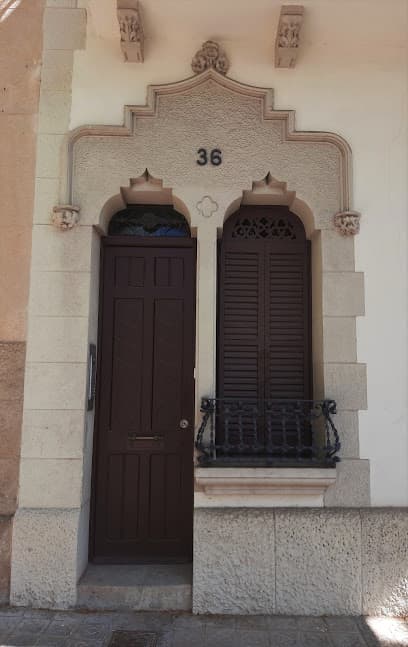
A Modernista fever dream tucked away in Sarrià, where Salvador Valeri i Pupurull’s stone curves and ironwork prove that Gaudí wasn't the only genius in town.
0.0(0)
Tourist attraction
ATTRACTION
Plaça de Calvó
Sarrià-Sant Gervasi
A quiet, unpretentious slice of Sant Gervasi where the only drama is a toddler losing a shoe. No Gaudí, no crowds, just trees, benches, and the sound of real life in the Zona Alta.
0.0(0)
Park
ATTRACTION
Pipican Piscines i Esports
Sarrià-Sant Gervasi
A dirt-caked arena of canine chaos set against the polished backdrop of Sarrià-Sant Gervasi, where the neighborhood’s elite and their four-legged shadows come to settle scores.
0.0(0)
Park
Frequently Asked Questions
Is Vallvidrera Reservoir worth visiting?
Yes, if you want a quick escape from the city heat and noise. It’s a peaceful spot for a walk, though the water levels can be very low during drought periods.
How do I get to Vallvidrera Reservoir?
Take the FGC train (lines S1 or S2) from Plaça de Catalunya to the 'Baixador de Vallvidrera' station. From there, it's a well-signposted 10-15 minute walk.
Are there wild boars at the reservoir?
Yes, wild boars are very common in this area. They are generally used to humans but can be aggressive if they smell food; never feed them or approach them closely.
Is there an entrance fee for the reservoir?
No, access to the Vallvidrera Reservoir and the surrounding Collserola Natural Park is completely free.
Reviews
0 reviews for Vallvidrera Reservoir
No reviews yet. Be the first to share your experience!