3.7
3 verified reviews
About
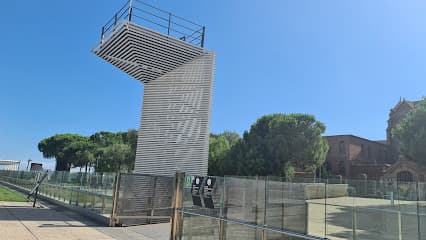
In 1992, Barcelona didn’t just host an Olympics; it underwent a brutal, high-speed reconstructive surgery. The city shed its industrial soot and emerged as a playground of glass, steel, and ambition. Up in the rarified air of Sarrià-Sant Gervasi, away from the sweating crowds of the Rambla, stands a testament to that era: the Torre Meteorològica. Designed by Sir Norman Foster—the high priest of British High-Tech architecture—this isn't your typical medieval stone tower. It’s a slender, white, 50-meter-tall needle that looks like it was dropped from a passing starship.
When you arrive at Carrer del Císter, you’re in the heart of 'Old Money' Barcelona. The streets are quieter, the air is cooler, and the architecture usually leans toward the modernist mansions of the Catalan bourgeoisie. Then you see it. The tower is a masterclass in precision. It’s held together by a tension that feels almost visceral, a tripod of steel legs supporting a central mast that pierces the sky. It was built to handle communications and meteorological data for the Games, a functional object that Foster decided should also be a piece of sculpture. It’s clinical, cold, and undeniably beautiful in that way only perfectly engineered objects can be.
Don’t come here expecting a gift shop or a guided tour with a bored teenager in a vest. This is one of those 'look, don't touch' landmarks. You can’t go inside, and there’s no observation deck to buy overpriced cava on. It’s a piece of the city’s infrastructure that demands you appreciate it from the sidewalk. For the architecture nerds, it’s a pilgrimage site—a chance to see Foster’s obsession with structural honesty without the crowds that swarm his larger Torre de Collserola further up the mountain. It represents a moment when Barcelona decided to stop looking at its past and start staring directly into the future.
The vibe around the tower is dictated by its neighbor, the CosmoCaixa science museum. You’ll see families and school groups buzzing around, but the tower itself remains aloof. It stands there, measuring the wind and transmitting data, indifferent to the humans below. It’s a reminder that the best architecture Barcelona has to offer isn't always a cathedral or a Gaudí fever dream; sometimes, it’s a perfectly balanced piece of industrial design that does its job with a quiet, steely elegance.
If you’re doing a Norman Foster tour of the city, this is a mandatory stop. If you’re just a casual tourist looking for a place to take a selfie with a churro, you might find it underwhelming. But for those who find beauty in the way a steel cable holds a thousand tons of pressure, or how a white mast cuts through the Mediterranean blue, it’s a quiet thrill. It’s a relic of the '92 dream, still standing tall, still doing its work, and still looking sharper than anything built in the decades since.
Is it worth the trek? If you’re already heading to CosmoCaixa—which you absolutely should be—then yes. It’s right there, a vertical exclamation point at the end of a sentence about human ingenuity. Just don't expect it to entertain you. It’s a tower, not a circus. Stand back, look up, and appreciate the fact that for one brief moment in the early nineties, we thought the future was going to look exactly like this.
Type
Tourist attraction
Features
Tourist attraction
Categories
ArchitectureHigh-Tech ArchitectureOlympic History
Accessibility
- Viewable from the street
- Paved sidewalks in the area
Location
Carrer del Císter, 45
Sarrià-Sant Gervasi, Barcelona
Nearby
ATTRACTION
Plaça de la Ciència
50 m · Sarrià-Sant Gervasi
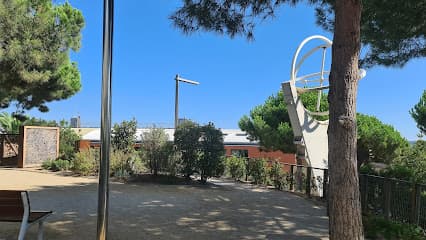
A sprawling, high-altitude slab of concrete and curiosity where physics isn't a textbook chore but a tactile playground at the foot of Tibidabo. Pure nerd-joy with a view.
4.6(5)
Park
ATTRACTION
Monestir de Santa Maria de Valldonzella
50 m · Sarrià-Sant Gervasi
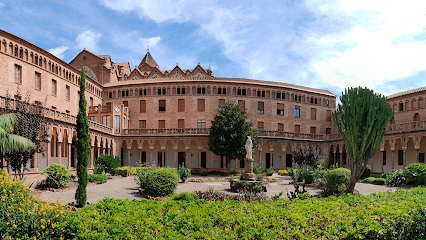
A brick-and-mortar sanctuary in the hills of Sarrià where Cistercian nuns keep the Gregorian chants alive amidst Bernardí Martorell’s staggering Modernista architecture.
4.7(282)
MonasteryTourist attraction
RESTAURANT
La Balsa
200 m · Sarrià-Sant Gervasi
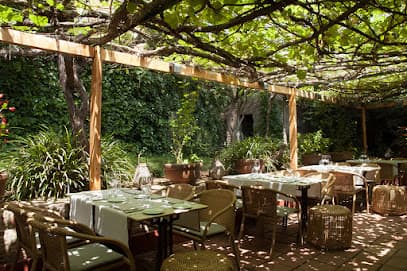
A lush, architectural sanctuary in Sarrià where the 1970s never ended, the gin is cold, and the Catalan classics are served without the soul-crushing noise of the city center.
4.3(1K)
Mediterranean restaurantCatalonian restaurant

RESTAURANT
Aranda's Grill
€€€300 m · Sarrià-Sant Gervasi
A primal Castilian meat temple housed in an imposing Modernista mansion. Come for the wood-fired suckling lamb; stay for the smell of oak smoke and old-world Barcelona grandeur.
4.4(5K)
RestaurantGrill
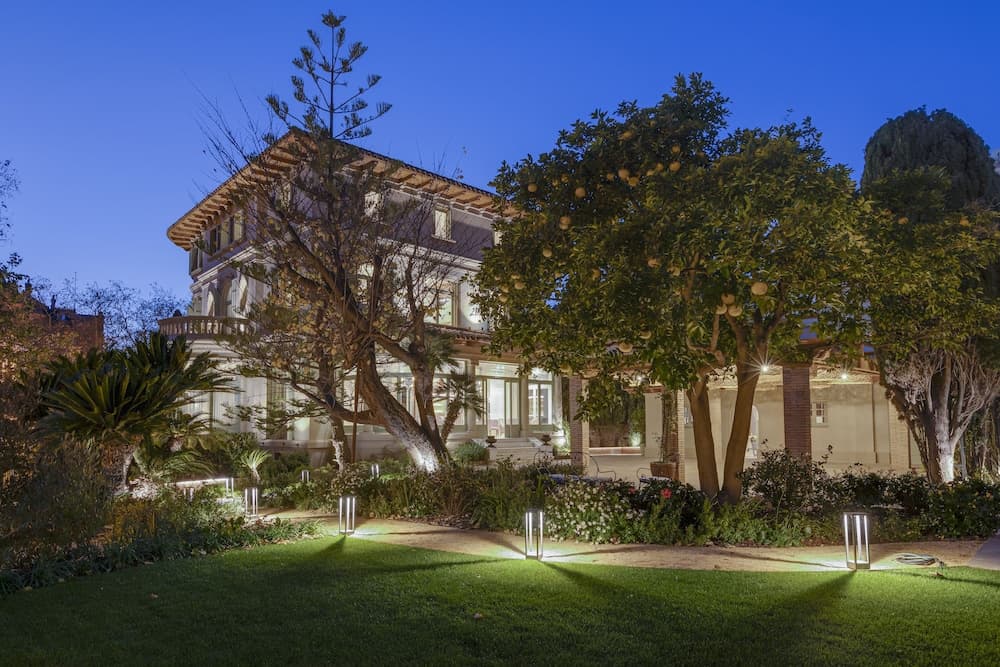
HOTEL
Hotel Boutique Mirlo Barcelona (Torre Macaya)
€€€350 m · Sarrià-Sant Gervasi
A Modernista mansion on the hill where the air is thinner and the rooms come with private saunas. It’s old-world Barcelona luxury for people who want to disappear for a while.
4.8(266)
Hotel
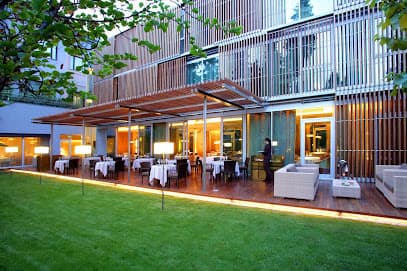
HOTEL
ABaC Hotel
€€€450 m · Sarrià-Sant Gervasi
A high-tech, white-on-white sanctuary for the food-obsessed, where Jordi Cruz’s three-Michelin-starred kitchen is the beating heart of an ultra-exclusive Tibidabo retreat.
4.6(241)
Hotel
Frequently Asked Questions
Is Torre Meteorològica worth visiting?
It is worth a look if you are an architecture enthusiast or already visiting the nearby CosmoCaixa museum. You cannot go inside, so it is strictly an exterior architectural viewing experience.
Can you go to the top of the tower?
No, the tower is a functional telecommunications and meteorological facility and is not open to the public for interior tours or observation.
How do I get to the Torre Meteorològica?
Take the FGC (L7) to Av. Tibidabo and walk about 15 minutes uphill, or take the V15 bus which drops you very close to the Carrer del Císter entrance.
Reviews
0 reviews for Torre Meteorològica
No reviews yet. Be the first to share your experience!