4.6
1,355 verified reviews
About
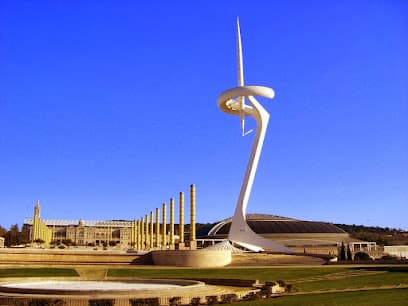
1992 was the year everything changed. Before the Olympics, Barcelona was a gritty, somewhat neglected port city that turned its back on the sea. Then came the Games, and with them, a massive injection of cash, ego, and architectural adrenaline. The Torre de Comunicacions de Montjuïc—or the Calatrava Tower, if you’re into naming things after their high-priced creators—is the literal needle that injected that change. Standing tall in the middle of the Anella Olímpica, it’s a 136-meter spike of white steel that looks less like a radio antenna and more like a futuristic weapon or a very elegant, skeletal athlete holding the Olympic flame.
Santiago Calatrava, the architect behind this thing, is a man who doesn't do 'subtle.' He does 'expensive, structural poetry.' You see his work and you know it’s his—all white ribs and organic curves that look like they might start breathing if you stop watching them. This tower is no different. It leans at a precarious angle, supposedly mimicking the stance of an athlete kneeling to receive a medal or holding a torch. It’s beautiful, sure, but it’s also a functional piece of kit built to beam the 1992 Games to television sets across the planet. It was the city’s way of saying, 'We’re here, we’re modern, and we’ve got better taste than you.'
When you walk up to the base, you’ll notice a nod to the local legend, Antoni Gaudí. The base is covered in trencadís—that classic Catalan technique of using broken tile shards to create a mosaic. It’s a nice touch, a bridge between the turn-of-the-century modernisme that put Barcelona on the map and the high-tech futurism that redefined it in the nineties. But here’s the kicker: the tower is also a giant sundial. The shadow cast by the central needle falls onto the circular Plaça d'Europa, marking the hours on the pavement. It’s a clever bit of ancient tech hidden inside a space-age shell.
The atmosphere around the tower today is a strange mix of triumph and melancholy. The Anella Olímpica (Olympic Ring) is vast, paved, and often eerily quiet compared to the claustrophobic swarm of the Gothic Quarter. You’ve got the Palau Sant Jordi next door—another architectural heavyweight—and the Estadi Olímpic Lluís Companys just down the road. Walking through here feels like wandering through a very expensive, very clean movie set after the actors have all gone home. It’s one of the best things to do in Barcelona if you need to escape the tourist crush and just breathe in some scale.
Is the Torre de Montjuïc worth it? If you’re looking for a gift shop, an elevator to an observation deck, or a place to buy a lukewarm panini, you’re going to be disappointed. You can’t go inside. It’s a sculpture, a landmark, a giant piece of functional art. But if you care about how cities reinvent themselves, or if you just want to see one of the most iconic silhouettes in Europe against a Mediterranean sunset, then yeah, it’s worth the trek up the hill. It’s a reminder that sometimes, a city needs to build something completely ridiculous and beautiful just to prove that it can. It’s a monument to a moment when Barcelona decided to stop being a secret and start being a superstar.
Type
Tourist attraction
Duration
30-45 minutes
Best Time
Late afternoon for the best light on the white steel and to see the sundial shadow.
What People Say
olympic(48)santiago calatrava(46)architecture(39)1992(30)antenna(12)1989(9)stadium(9)icon(9)
Features
Tourist attraction
Categories
ArchitectureOlympic HistoryModern Design
Ticket Prices
Free Admission
No tickets required
Must-See Highlights
The trencadís mosaic at the base of the tower
The sundial markings on the Plaça d'Europa
The view of the tower framed by the columns of the Olympic Ring
Visitor Tips
Bring water as there is very little shade in the Olympic Ring plaza.
Combine this with a visit to the nearby Olympic Museum for the full 1992 experience.
It's a great spot for architectural photography, especially on a clear blue-sky day.
Good For
Architecture enthusiastsPhotographersHistory buffsBudget travelers
Why Visit
Designed by world-renowned architect Santiago Calatrava
Functions as a massive sundial using the Plaça d'Europa
Features a base decorated in traditional Catalan trencadís tile-work
Nearby Landmarks
- Palau Sant Jordi (2-minute walk)
- Estadi Olímpic Lluís Companys (5-minute walk)
- Joan Miró Foundation (12-minute walk)
- Museu Nacional d'Art de Catalunya - MNAC (15-minute walk)
Accessibility
- Wheelchair accessible plaza
- Paved flat surfaces around the base
- Accessible via public transport (150 bus)
Location
Sants-Montjuïc, Barcelona
Nearby Hotels
Nearby Restaurants
In Sants-Montjuïc
ATTRACTION
Bolets1
Sants-Montjuïc
A gritty, earthy temple to the Catalan obsession with wild mushrooms, where the dirt is real, the fungi are seasonal gold, and the air smells like the damp floor of a Pyrenean forest.
0.0(0)
Tourist attraction
ATTRACTION
Montjuic aparca
Sants-Montjuïc
The unglamorous base camp for your Montjuïc assault. A tactical slab of asphalt where the city's chaos fades into the pine-scented ghosts of the 1992 Olympics.
0.0(0)
Tourist attraction
ATTRACTION
Паркінг Барселона
Sants-Montjuïc
A sprawling slab of industrial reality in the Zona Franca. No Gaudí here—just hot asphalt, diesel fumes, and the honest utility of a secure place to park your rig.
0.0(0)
Park
Frequently Asked Questions
Can you go inside the Torre de Comunicacions de Montjuïc?
No, the tower is a functional telecommunications facility and is not open to the public for interior tours or observation deck access.
Is the Montjuïc Communications Tower worth visiting?
It is worth visiting for fans of architecture and photography. While you can't go inside, its unique design by Santiago Calatrava and its role in the 1992 Olympics make it a stunning landmark within the Olympic Ring.
How do I get to the Calatrava Tower in Barcelona?
The easiest way is to take the Funicular de Montjuïc from Paral·lel metro station, then walk about 10-15 minutes through the Olympic Park, or take the 150 bus from Plaça d'Espanya.
How much does it cost to see the tower?
Viewing the tower from the outside is completely free, as it is located in a public plaza within the Anella Olímpica complex.
Reviews
0 reviews for Torre de Comunicacions de Montjuïc
No reviews yet. Be the first to share your experience!